PLA vs PETG vs ASA: Best 3D Printing Filament for Outdoor Use
11 min
- PLA vs PETG vs ASA for Outdoor Use
- How Long Do 3D Printed Parts Last Outdoors?
- What About Resin? (3D Printing Resin for Outdoor Use)
- Best Outdoor 3D Print Use Cases by Material
- 3D Printing Filament for Outdoors Use FAQ
If you've ever watched a 3D printed garden hook sag in the sun or a cold snap crack your custom outdoor fixture, you already know: not all filaments are built for the elements.
Choosing the best 3D printing filament for outdoor use isn't just about surviving the occasional drizzle. It's about UV exposure, temperature swings, moisture resistance, and long-term strength. And let's be real, most people don't want to reprint every few months just because they picked the wrong plastic.

In this guide, we'll break down PLA, PETG, and ASA, three of the most common outdoor 3D printing filaments, and how they actually hold up in real-world weather. This guide focuses on rigid filaments for general outdoor use, so we won't compare other outdoor filament options, such as TPU, which is valued for its flexibility, or nylon, which is known for its toughness and wear resistance. We'll also touch on 3D printing resin for outdoor use, what happens when prints face cold weather, and how to make your outdoor 3D prints last longer.
PLA vs PETG vs ASA for Outdoor Use
Why Outdoor Durability Matters in 3D Printing
If you've ever printed a garden light holder or a tool hook, only to see it warp or crack after a few weeks in the sun or frost, you already know: not all 3D printing filaments can survive outdoors.
Choosing the best 3D printing filament for outdoor use means balancing strength, UV resistance, temperature tolerance, and longevity. Let's break down how PLA, PETG, and ASA hold up in real outdoor conditions—and which one makes the most sense for your next print.
PLA: Affordable and Easy – But Weak Outdoors
(Source:Freepik)
PLA is the go-to filament for beginners. It's cheap, prints smoothly, and doesn't require a heated chamber. But outdoor environments? That's where the PLA falls short.
- Heat Deflection: PLA softens at just ~55℃ so that direct sunlight can deform it, even in spring.
- UV Resistance: Poor. It breaks down over time when exposed to sunlight.
- Moisture Resistance: Moderate. It absorbs water, becoming brittle over time.
PLA works great for indoor use or short-term outdoor applications. But if you're making outdoor 3D prints that need to last months (or years), PLA isn't the best option.
- Best for: Temporary decorations, prototypes, shaded outdoor areas.
- Not recommended for: Functional outdoor parts, direct sunlight, or cold snaps.
PETG: A Balanced Performer for Most Outdoor Prints
(Source: Istock)
PETG is often seen as the middle ground between PLA and ASA. It prints nearly as easily as PLA but offers significantly better outdoor performance.
- Heat Resistance: ~80℃. It holds its shape better in warm conditions.
- UV Resistance: Moderate to good, depending on brand and pigment.
- Moisture Resistance: Excellent. PETG is hydrophobic and resists swelling or delamination.
PETG is ideal for 3D printing in cold weather and moderate sun exposure, making it a solid pick for outdoor signs, brackets, planters, or weatherproof enclosures.
- Best for: Durable outdoor accessories, medium-term functional parts, utility hooks.
- May struggle with: Constant UV exposure over the years without coating or treatment.
ASA: Industrial-Grade Durability for Harsh Weather
(Source: Reddit)
ASA (Acrylonitrile Styrene Acrylate) was practically built for the outdoors. Originally designed as a UV-stable alternative to ABS, ASA offers high strength, excellent weather resistance, and a matte finish that hides layer lines.
- Heat Resistance: ~100℃. No warping in direct sunlight.
- UV Resistance: Excellent. It resists yellowing and degradation.
- Moisture Resistance: High. It remains stable in rain, humidity, and snow.
If your project will face year-round exposure, ASA is hands-down the best 3d print filament for outdoor use.
- Best for: Long-term outdoor use, automotive parts, tool holders, enclosures.
- Caution: ASA requires a heated chamber and emits fumes during printing, use proper ventilation.
Head-to-Head: PLA vs PETG vs ASA for Outdoor Use
| Feature | PLA | PETG | ASA |
|---|---|---|---|
| UV Resistance | Poor | Moderate | Excellent |
| Heat Resistance | Low | Moderate | High |
| Moisture Resistance | Moderate | Great | Great |
| Printability | Easy | Easy | Advanced |
| Outdoor Lifespan | Short (Shaded or temporary use) | Moderate (Moderate exposure, depending on formulation) | Long-term sun and weather exposure |
How Long Do 3D Printed Parts Last Outdoors?
Short answer: PLA generally has the most limitations for outdoor use, PETG offers a balance of durability and printability, and ASA is usually the best choice for prolonged exposure to sunlight and changing weather. However, there is no fixed outdoor lifespan for any material. Actual service life depends on UV exposure, temperature, material formulation, part geometry, print quality, and mechanical loading.
Lifespan by Material and Conditions
| Conditions | PLA | PETG | ASA |
|---|---|---|---|
| Shaded, covered area | Can last a while if it stays cool and carries little load | Generally reliable | Very reliable |
| Partial sun | Risky, especially in warm climates | Usually holds up for a few seasons | Reliable |
| Direct sun, all year | Likely to warp or degrade quickly | Slowly yellows and weakens | Built for this |
| Freezing winters | Becomes brittle and prone to cracking | Handles cold better | Stays stable |
Treat this as a relative guide, not a guarantee. Brand, color, wall thickness and print quality all affect the results.
What Actually Wears a Printed Part Out
Outdoor 3d prints often fail due to a combination of factors:
Heat: A part can soften and sag before any visible damage appears. PLA, which softens at around 55℃, is the most exposed. PETG (~80℃) and ASA (~100℃) give you much more margin. Learn more about PLA's temperature resistance and PETG's temperature resistance when choosing a material for outdoor use.
UV exposure: Sunlight slowly dulls the surface, fades color and makes the plastic more brittle. This is why a part can look fine and still snap when you handle it.
Moisture and freeze-thaw cycles: Water sits in layer lines and expands when it freezes, which can pry layers apart over time.
Constant load: A hook or bracket under steady weight will fail sooner than a decorative piece, because heat and UV weaken it while it's already under stress.
1How Long Does PLA Last Outside?
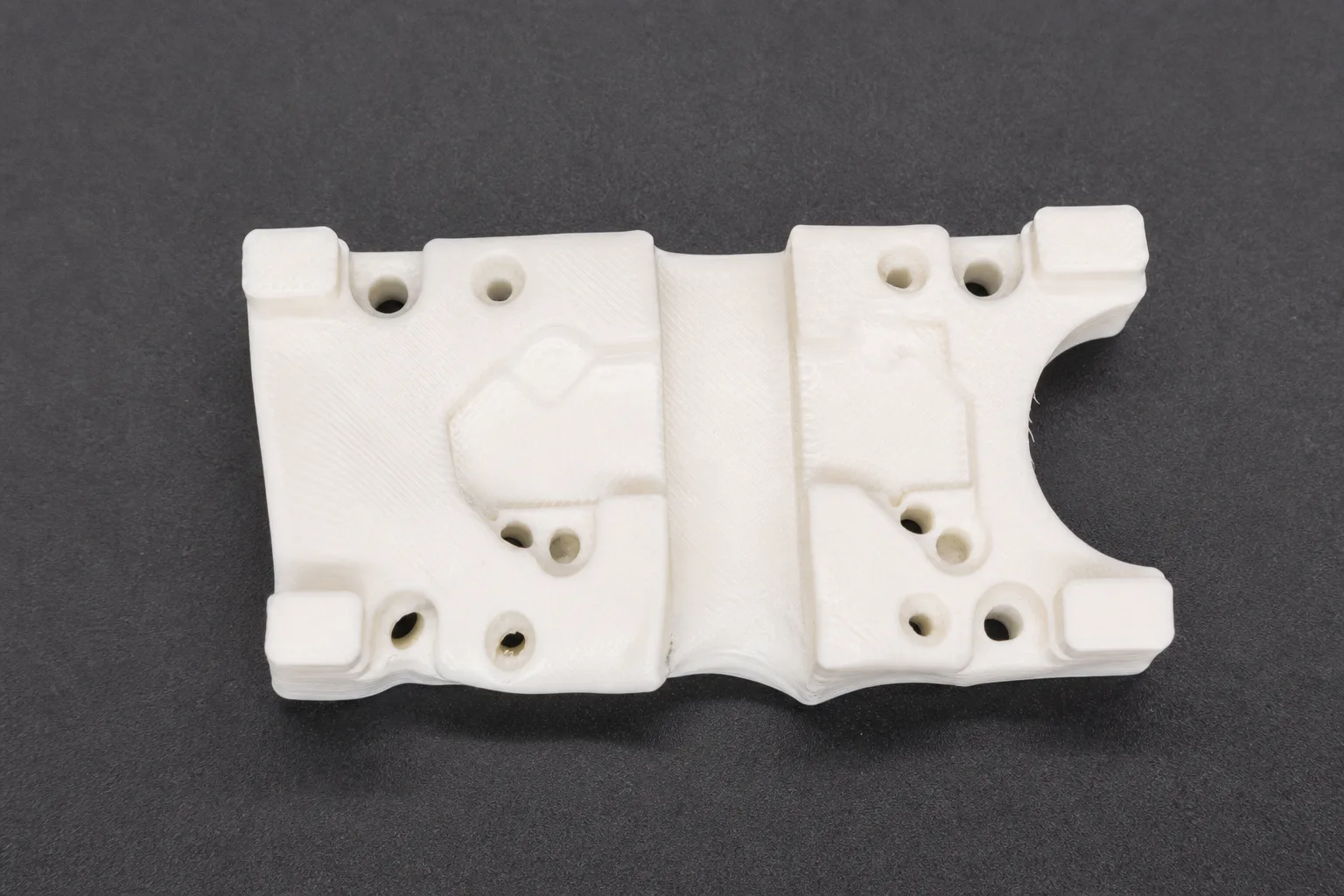
PLA has the shortest outdoor life of the three. In direct sun it can warp or crack within a season, and even in milder conditions it tends to become brittle. It's fine for temporary items, such as plant markers or seasonal decorations, and for covered spots that stay cool. Don't use it for anything that needs to carry weight or that you don't want to replace.
2How Long Does PETG Last Outside?
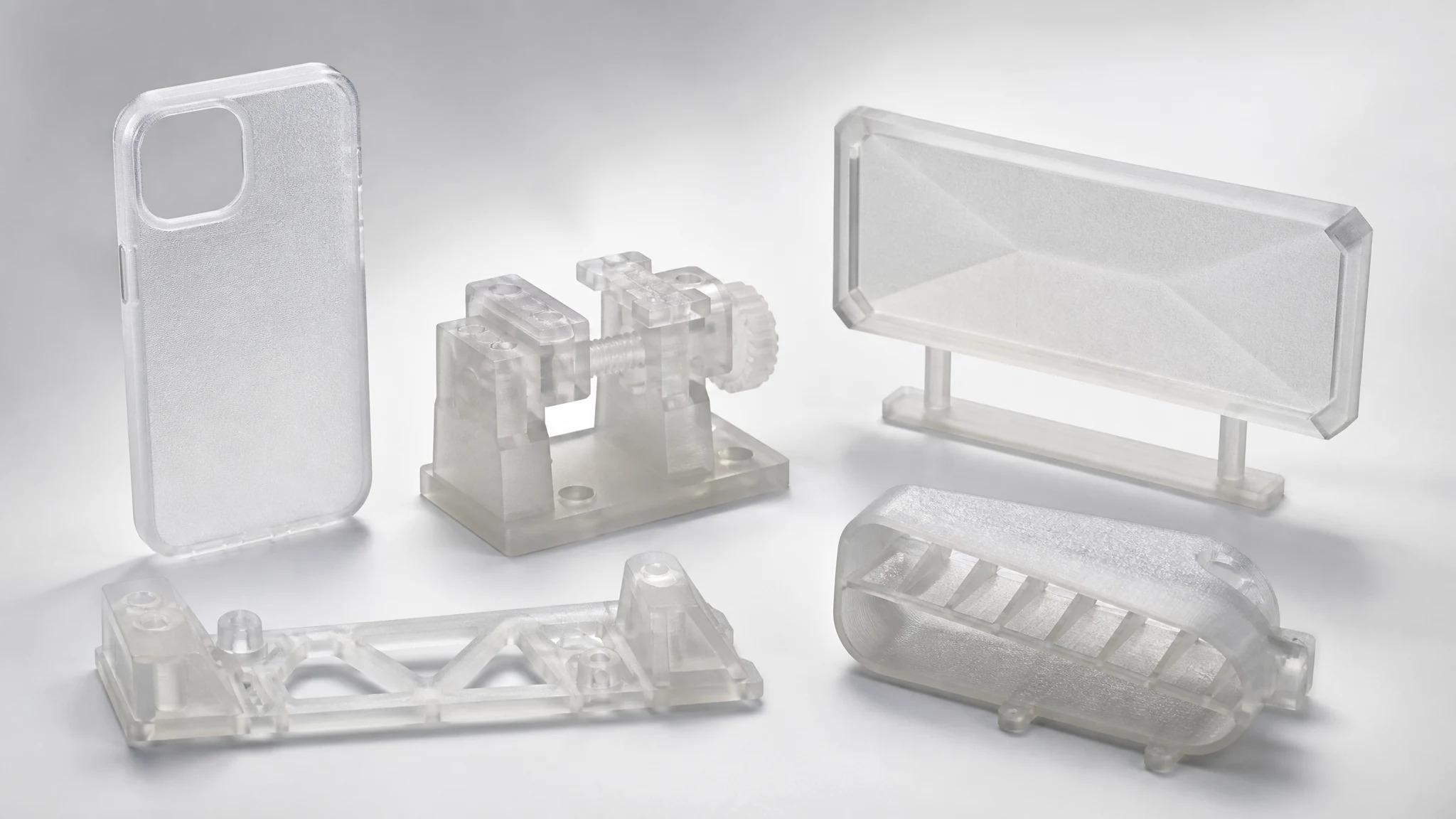
PETG sits in the middle. In shade or partial sun it typically holds up well for a few seasons, and it handles moisture and cold better than PLA. In full sun year after year, expect gradual yellowing and some loss of toughness. A UV-protective coat and a lighter color can extend its life noticeably (see the UV section above). PETG is a sensible choice for garden hooks, planters, fence clips and similar parts you're happy to reprint eventually.
3How Long Does ASA Last Outside?
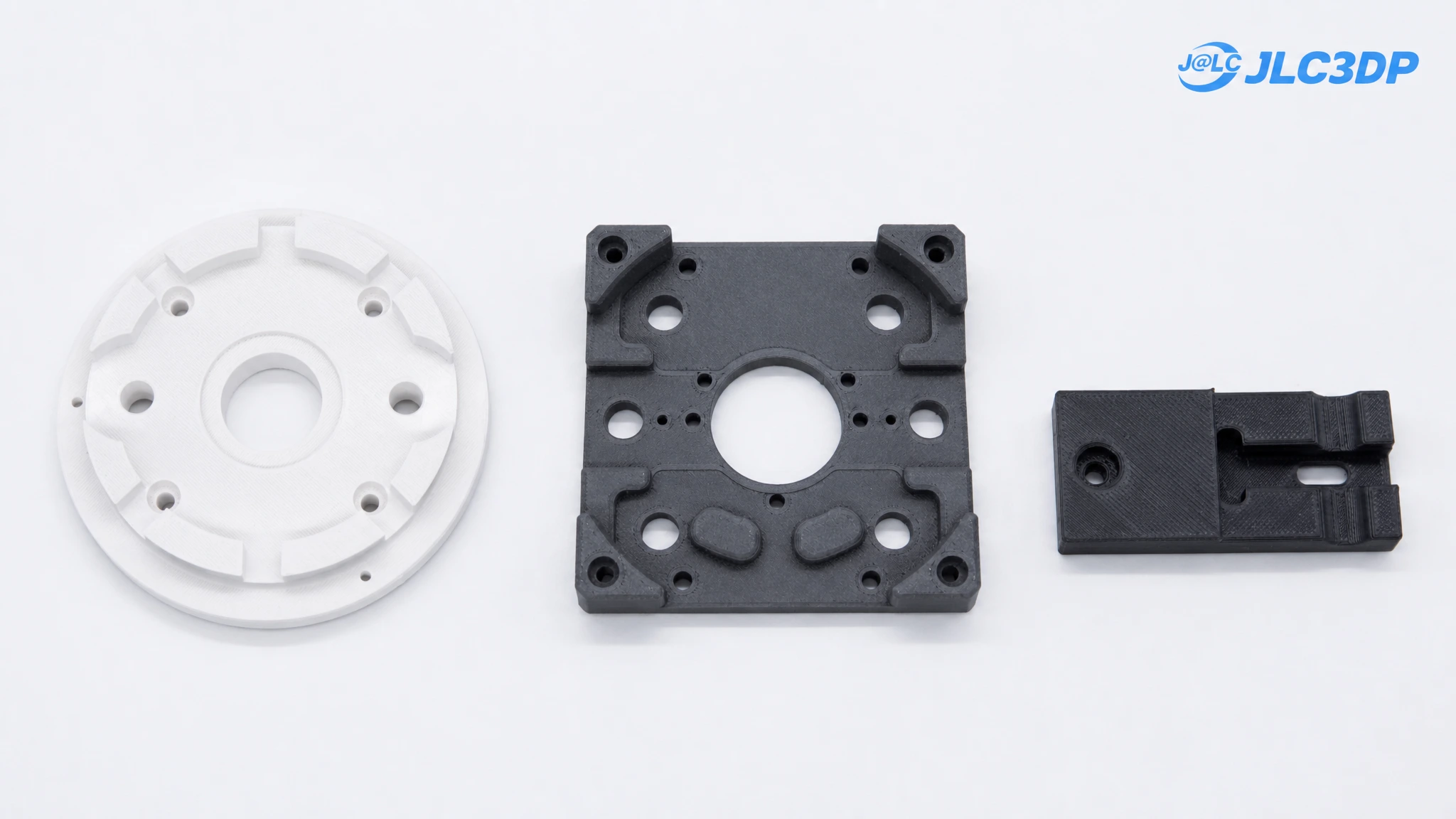
ASA is the long-term option. It's designed to resist UV, heat, and moisture together, so it keeps its shape and finishes through year-round exposure better than PLA or PETG. If a part will sit in the sun, carry a load, or be hard to replace, such as a roof bracket, solar light mount, or sensor enclosure, ASA is usually worth the extra printing effort.
Tips to Extend Outdoor Print Lifespan
Match the material to the exposure, not to what's already on your spool. Print thicker walls and add more perimeters on load-bearing parts so surface weathering doesn't mean sudden failure. Add a UV-protective clear coat or paint on PETG and PLA parts that see sun. Choose lighter, opaque colors when you can, as they tend to run cooler in the sun. Inspect parts at the start of each season. Chalky, yellowed, or cracked surfaces mean it's time to reprint before the part fails under load.
What About Resin? (3D Printing Resin for Outdoor Use)
3D printing resin for outdoor use is hit-or-miss. Standard resins become brittle with UV exposure. However, there are tough engineering resins or weatherproof variants like Siraya Tech Blu or Anycubic's ABS-Like resin that offer better durability.
Still, resins can degrade faster than filaments and are best for detail-focused prints that stay in shaded or protected areas.
Cold Weather & UV Resistance
3D printing in cold weather presents challenges like layer cracking, delamination, and brittle parts. PLA tends to become extremely brittle below 0℃. PETG handles low temperatures better, while ASA remains structurally stable even in freezing temperatures.
For outdoor 3D prints in regions with harsh winters or high summer UV, ASA wins, no contest.
Best Outdoor 3D Print Use Cases by Material
- PLA: Short-term plant markers, temporary signage, and shaded decorative items.
- PETG: Fence clips, garden hose holders, tool hooks, planters.
- ASA: Roof brackets, solar light mounts, outdoor sensor enclosures, automotive trim.
Want inspiration for practical prints that actually benefit from outdoor filament durability? Check out these useful 3D print ideas that make life easier year-round.
What Outdoor Filament Should You Use?
- Want something quick and easy for a short-term need? Use PLA.
- Need balanced printability and weather resistance? PETG has your back.
- Going for longevity, strength, and sunproof durability? ASA is your answer.
For serious 3D printing car accessories, outdoor brackets, garden tools, or weatherproof enclosures, ASA's the best investment.
3D Printing Filament for Outdoors Use FAQ
Q: What is the best filament for outdoor use?
For long-term outdoor use, ASA is the best choice because it resists UV, heat and moisture together. PETG is the best balance of easy printing and weather resistance for most home projects, such as hooks, planters and brackets. PLA only suits short-term or shaded use.
Q: Is PETG good for outdoor use?
Yes, PETG is a good choice for most outdoor parts. It handles moisture and cold well, it's stronger than PLA, and it doesn't soften as easily in the sun. Its main weakness is long-term UV exposure, which can slowly yellow it and make it more brittle, so choose ASA for parts that sit in direct sun year-round. PETG is safe to use outdoors, and you can use it for garden hooks, planters, fence clips and similar parts.
Q: Can PLA be used outside?
PLA can be used outside only in limited cases. It works for shaded or covered spots and for temporary items, but it softens at around 55℃ and breaks down in sunlight, so it's a poor choice for anything in direct sun or anything that needs to last.
Q: Why Is ASA More UV Resistant Than Other Filaments?
ASA's UV resistance is excellent because of its chemical structure. Unlike ABS, whose butadiene rubber phase is vulnerable to UV-induced oxidation, ASA uses an acrylate rubber phase without the carbon–carbon double bonds found in butadiene rubber. This makes ASA less susceptible to UV-driven degradation, helping it retain its properties for longer under outdoor exposure. Although ASA is not immune to UV damage, its superior weather resistance makes it a reliable choice for 3D-printed parts exposed to sunlight over extended periods.
Q: Is PETG UV Resistant?
PETG has moderate UV resistance, but it is not fully UV-stable. That said, it is suitable for many outdoor applications with moderate sun exposure. Prolonged exposure to direct sunlight can cause some PETG prints to fade, yellow, lose their gloss, and become more brittle over time. Its performance depends on the filament formulation, pigments, climate, and part design.
Q: How Can You Protect PETG Prints from UV Damage?
To slow UV-related degradation, use a UV-resistant coating designed for plastics, choose a PETG formulation with documented UV resistance, and reduce direct sunlight exposure where possible. For load-bearing parts, use an appropriate safety margin in the design rather than relying on thicker walls alone to compensate for material aging.
Keep Learning
PLA vs PETG vs ASA: Best 3D Printing Filament for Outdoor Use
If you've ever watched a 3D printed garden hook sag in the sun or a cold snap crack your custom outdoor fixture, you already know: not all filaments are built for the elements. Choosing the best 3D printing filament for outdoor use isn't just about surviving the occasional drizzle. It's about UV exposure, temperature swings, moisture resistance, and long-term strength. And let's be real, most people don't want to reprint every few months just because they picked the wrong plastic. In this guide, we'll......
ABS Temperature Resistance: How Hot Can ABS Withstand?
Key Takeaways ABS heat resistance is defined by Tg and HDT, not melting point. Typical ABS grades have a Tg around 100–110℃ and HDT around 85–95℃. JLC3DP ABS reaches 98°C HDT under its published test conditions, but actual part performance depends on load, geometry, orientation, and exposure time. ABS offers higher heat resistance than PLA and PETG, while ASA provides similar heat performance with better outdoor durability. PC-ABS and PC are options when ABS is not enough. PC-ABS balances heat resista......
Is PETG Toxic to Print? Fumes, Risks & Safety Guide
Key Takeaways PETG is generally considered a lower-emission 3D printing material compared to ABS and ASA, but it does produce VOCs and ultrafine particles during printing. The odor during PETG printing is typically mild, some people barely notice it, others describe a faint warm-plastic smell. Low odor doesn't mean zero emissions. Ventilation is still a sensible precaution. PETG food safety is complicated, the material itself may be food-grade in some formulations, but the printing process introduces ......
Top 5 Heat-Resistant 3D Printing Filaments Compared
When Regular Filament Just Doesn’t Cut It You’ve 3D printed a functional bracket for a car engine bay. It fits perfectly, looks great, and then warps into a banana-shape after a week under the hood. That’s the danger of underestimating heat. If you're building automotive components, enclosures near motors, molds, or even kitchenware, using the wrong filament can lead to deformation, brittleness, or outright failure when exposed to heat. So, you already know the solution: Choosing the right heat-resist......
PLA Temperature Resistance: Heat Resistance, Softening & Melting Point
Key Takeaways PLA typically starts losing rigidity around 55–65℃ (Tg) and melts at approximately 150–180℃. PLA can deform and creep long before it melts, so melting point is not a practical service-temperature limit. Actual PLA deformation depends on temperature, load, geometry, print orientation, and exposure time. Standard PLA becomes increasingly risky above 50–60℃ and is generally unsuitable for sustained 70–80℃ applications. PLA+ heat resistance varies by formulation. For higher-temperature appli......
PETG Temperature Resistance: Limits & Comparison with PLA/ABS/ASA
Key Takeaways Standard PETG is best suited for continuous use below ~60℃; performance can decline as temperatures approach 70℃. PETG typically has a Tg of ~75–85℃ and an HDT of ~65–75℃, depending on the material grade and test conditions. HDT is not a maximum service temperature—load, print orientation, wall thickness, geometry, and exposure time all affect real-world performance. PETG offers better heat resistance than PLA but lower heat resistance than ABS, ASA, PA12-CF, PC, and PEEK. For sustained ......