Is MJF Suitable for Production Parts? A Practical Engineer’s Guide
8 min
- Why Engineers Choose MJF for Production Parts
- MJF for Production Parts: When It Makes Business Sense
- MJF Materials for Functional Production Parts
- MJF Material for Enclosures and Snap-Fit Design
- Surface Finish, Assembly, and Post-Processing Considerations
- Designing Snap-Fits and Enclosures with MJF
- When to Choose MJF Over CNC or Injection Molding
- FAQ about MJF Production Parts
Why Engineers Choose MJF for Production Parts
MJF didn’t rise just as a prototyping machine. It climbed straight into real manufacturing. The making of HP Multi Jet Fusion 3D printed parts uses a fine-grained nylon powder fused with a chemical fusing agent and precision infrared heating.
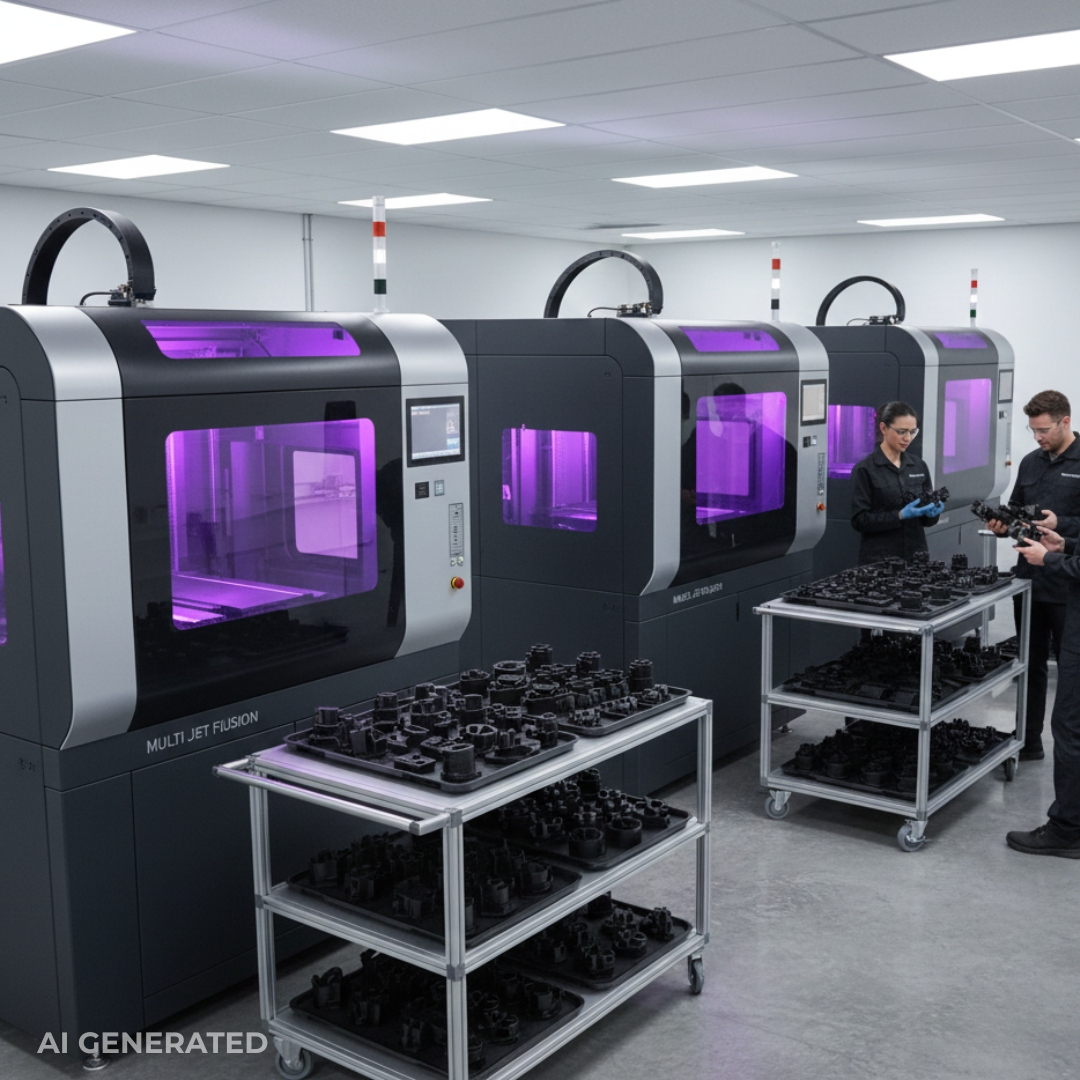
That means consistent, repeatable parts without visible stepping or layered fragility. Dimensional accuracy typically sits around ±0.2 mm for small features, depending on geometry, orientation, and part size, tight enough to replace injection-molded parts in many low-to-mid volume applications where tolerances are not ultra-critical. You can iterate fast without retooling, which saves tens of thousands when you’re still refining your design.
Many engineers discover that a prototype fits perfectly, only to see assembly failures when parts are produced in batches. Small dimensional drift across builds can break snap-fits, cause misalignment, or require costly rework.
At JLC3DP, MJF production runs are tightly controlled for orientation, nesting density, and thermal balance. Critical dimensions are monitored across batches, ensuring parts remain consistent.

MJF for Production Parts: When It Makes Business Sense
Low-to-Mid Volume Production (10–10,000 Units)
If you’re producing anywhere from 10 to 10,000 units, an HP Multi Jet Fusion 3D printed part (MJF) often outperforms injection molding in low- to mid-volume production scenarios.
Cost and ROI Without Tooling
Zero tooling + robust mechanical performance = faster ROI. No waiting weeks for steel molds. No minimum order headaches. Production becomes adaptable, allowing you to scale once the market responds. And if feedback forces a redesign? Update the model, hit re-print. Your product evolves at startup speed, not the old-school manufacturing pace.
Typical users include hardware startups validating early market demand, industrial OEMs producing jigs and fixtures, and robotics teams requiring fast design iteration without tooling delays.
When MJF Is Not the Right Choice
When tolerances become ultra-critical, surface finish must be optically perfect, or volumes exceed tens of thousands, CNC machining or injection molding may become the better choice.
MJF Materials for Functional Production Parts
Close-up of functional MJF PA12 parts showing realistic powder-bed nylon surface texture.
| Material | Key Strengths | Best Functional Uses | Notes for Designers |
| PA12 | High strength, excellent durability, good chemical + heat resistance | Snap-fit enclosures, brackets, jigs & fixtures, mechanical housings | Most common production material, tight tolerances and smooth finish |
| PA12 GB (Glass-Bead Filled) | Increased stiffness, dimensional stability, reduced warping | Alignment guides, structural spacers, flat plates, precision tools | Less flexible, avoid features requiring elasticity |
| TPU | Flexible, resilient, strong tear resistance | Seals, gaskets, bumpers, soft mounts, wearable components | Ideal for shock-absorbing or bendable geometry |
PA12 for End-Use Components
PA12 (Nylon 12) is the most common MJF material for functional parts, offering balanced strength, durability, and chemical resistance. Ideal for snap-fit enclosures, housings, and production components.
Glass-Bead Filled PA12 for Stiff Structures
PA12 GB increases stiffness and dimensional stability, making it suitable for flat, rigid functional parts like fixtures, guides, and precision tools. Avoid elastic features.
TPU for Flexible Functional Parts
MJF TPU provides flexibility, resilience, and tear resistance for functional parts such as seals, gaskets, bumpers, and shock-absorbing components.
MJF Material for Enclosures and Snap-Fit Design
Why MJF Works for Snap-Fit Geometry
MJF material for enclosures maintains elastic strength under repeated stress, enabling reliable snap-fit latches, clips, and locking features in production parts.
For snap-fit applications, MJF material for snap fit provides controlled elasticity and fatigue resistance under repeated stress cycles.
Living Hinges and Flexible Features
MJF PA12 supports living hinges and flexible features that require controlled deflection and fatigue resistance over thousands of cycles.
Design Guidelines for Reliable Assembly
Designing with MJF material for enclosures requires uniform walls and proper tolerances to ensure clean assembly and long-term reliability.
Surface Finish, Assembly, and Post-Processing Considerations
As-Printed Surface Quality
MJF produces a fine, uniform surface suitable for functional enclosures, with consistent texture ready for coating or branding.
Post-Processing for Fit and Appearance
Optional post-processing improves surface finish and dimensional control, helping enclosures meet both functional and cosmetic requirements.
Assembly-Driven Design Tips
Uneven wall thickness, inconsistent surfaces, or poor post-processing can turn a good design into an assembly nightmare.
Maintain uniform wall thickness and proper tolerances to ensure clean assembly, reduce rework, and improve enclosure reliability.
JLC3DP Solution:
We combine MJF printing with optional post-processing, ensuring parts assemble cleanly and meet functional and cosmetic requirements.
Designing Snap-Fits and Enclosures with MJF
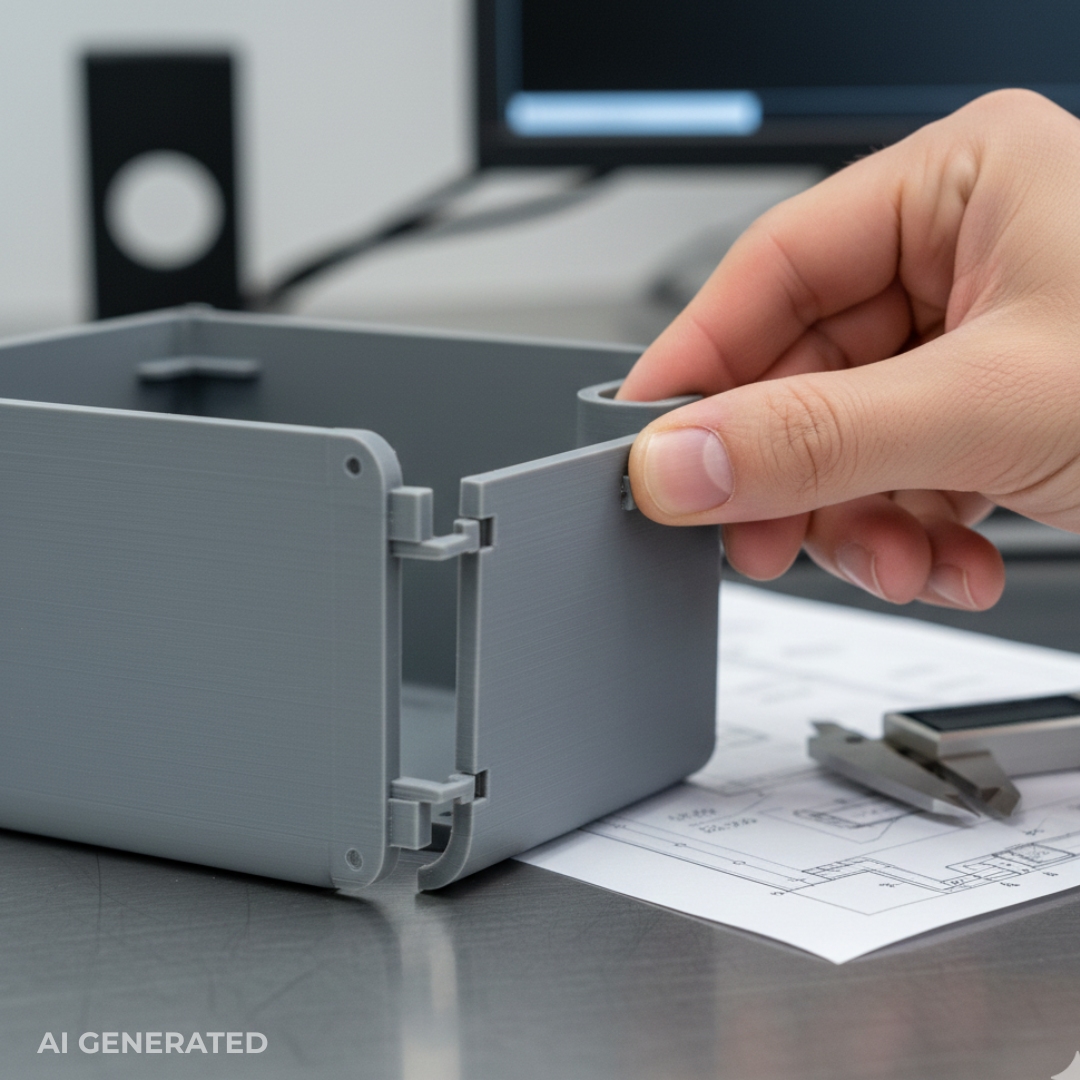
Snap-fits and enclosure components are where MJF really shines. The parts come off the machine tough, dimensionally consistent, and fatigue-resistant, exactly what you want when pieces need to flex, latch, and keep latching after repeated cycles.
Snap-Fit Design Considerations
Snap-fit features survive based on the balance between stiffness and elasticity, and MJF material hits that sweet spot.
Key design rules that keep the latch alive:
1. Retention Features: Hooks and cantilevers need a smooth radius at the base to avoid crack starters.
2. Deflection Limits: Overflexing once = fatigue forever. PA12 tolerates small elastic bends repeated thousands of times.
3. Engagement Depth: Keep latch hooks proportional (≈ 0.5–1.0 mm catch height for handheld-scale devices).
4. Draft Angles: A few degrees of draft helps snap engagement and reduces wear during assembly.
5. Test + Iterate: MJF is fast and affordable, prototypes for fine-tuning geometry take days, not weeks.
If you're designing consumer-grade devices or robotics housings, MJF snap-fits feel like injection-molded parts without the tooling bill.
Wall Thickness & Living Hinges
MJF nylon handles flex, but only when the geometry supports it.
Practical guidelines:
| Feature | Recommended Value | Notes |
| Typical enclosure wall | 1.5–2.5 mm | Thinner = light, but risk of warping on long edges |
| Snap-fit beams | 1.0–2.0 mm thickness | Adjust thickness vs. beam length to control stiffness |
| Living hinges | ≈ 0.3–0.5 mm | Only PA12. PA12 GB is too rigid for lasting hinges |
| Ribs/supports | 1.0–1.2 mm | Reinforce long walls to avoid flex + vibration |
| Inside radii | 0.5 mm minimum | Avoids stress concentrations at hinge roots |
Extra engineering tips:
1. Longer beams = easier snap engagement without excessive force.
2. Maintain constant wall thickness where possible to improve print uniformity.
3. Use fillets over sharp corners to extend fatigue life.
MJF gives you freedom: agile enclosures + durable mechanisms in one print.
At JLC3DP, we print production-grade components with tight tolerance control, repeatable quality, and pricing built for scaling, even if you need 10 parts or 3,000.
Upload your design, get instant pricing. No waiting. Just a quote that lets you move forward today.
When to Choose MJF Over CNC or Injection Molding
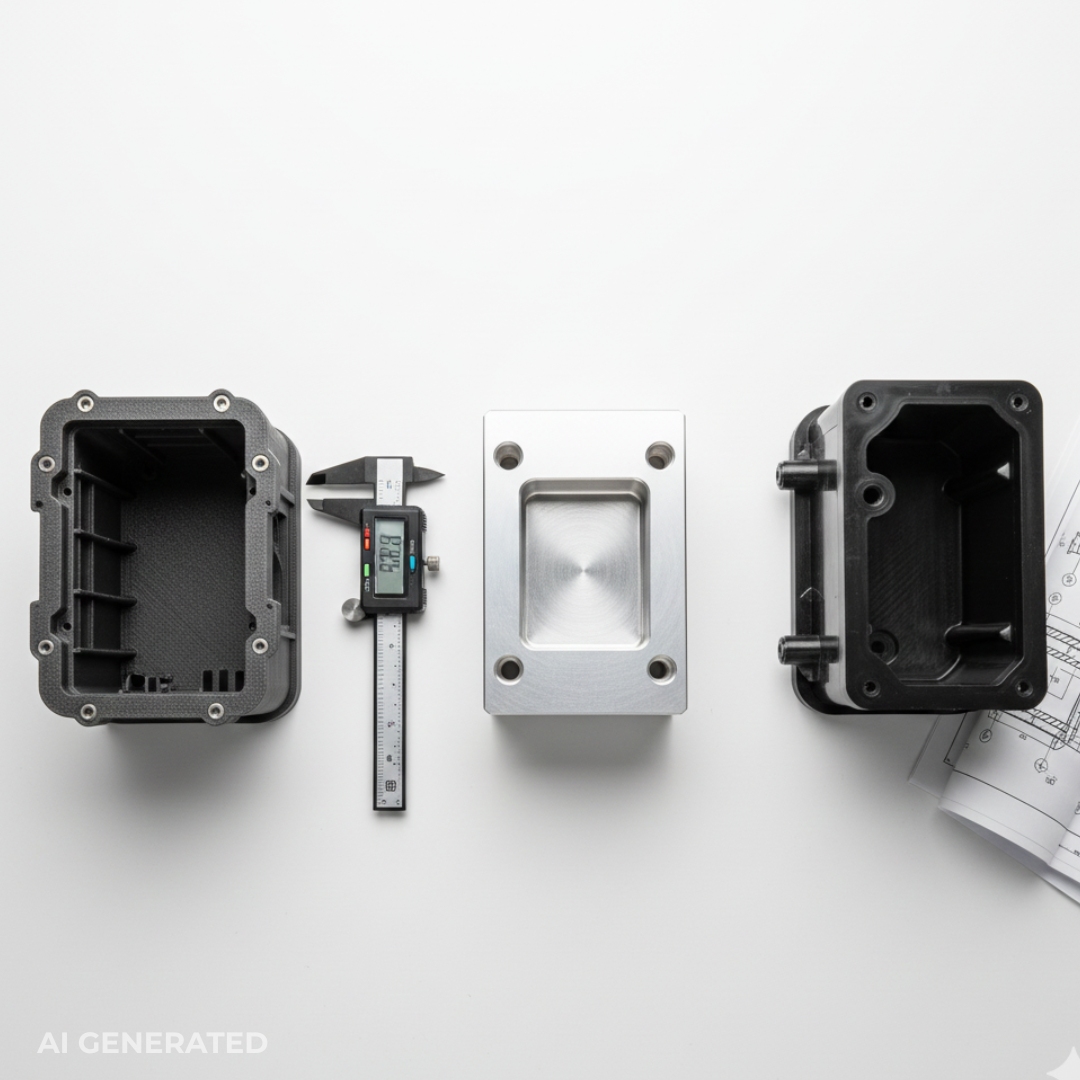
There’s a point in every product journey where CNC or injection molding could be effective, but MJF strikes a smarter balance between performance, speed, and cost.
Choose MJF when you need:
1. Production-grade parts without tooling. Skip the five-figure mold cost and still get finished components
2. Complex internal features or lightweighting. Lattices, undercuts, internal channels, geometry that CNC simply can’t reach
3. Small-to-mid production volumes. The break-even math often favors MJF for 10–3,000 units
4. Fast iteration cycles. Validate ergonomics, tolerances, and assembly features while still refining the product
5. Functional polymers with good mechanical performance. Impact-resistant housings, gears, snap enclosures, all feasible
Where CNC wins:
1. Tightest tolerances on metal
2. Optical-level surface finish
3. Structural loads requiring metal properties
Where molding wins:
1. Volumes in the tens of thousands+
2. When a perfect cosmetic texture is mandatory
If your product needs real-world durability now, not after tooling, MJF keeps projects moving.
You already know MJF can take your prototype and turn it into a real product.
Now you just need a manufacturer that won’t slow you down.
JLC3DP delivers:
1. Production strength Multi Jet Fusion parts
2. post-processing fit
3. Same-day quoting + controlled lead times
4. Support from real engineers (not automated scripts)
If your product needs real-world durability now, not after tooling, MJF keeps projects moving.
FAQ about MJF Production Parts
Q1: How strong are MJF parts compared to injection-molded plastics?
PA12 MJF typically achieves approximately 80–90% of injection-molded PA12 tensile strength, with more isotropic mechanical properties than many additive processes.
Q2: Can I use MJF parts outdoors?
Yes. PA12 offers good moisture resistance and moderate UV stability. For extended outdoor exposure beyond 12–24 months, surface coating or UV stabilization is recommended.
Q3: What tolerances can I expect?
Typically ±0.2 mm + 0.2% of nominal dimension. Critical faces can be post-machined after printing.
Q4: Are MJF snap-fits reliable?
Absolutely. MJF material for snap fit, combined with tough nylon and consistent layer bonding, supports thousands of flex cycles when designed correctly.
Q5: What about surface finish?
Parts come out with a fine, matte texture. Media blasting or vapor smoothing makes them consumer-ready.
Q6: What materials can I choose?
Most functional parts use:
1. PA12 (balanced performance)
2. PA12 GB (glass-bead reinforced, higher stiffness)
Q7: Can MJF replace CNC for all functional prototypes?
No. Metal strength, optical polish, and ultra-tight fits remain the domain of CNC technology. However, for 75% of functional plastic parts, MJF is faster and more efficient.
Keep Learning
PLA vs PETG vs ASA: Best 3D Printing Filament for Outdoor Use
If you've ever watched a 3D printed garden hook sag in the sun or a cold snap crack your custom outdoor fixture, you already know: not all filaments are built for the elements. Choosing the best 3D printing filament for outdoor use isn't just about surviving the occasional drizzle. It's about UV exposure, temperature swings, moisture resistance, and long-term strength. And let's be real, most people don't want to reprint every few months just because they picked the wrong plastic. In this guide, we'll......
ABS Temperature Resistance: How Hot Can ABS Withstand?
Key Takeaways ABS heat resistance is defined by Tg and HDT, not melting point. Typical ABS grades have a Tg around 100–110℃ and HDT around 85–95℃. JLC3DP ABS reaches 98°C HDT under its published test conditions, but actual part performance depends on load, geometry, orientation, and exposure time. ABS offers higher heat resistance than PLA and PETG, while ASA provides similar heat performance with better outdoor durability. PC-ABS and PC are options when ABS is not enough. PC-ABS balances heat resista......
Is PETG Toxic to Print? Fumes, Risks & Safety Guide
Key Takeaways PETG is generally considered a lower-emission 3D printing material compared to ABS and ASA, but it does produce VOCs and ultrafine particles during printing. The odor during PETG printing is typically mild, some people barely notice it, others describe a faint warm-plastic smell. Low odor doesn't mean zero emissions. Ventilation is still a sensible precaution. PETG food safety is complicated, the material itself may be food-grade in some formulations, but the printing process introduces ......
Top 5 Heat-Resistant 3D Printing Filaments Compared
When Regular Filament Just Doesn’t Cut It You’ve 3D printed a functional bracket for a car engine bay. It fits perfectly, looks great, and then warps into a banana-shape after a week under the hood. That’s the danger of underestimating heat. If you're building automotive components, enclosures near motors, molds, or even kitchenware, using the wrong filament can lead to deformation, brittleness, or outright failure when exposed to heat. So, you already know the solution: Choosing the right heat-resist......
PLA Temperature Resistance: Heat Resistance, Softening & Melting Point
Key Takeaways PLA typically starts losing rigidity around 55–65℃ (Tg) and melts at approximately 150–180℃. PLA can deform and creep long before it melts, so melting point is not a practical service-temperature limit. Actual PLA deformation depends on temperature, load, geometry, print orientation, and exposure time. Standard PLA becomes increasingly risky above 50–60℃ and is generally unsuitable for sustained 70–80℃ applications. PLA+ heat resistance varies by formulation. For higher-temperature appli......
PETG Temperature Resistance: Limits & Comparison with PLA/ABS/ASA
Key Takeaways Standard PETG is best suited for continuous use below ~60℃; performance can decline as temperatures approach 70℃. PETG typically has a Tg of ~75–85℃ and an HDT of ~65–75℃, depending on the material grade and test conditions. HDT is not a maximum service temperature—load, print orientation, wall thickness, geometry, and exposure time all affect real-world performance. PETG offers better heat resistance than PLA but lower heat resistance than ABS, ASA, PA12-CF, PC, and PEEK. For sustained ......