316L Stainless Steel 3D Printing: Properties, Methods & Applications
19 min
- Can You 3D Print Stainless Steel?
- Types of Stainless Steel for 3D Printing: 316L vs 304 vs 17-4 PH
- Advantages of 316L Stainless Steel as a 3D Printing Material
- Mechanical Properties of 3D Printed 316L
- 3D Printing Metal Production Process
- 3D Printing Industry Application of 316L Stainless Steel
- FAQs About 316L Stainless Steel 3D Printing
As a representative austenitic stainless steel, 316L stainless steel is well-known for its excellent corrosion resistance, strength and durability, and has become a key metal material in the field of 3D printing. 316L stainless steel can be used to print various parts with complex structures and is widely used in aerospace, medical equipment, petrochemical and other industries. In this article, we review the advantages and typical mechanical properties of stainless steel 3d printing, explain the main manufacturing processes, compare SLM with binder jetting, discuss common applications.
Source:https://am-material.com/industry-news/preparation-and-application-of-316l-stainless-steel-powder/
Can You 3D Print Stainless Steel?
Yes, you can 3D print stainless steel, and 316L is one of the most popular choices. But the printing method decides whether you end up with a real stainless steel part.
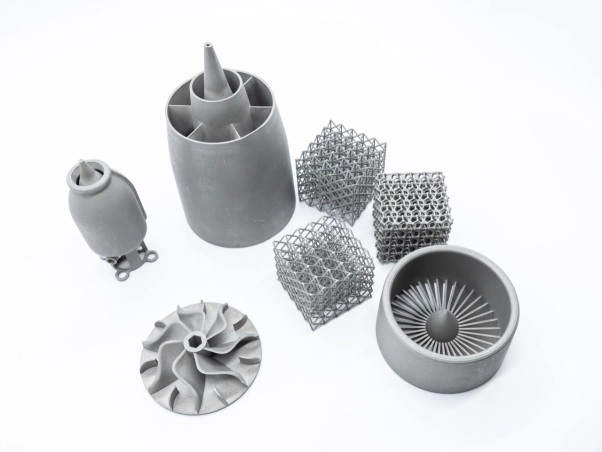
Industrial metal processes print real stainless steel. Selective laser melting (SLM/DMLS), binder jetting (with sintering), and electron beam melting (EBM) all start from stainless steel powder and fuse it into solid metal. The result is a genuine 316L part with metallic properties, which is why these processes are used for implants, tooling, and aerospace components.
Desktop FDM is different. Metal-filled filament is mostly stainless steel powder held together by a plastic binder. Straight off the printer, the part is a metal-plastic composite, not stainless steel. It only becomes metal after debinding and sintering in a furnace, and it is usually less dense and less accurate. For prototypes, jigs, and fixtures that is often enough, but it is not a substitute for a dense functional part. For more information about feedstock composition, printer compatibility, debinding, and sintering, see our guide to metal filament for 3D printers.
So yes, stainless steel can be 3D printed today, but it is far more common as an industrial service than a home hobby. Home setups need filament, a debinding step, and a sintering furnace, so for most functional 316L parts the practical route is to send your design to a manufacturer with industrial equipment.
Types of Stainless Steel for 3D Printing: 316L vs 304 vs 17-4 PH
Not every stainless steel is equally easy to print. Three grades come up most often: 316L, 304 (usually 304L), and 17-4 PH. 316L and 17-4 PH are the most common in powder bed fusion, while 304L is available but less often specified.
What does the "L" in 316L mean? The "L" stands for low carbon. Standard 316 contains more carbon, which can form chromium carbides during welding and heat exposure and reduce corrosion resistance. 316L keeps carbon low, which helps in 3D printing, where each layer is melted and rapidly cooled. It also contains molybdenum, which improves resistance to chlorides and pitting.
| Property | 316L | 304 / 304L | 17-4 PH |
|---|---|---|---|
| Type | Austenitic | Austenitic | Precipitation-hardening martensitic |
| Key alloying elements | Cr, Ni, Mo | Cr, Ni (no Mo) | Cr, Ni, Cu |
| Corrosion resistance | Excellent, including seawater and chemicals | Good in general use | Moderate |
| Strength | Moderate, very ductile | Moderate | High after heat treatment |
| Heat treatment | Optional stress relief | Optional stress relief | Needed to reach full strength |
| Magnetic | Generally non-magnetic | Generally non-magnetic | Magnetic |
| Typical uses | Medical, marine, chemical, food | Food equipment, general fittings | Tooling, aerospace, high-load parts |
Note
JLC3DP currently offers 316L 3D printing services (not for medical or food use).
How to Choose
- Pick 316L when corrosion resistance, ductility, or biocompatibility matter most: implants, surgical tools, valves, marine and chemical parts.
- Pick 304L for general-purpose parts in mild environments where the extra corrosion resistance of molybdenum is not needed.
- Pick 17-4 PH when you need high strength and hardness and can accept lower corrosion resistance, such as tooling, fixtures, and structural parts.
If you are unsure, 316L is the safest starting point: it is widely available, well documented, and forgiving to print. Here is why 316L is usually the default choice.
Advantages of 316L Stainless Steel as a 3D Printing Material
1. Corrosion resistance: 316L stainless steel has high corrosion resistance, especially for seawater, organic acids, alkalis, salts and many inorganic compounds, which enables the printed products to maintain a good service life in a variety of harsh environments.
2. High strength and heat resistance: After 3D printing, 316L stainless steel can still maintain high strength and hardness as a whole, and has good high temperature strength and lasting strength, which is suitable for use in high temperature environments.
3. Biocompatibility: 316L stainless steel will not cause obvious rejection reactions when implanted in the human body for a long time, and it is not easy to cause allergies, so it is widely used in the field of medical implants.
4. Excellent printing performance: 316L stainless steel powder is easy to melt, and the microstructure after cooling and solidification is uniform and dense, which is conducive to ensuring the mechanical properties and dimensional accuracy of 3D printed parts.
5. Green and environmentally friendly: Stainless steel 316L produces less waste during production and use, which is in line with the concept of modern industry pursuing sustainable development.
These advantages only make sense relative to an alternative. For lightweight structures, heat dissipation, or high-volume CNC machining, aluminum alloys often win: 316L is about three times denser, conducts roughly one-tenth as much heat, and takes longer to machine. See how stainless steel compares with aluminum for a side-by-side look at strength, weight, corrosion, finishing, and finished-part cost.
Mechanical Properties of 3D Printed 316L
What is the typical UTS of 3D printed 316L? For JLC3DP's SLM 316L and binder jetting (BJ) 316L, tensile strength is about 560–600 MPa, which is above the 485 MPa minimum specified for annealed wrought 316L. Yield strength depends heavily on the process, and ductility is lower or higher depending on how the part is made.
| Property | Wrought 316L (annealed, ASTM A240 minimum) | JLC3DP SLM 316L | JLC3DP BJ-316L |
|---|---|---|---|
| Tensile strength (UTS) | 485 MPa | 600 MPa | 561 MPa |
| Yield strength (0.2%) | 170 MPa | 400 MPa | 219 MPa |
| Elongation | 40% | 30% | 50% |
| Hardness | 95 HRB max | 28 HRC (after heat treatment) | 69 HRB |
| Density | 7.99 g/cm³ | 7.8 g/cm³ | 7.8 g/cm³ |
Note
Wrought values are the minimums required by ASTM A240, not typical measured values. Typical wrought values are usually higher, so treat this column as a baseline rather than a head-to-head comparison. JLC3DP values are the figures published on its material pages.
1How to Read the Table
- Strength: Both printed grades meet or exceed the wrought UTS minimum. SLM has the higher yield strength (400 MPa vs 219 MPa), so it suits parts that carry load without deforming.
- Ductility: BJ-316L stretches more before breaking (50% vs 30%), which suits parts that may bend or take impact.
- Hardness: The two hardness figures use different scales (HRC and HRB) and different conditions, so they are not directly comparable.
- Density: Fully dense 316L has a density of about 7.99 g/cm³. 3D-printed parts are slightly less dense due to residual small pores, and porosity is one of the main reasons mechanical properties vary between builds.
2Which Standards Apply?
ASTM A240 covers wrought 316L plate, sheet, and strip, and it is where the minimum values above come from. For additive manufacturing, ASTM F3184 is the specification for 316L made by powder bed fusion, and it sets requirements for powder, heat treatment condition, and mechanical testing. When ordering 3D-printed 316L stainless steel parts, pay attention to the datasheet—specifically the testing standard, build orientation, and heat treatment condition.
3Why Printed Values Vary
Final properties vary based on the printing process, build orientation, and post-processing:
- Heat treatment (stress relief/annealing) alters strength and ductility.
- HIP can reduce or close internal porosity.
- Batch testing: For critical parts, request a test certificate for your actual batch rather than relying on typical values.
3D Printing Metal Production Process
1Selective Laser Melting (SLM)
Selective laser melting (SLM) is the most common metal 3D printing technology, accounting for about 80% of the metal 3D printer market, and is also a common printing method for 316L stainless steel. This technology uses a laser as the energy source, and scans the metal powder bed layer by layer according to the path planned in the slice model. The scanned metal powder is melted and solidified to finally obtain the metal parts designed by the model. SLM 3D printing technology can directly form metal parts that are nearly fully dense and have good mechanical properties. Among them, steel and steel alloys are the most popular materials for SLM 3D printing machines and are widely used in business.
The 316L stainless steel powder used in SLM is typically produced through gas atomization. Its fine, spherical particles (typically 15–53 μm) offer good flowability, helping the recoater spread uniform powder layers across the build platform. These powder characteristics contribute to consistent printing quality.
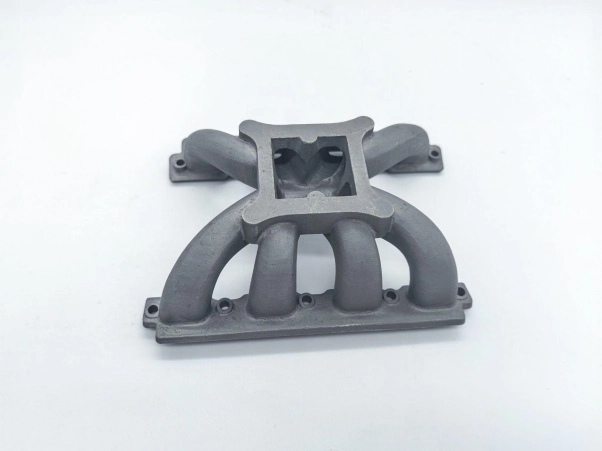
According to JLC3DP's published material data, SLM 316L has a tensile strength of 600 MPa and a yield strength of 400 MPa, making it suitable for functional components that require high strength and resistance to deformation.
However, SLM requires support structures for certain overhangs and complex geometries. Support removal and additional post-processing should also be considered when planning production.
2Binder Jetting
Binder jetting is another powder-bed 3D printing technology. Instead of melting powder with a laser, an inkjet print head sprays a liquid binder onto the powder to bond the particles together layer by layer. This creates a fragile "green part"—as brittle as dry clay. A critical sintering step then follows to burn off the binder and fuse the metal into a solid part. Binder jetting is widely seen as the most promising method for mass-producing metal 3D-printed parts, offering properties similar to traditional metal injection molding.
316L stainless steel is also compatible with binder jetting. Compared with SLM, BJ does not require conventional printing support structures, making it suitable for complex geometries and parts with internal channels. However, dimensional shrinkage during sintering must be accounted for in the design and manufacturing process.
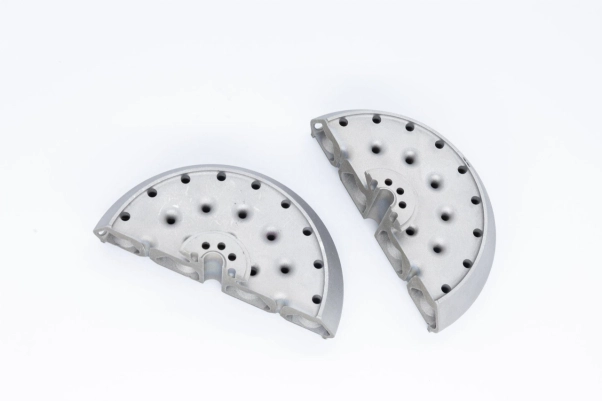
According to JLC3DP's published material data, BJ-316L has a tensile strength of 561 MPa and an elongation of 50%. Compared with SLM 316L, it has lower yield strength but higher elongation. Its support-free printing process and batch production potential also make it an attractive option for cost-conscious manufacturing. Learn more about BJ vs SLM.
BJ-316L vs. SLM-316L: A JLC3DP Engineer's Guide
For projects where production cost, lead time, and design complexity are key considerations, JLC3DP BJ-316L is the preferred option. It is particularly suitable for parts with internal cavities or hollow structures, small to medium-sized parts under 100 mm, and small-to-medium batch production.
Choose JLC3DP SLM 316L when parts require higher dimensional accuracy and density, or when producing large, custom components over 100 mm.
Neither process is inherently better than the other. They complement each other by meeting different part requirements and production needs.
3Metal Filament Extrusion (Fused Deposition Modeling/FDM)
FDM is widely used to print thermoplastic filaments. In metal printing, FDM 3D printing is combined with stainless steel powder-injected filaments, which are usually composed of about 80% metal and 20% plastic mixture. After printing is completed, post-processing is required to remove the plastic to obtain a metal part similar to metal injection molding, but this may result in a volume loss of up to one-third of the part. Wire is not the only material option for FDM printing. Combining stainless steel particles and metal polymer composites, the prototype model is first printed, and then the final dense stainless steel metal part is manufactured through degreasing and sintering processes.
4Combined Metal Deposition
The combined metal deposition technology is similar to FDM. It uses metal wire material to melt the wire by induction and other methods, and then controls the surface tension of the droplets on the nozzle under the action of electrostatic force or magnetic field, and deposits the metal droplets on the forming platform. This technology is closer to traditional metal injection molding (MIM) technology. In addition, post-processing is required to remove the binder and heat treatment in the furnace for final sintering. This technology is mainly used to manufacture steel prototype parts. Typical applications include molding tools, stamping dies, nozzles, impellers, fixtures, and heat exchangers.
5Powder Bed Electron Beam Melting (EBM)
Electron beam melting (EBM) is another powder bed melting technology. Its working principle is similar to selective laser melting (SLM), except that it uses a higher temperature electron beam instead of a laser as an energy source. The recoater applies a layer of powder to the build platform, and then the electron beam selectively melts each cross-section of the powder. After each layer is completed, the print platform plate lowers, and the layers will be stacked to form an object. EBM is much faster than SLM, but the surface smoothness and precision of the manufactured parts are not as good as SLM. In addition, the EBM process is carried out in a vacuum chamber, which reduces material impurities that may cause defects.
6Wire Arc Additive Manufacturing (WAAM)
Wire arc additive manufacturing (WAAM) is a directed energy deposition process that uses an electric arc to melt metal wire, which is typically deposited layer by layer by a robotic arm. WAAM can be used with 316L stainless steel and is primarily suited to large, relatively simple near-net-shape components, structural parts, and repair applications.
Compared with SLM, WAAM generally offers higher deposition rates and fewer build-size limitations, but it provides lower feature resolution and a rougher as-built surface. CNC machining is commonly required to achieve final dimensions and tolerances. Residual stress and thermal distortion must also be managed during deposition.
WAAM is not normally the preferred route for small, high-precision parts or components with fine internal channels. Its advantages are most relevant when producing large parts where extensive machining from solid stock would require substantial time and material removal.
3D Printing Industry Application of 316L Stainless Steel
1316L Medical Device 3D Printing
316L stainless steel is widely used in medical device 3D printing due to its excellent corrosion resistance, good mechanical properties, and biocompatibility. It is suitable for medical components that require durability, repeated cleaning, and sterilization. Its compatibility with metal 3D printing also enables the production of customized parts with complex structures.
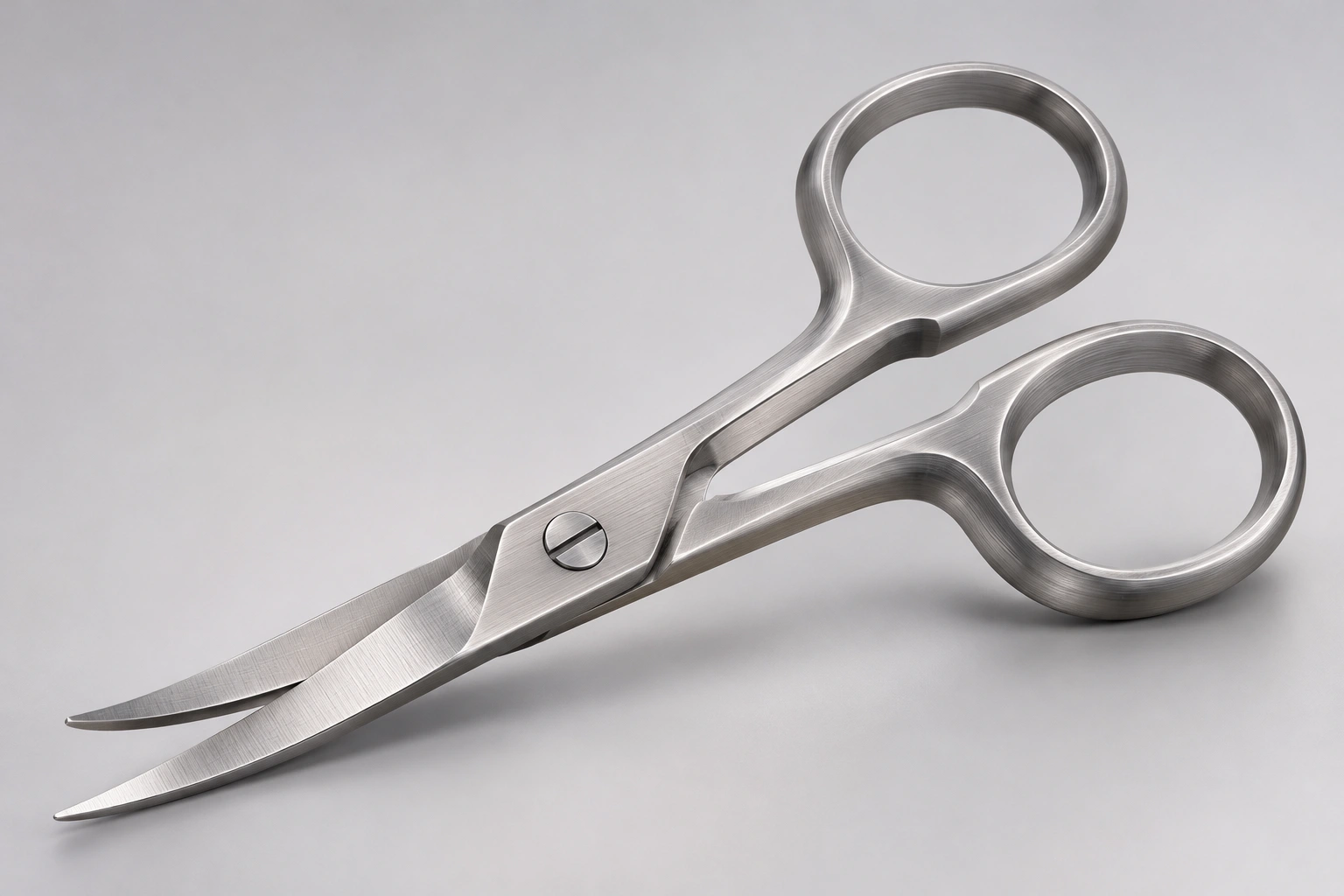
Typical applications include:
- Surgical instruments: 316L stainless steel is used to manufacture surgical tool components, forceps parts, and instrument handles that require corrosion resistance and repeated sterilization.
- Medical equipment: Connectors, housings, and fluid-handling components can be manufactured using 316L stainless steel to provide durability and corrosion resistance.
- Customized medical components: Metal 3D printing allows the production of customized components with complex geometries to meet specific design and functional requirements.
Post-processing and certification requirements:
Depending on the intended application, medical device components may require support removal, CNC machining, polishing, electropolishing, cleaning, and passivation. Thorough cleaning is particularly important for removing residual powder from internal channels and complex structures. Sterilization processes must also be validated for the final device.
For medical applications, relevant standards and requirements may include ASTM F3184 for powder bed fusion 316L, ISO 10993 for biological evaluation, and ISO 13485 for medical device quality management systems. Regulatory requirements depend on the device classification and intended use. Using 316L alone does not automatically make a printed part suitable for medical use.
2316L Industrial Applications
316L stainless steel is widely used in industrial equipment exposed to moisture, chemicals, salts, and other corrosive environments. Its excellent corrosion resistance, strength, and durability make it suitable for manufacturing heavy-duty industrial components. Metal 3D printing further expands its applications by enabling the production of complex structures that are difficult to manufacture using conventional methods.
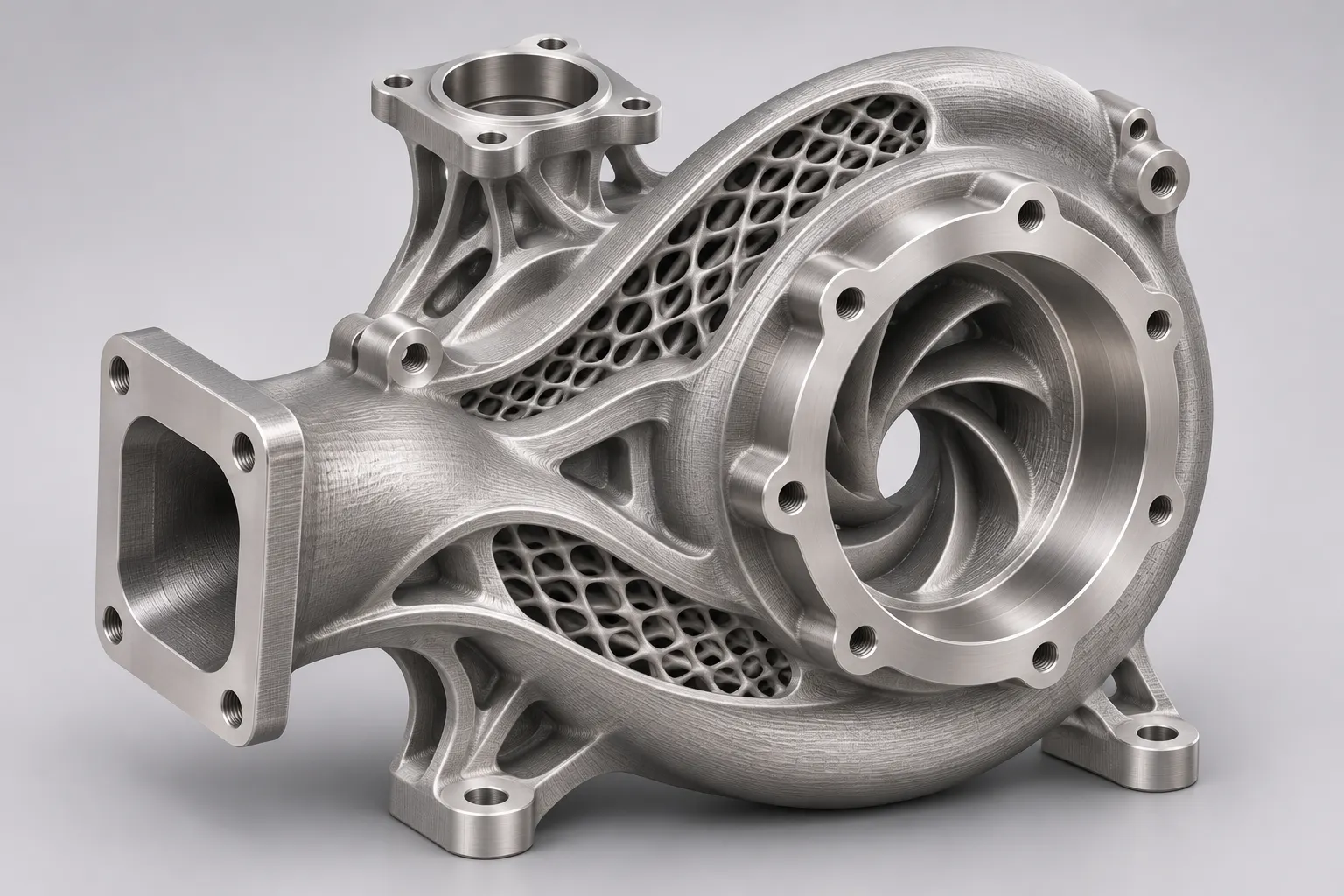
Typical applications include:
- Aerospace: 316L stainless steel can be used to manufacture complex components such as hollow brackets, grid structures, and fluid system components that require corrosion resistance and reliable mechanical properties.
- Automotive manufacturing: 316L is used for components such as exhaust system parts, turbocharger housings, and other parts requiring heat and corrosion resistance.
- Chemical processing equipment: Its corrosion resistance makes 316L suitable for manufacturing pipes, valves, reactor components, and other equipment exposed to chemicals.
- Pumps and valves: Impellers, valve bodies, connectors, and pump components can benefit from 316L's corrosion resistance and the geometric freedom of metal 3D printing.
- Marine equipment: 316L components are used in marine environments where resistance to seawater corrosion is important.
Post-processing and quality requirements:
Depending on the application, industrial 316L parts may undergo support removal, stress-relief heat treatment, hot isostatic pressing (HIP), CNC machining, polishing, or passivation. CNC machining is often required for precision interfaces, threaded connections, and sealing surfaces. HIP may be used when reducing internal porosity and improving mechanical performance are important.
For critical industrial components, quality control may include material composition verification, dimensional inspection, density testing, mechanical testing, and corrosion testing. ASTM F3184 is relevant to 316L stainless steel manufactured by powder bed fusion, while specific quality and certification requirements depend on the industry and component's operating conditions.
With the increasing maturity of 3D printing technology, the application scenarios of 316L stainless steel will be further expanded to provide more efficient, precise and innovative solutions for various industries. If you are looking for professional 316L stainless steel 3D printing services, JLC3DP can support you and help you achieve a one-stop solution from design to high-performance part manufacturing.
FAQs About 316L Stainless Steel 3D Printing
Q: Is 3D-printed 316L as strong as wrought 316L?
It can meet or exceed some wrought-material requirements, but the result depends on the process and testing condition. JLC3DP publishes a tensile strength of 600 MPa for SLM 316L and 561 MPa for BJ-316L, compared with the 485 MPa minimum for annealed wrought 316L under ASTM A240. However, this is not a direct like-for-like comparison: the wrought figure is a standard minimum, while printed values depend on build orientation, heat treatment, porosity, and specimen testing. For critical parts, request batch-specific test documentation.
Q: Is 3D-printed 316L fully dense and pressure-tight?
Not automatically. Well-optimized SLM 316L can approach full density, while binder-jetted parts are densified during sintering and may retain some residual porosity. Density also varies with geometry, process parameters, and post-processing. If your part must hold pressure or contain fluid, specify leak-tightness and inspection requirements before production. HIP, CNC machining, and appropriate testing may be required; the material name alone does not guarantee a pressure-tight part.
Q: Does 3D-printed 316L have the same corrosion resistance as wrought 316L?
3D-printed 316L can provide excellent corrosion resistance, but it should not automatically be assumed to perform identically to wrought material in every environment. Surface roughness, residual porosity, heat treatment, contamination, and post-processing can affect pitting and crevice corrosion. Passivation or electropolishing may improve surface condition and cleanability. For chemical, marine, or other severe service, evaluate the actual corrosive medium, temperature, and surface finish rather than relying only on the 316L grade.
Q: Does 3D-printed 316L require heat treatment?
It depends on the process and application. SLM parts may require stress relief or other heat treatment to reduce residual stress and achieve the required balance of strength and ductility. HIP may be specified when reducing internal porosity is important. Binder-jetted parts require debinding and sintering to become metal parts; these are essential manufacturing steps, not optional enhancements. The required condition should be stated in the drawing, purchase specification, or RFQ.
Q: Can 3D-printed 316L be CNC machined and polished?
Yes. 3D printed 316L parts can be CNC machined, drilled, tapped, polished, electropolished, and passivated, subject to a review of the part geometry and manufacturing route. CNC machining is commonly used for precision holes, threads, datums, mating surfaces, and sealing interfaces. Identify these features on a 2D drawing and allow sufficient machining stock where required. Polishing or electropolishing can improve surface quality, but neither should be treated as a substitute for dimensional machining.
Q: Can 3D-printed 316L be used for food-contact or hygienic equipment?
Potentially, but the finished component must meet the applicable food-contact and hygienic-design requirements. As-built surfaces and inaccessible internal channels may retain powder, contamination, or crevices that are difficult to clean. Specify requirements for powder removal, surface roughness, passivation or electropolishing, cleaning, and inspection. Material selection alone does not establish compliance for the finished part.
Q: How much does 316L stainless steel 3D printing cost?
There is no reliable universal price per gram or per cubic centimeter. Cost depends on part geometry, material consumption, process selection, build utilization, quantity, support removal, sintering, heat treatment, machining, finishing, inspection, and certification. Binder jetting may be economical for suitable small parts and batches, while SLM may be preferable for larger parts or different performance requirements. Uploading the same CAD model and specifications for both routes is the best way to obtain a meaningful comparison.
Keep Learning
316L Stainless Steel 3D Printing: Properties, Methods & Applications
As a representative austenitic stainless steel, 316L stainless steel is well-known for its excellent corrosion resistance, strength and durability, and has become a key metal material in the field of 3D printing. 316L stainless steel can be used to print various parts with complex structures and is widely used in aerospace, medical equipment, petrochemical and other industries. In this article, we review the advantages and typical mechanical properties of stainless steel 3d printing, explain the main ......
Aluminum 3D Printing: Processes, Alloys, and Applications
Aluminum 3D printing is a process that builds metal parts layer by layer from a digital 3D model. Laser powder bed fusion (LPBF), commonly referred to as SLM or DMLS, is the main method used to produce aluminum components. Compared with conventional manufacturing, aluminum 3D printing enables lightweight lattice structures, integrated features, and geometries much more easily. However, from material selection to post-processing, every step affects the final part's quality, properties, and cost. This g......
3D Printing Titanium: Technologies and Applications
Titanium is known for its high strength-to-weight ratio, biocompatibility, and resistance to extreme environments. These properties make it ideal for applications ranging from aerospace components to medical implants. However, traditional manufacturing methods often result in a lot of material waste and limited design possibilities, which is where 3D printing comes in, changing the way titanium parts are made. Additive manufacturing minimizes material waste by building components layer by layer, while......
Understanding 3D Printed Titanium for Industrial Applications
If you are looking to produce parts that are lighter, stronger, or have complex designs that traditional methods cannot achieve, then you should consider using Titanium. It is a key material in advanced manufacturing, offering a great balance of strength and lightweight, is resistant to corrosion, and is not harmful or toxic to living tissue. Because of these qualities, Titanium is often chosen for high-performance uses where component integrity is critical. Traditional manufacturing, however, often l......
Complete Guide to Selective Laser Melting Materials
Additive manufacturing continues to redefine industrial production, offering unmatched design freedom and material efficiency. One of the most advanced forms of metal 3D printing is Selective Laser Melting (SLM) , a technology that enables the fabrication of strong, complex components directly from digital files. For industries such as aerospace, medical, and automotive 3D printing, SLM delivers durable, high-performance parts using specialized SLM materials. This guide offers a detailed overview of w......