Aluminum vs. Stainless Steel: Choose a 3D Printing Route
22 min
- What Is Aluminum?
- What Is Stainless Steel?
- Aluminum vs. Stainless Steel: 7 Key Differences
- Aluminum vs. Stainless Steel for Metal 3D Printing
- Aluminum vs. Stainless Steel: Which Is More Cost-Effective?
- Applications of Aluminum and Stainless Steel
- How to Choose Between Aluminum and Stainless Steel
- Aluminum and Stainless Steel FAQs
Key Takeaways
- Stainless steel offers higher hardness, stiffness, and better resistance, while aluminum is lighter and conducts more heat.
- Neither material is always stronger. Strength depends on the alloy, temper or heat treatment, and manufacturing process.
- In the case of metal 3D printing, it also affects the quality of the parts and cost. The two technologies, SLM and Binder-jetting have different support needs, finishing steps, build sizes and costs.
Real applications of Aluminum and stainless steel are quite different. Aluminum is preferred for lightweight parts and heat dissipation, while stainless steel is better for the applications requiring higher stiffness, hardness, and resistance to many corrosive environments. The best choice depends on the alloy, operating conditions, and manufacturing process.
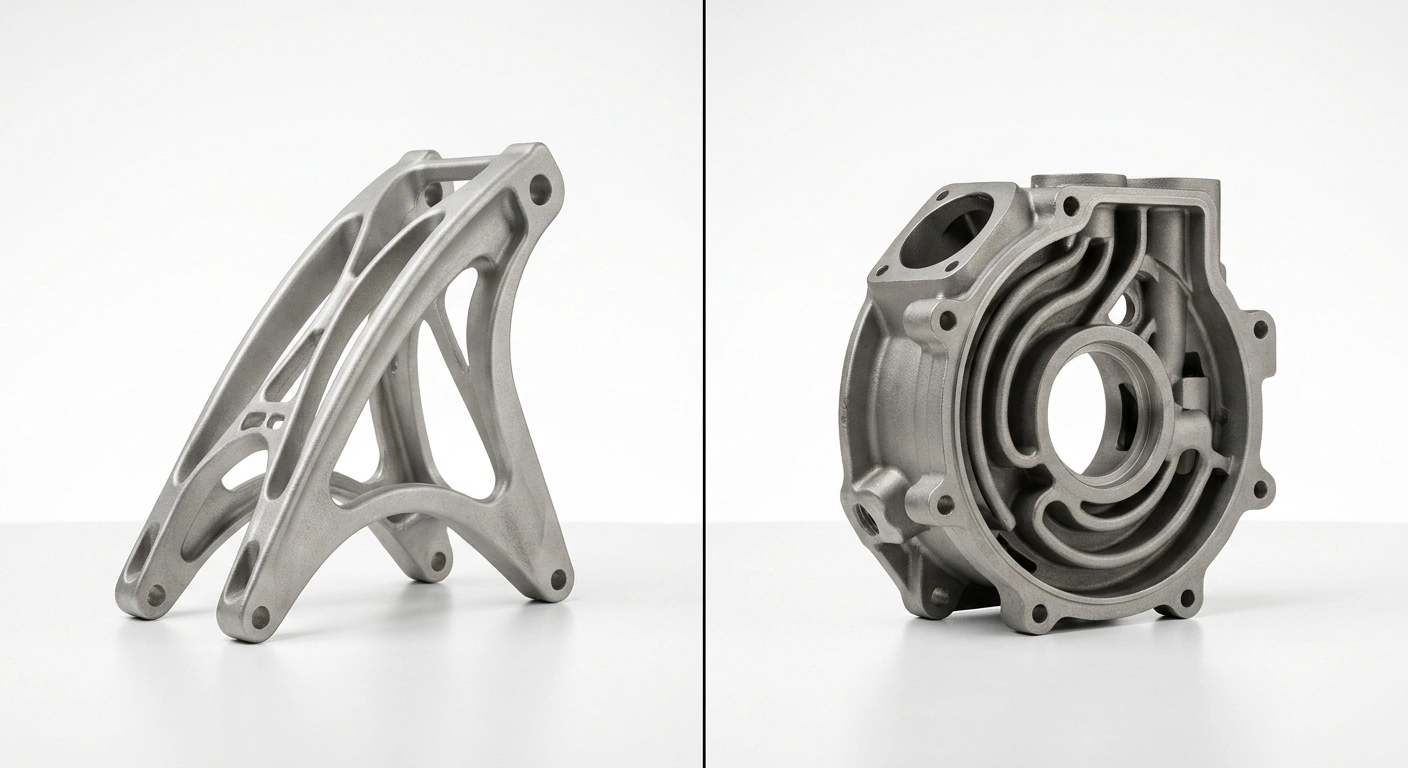
Aluminum and stainless steel are used in manufacturing a lot, but they behave differently during machining and in service.
For the most part, choosing the material isn’t rocket science. Though, the choice gets less obvious when a part needs a mix. Alloy grade, manufacturing process, and the cost of finishing the part can all affect this choice. That's where a guide like this becomes useful.
What Is Aluminum?
Basic Properties
Aluminum is light, about 2.70 g/cm³, and stiff enough for most jobs at around 69 GPa. Heat moves through it fast, over 150 W/m·K in a lot of alloys. Leave a clean surface out in the air and it grows a thin oxide skin almost immediately, and that skin is why it doesn’t rust the way steel does. The pure metal is soft, though. Anything structural is an alloy, with magnesium, silicon, copper or zinc added to get the strength up.
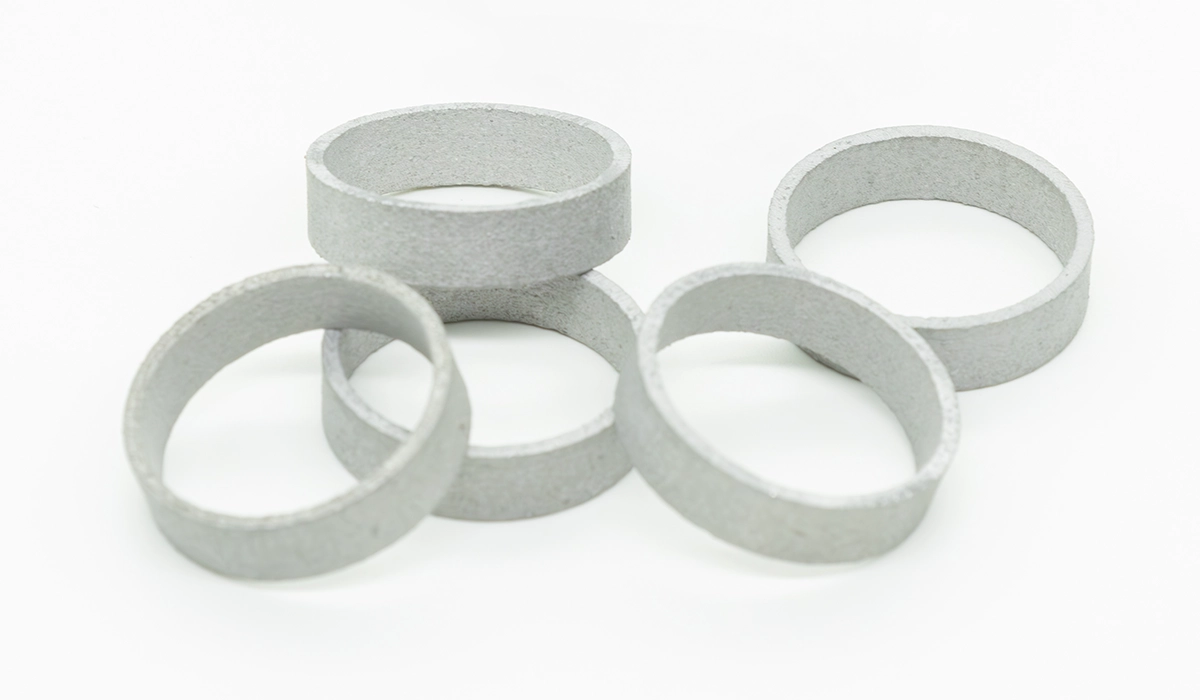
Common Aluminum Alloys
- 6061 is the all-purpose one. It machines easily, welds without much fuss, and anodizes well. In the T6 condition the yield strength comes in around 275 MPa.
- 7075 is a much stronger alloy because it is used in aerospace and high performance parts. The cost you pay for that is weldability, and it's not as resistant to corrosion as most other grades.
- 5052 contains Magnesium. It is ideal for sheet metal and marine applications, as it is flexible and resistant to salt water.
- AlSi10Mg is silicon-rich. It is used extensively in the casting and metal 3D printing shops because it melts and flows well.
Aluminum in Metal Manufacturing
Few metals are easier to machine. Cycle times stay short and tools last. Aluminum can also be extruded, formed, cast and printed. The bad sides are that it's softer than steel, and it wears out more quickly. It also changes its characteristics with temper and thermal history, which may mean that the welded or heat-affected zone may be weaker than the base material. For printed parts, see our guide to aluminum 3D printing.
What Is Stainless Steel?
Basic Properties
Stainless steel is iron-based. Density sits near 8.0 g/cm³ and the elastic modulus is around 193 GPa. Heat doesn’t travel through it well, only about 15 to 25 W/m·K for the common austenitic grades. It is harder and tougher than most aluminum alloys, and it holds useful strength at higher temperatures. The melting range is well above 1,300°C. 6061, by comparison, melts at roughly 580 to 650°C.

Common Stainless Steel Grades
- 304 is the everyday austenitic grade. You’ll find it in kitchen equipment, enclosures and general fabrication.
- 316 and 316L have molybdenum added, 316L is more resistant to chloride-induced pitting and crevice corrosion than 304 in many conditions. But it can still suffer from both, especially in warm seawater, concentrated chlorides and stagnant crevices. The “L” stands for low carbon, and it cuts down sensitization after welding.
- 17-4 PH is a precipitation-hardening grade. Heat treats it and it reaches high strength.
- 430 is ferritic. It costs less and it is magnetic, but corrosion resistance is more modest.
Why Chromium Matters
It takes at least about 10.5 percent chromium to make a steel stainless. The chromium will react with oxygen and a thin layer of passive film will form. As long as oxygen is nearby, Scratch it and the film will reform. If the oxygen is cut off under a deposit or in a crevice or if enough chloride is hit on the surface, the film can fail in a small area. Pitting and crevice corrosion begin just as that. For a printing-specific view, see our article on 316L stainless steel printing.
Aluminum vs. Stainless Steel: Key Differences at a Glance
The table below compares stainless steel vs aluminum using typical wrought values for 6061-T6 and 316L. Treat these as reference figures. Printed material, other tempers, and other grades will differ, and any real design should use the datasheet for the exact alloy and process.
| Property | Aluminum 6061-T6 | Stainless Steel 316L |
|---|---|---|
| Density | 2.70 g/cm³ | 7.99 g/cm³ |
| Yield strength (typical wrought) | About 275 MPa | About 170 to 290 MPa (annealed) |
| Tensile strength (typical wrought) | About 310 MPa | About 485 to 560 MPa |
| Elastic modulus | About 69 GPa | About 193 GPa |
| Hardness | About 95 HB | About 150 to 215 HB |
| Thermal conductivity | About 167 W/m·K | About 16 W/m·K |
| Electrical conductivity | About 40 to 45 % IACS | About 2 % IACS |
| Melting range | About 580 to 650°C | About 1,375 to 1,400°C |
| Thermal expansion | About 23.6 µm/m·°C | About 16 µm/m·°C |
| Corrosion behavior | Good in air, weaker in chlorides and strong alkalis | Very good, especially in chlorides |
| Typical finishes | Anodizing, sandblasting, polishing | Passivation, electropolishing, polishing |
Note: These values represent typical wrought material properties, not metal 3D printed parts.
Aluminum vs. Stainless Steel: 7 Key Differences
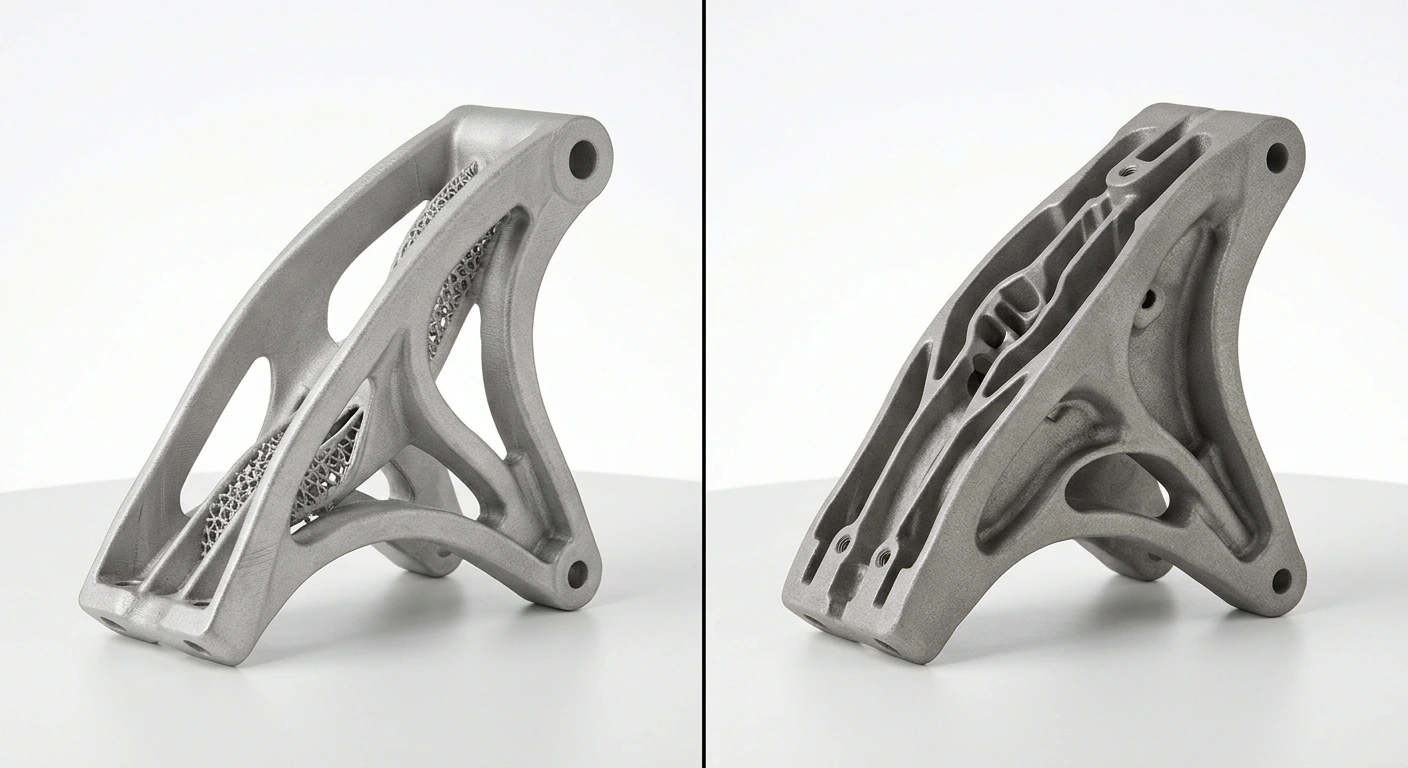
Aluminum vs Stainless steel
1Strength, Stiffness, and Strength-to-Weight Ratio
Ask an engineer whether aluminum is stronger than steel and the first reply is usually “stronger at what?” Failing by bending and remaining bent, failing by breaking, failing by denting, or failing by flexing too far to be used. All of these have a different property. Yield strength determines when the bend is permanent and the tensile strength determines where the break occurs. Hardness covers the dent. Flex under load comes from the elastic modulus, which has little to do with any of the strength numbers.
Take 6061-T6 and 316L. 316L generally has higher tensile strength and hardness than 6061-T6. Yield strength lands close together, though it shifts with the condition of the material, and stainless is about 2.8 times stiffer. Weight changes the picture. The tensile strength / density ratio is approximately 115 MPa/g/cm³ for 6061-T6, compared with ~ 70 for 316L. Aluminum wins the race when the gram makes the difference, and a high-strength aluminum alloy such as 7075 can perform as well or better than many steels in that regard. Stainless steel generally has higher hardness than 6061-T6 aluminum. Which one is stronger overall depends on the alloy and on whether you count weight.
2Weight and Density
Pick up a 100 cm³ block of each. The 6061 one weighs about 270 g, and the 316L one is closer to 800 g. Stainless is roughly three times heavier at the same volume, so aluminum is lighter by about two thirds. A lot of designs don’t compare at the same volume, though. If stiffness sets the wall thickness, the stainless part can be made thinner, and the real weight gap ends up smaller than those numbers suggest. Compare at equal stiffness or equal load.
3Corrosion Resistance
Aluminum and 316L both lean on a thin surface film, and in both cases that film can be lost under the wrong conditions. Aluminum does fine in plain air and fresh water but gets into trouble once chlorides or strong alkalis show up. 316L generally copes with chlorides far better, although hot, concentrated brine can still cause pitting, so neither one deserves the label “corrosion proof.”
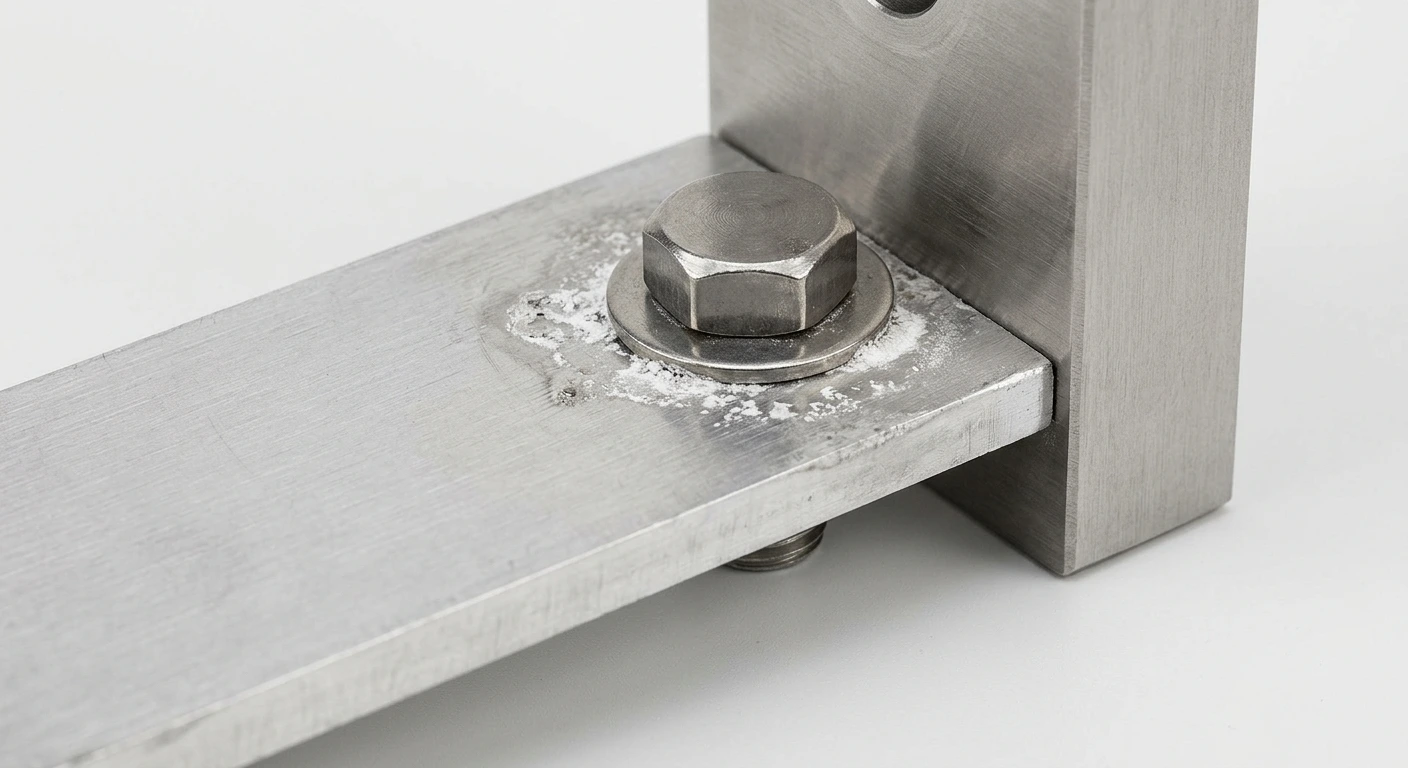
The pairing is where things go wrong. When the two metals touch and something wet bridges them, whether that’s rain, condensation or salt spray, aluminum is the anodic partner and ends up being the metal that gets consumed while the stainless steel acts as the cathode and is less affected by galvanic corrosion. How quickly this happens depends mostly on the potential difference between them, the conductivity of the electrolyte, and how much surface area each has exposed. That second factor surprises people. A small aluminum fastener holding down a large stainless panel is the bad case, because the galvanic corrosion current is concentrated over that little piece of aluminum, and it can be eaten through faster than you’d expect from how the joint looks. Reverse the sizes, with a small stainless bolt through a big aluminum plate, and the same current spreads across a larger aluminum area, so you may only see some light pitting around the hole.
None of this is hard to prevent. Nylon washers or a layer of sealant between the metals, a coating on one of them, and a joint that can drain and dry will handle most situations. Indoors and dry, you’ll rarely see it become a problem.
4Thermal and Electrical Conductivity
Heat is where the two metals split furthest.
Aluminum moves heat 10x faster than 316L, approx. That's why it's commonly used in heat sinks, thermal plates, and housings for hot electronics. On the other hand, stainless steel is useful when a part needs to keep the heat from spreading, such as some exhaust parts and cryogenic supports. And aluminum expands 45% more than 316L stainless steel too when both are heated to the same degree. If these two metals are joined into one assembly, repeated heating and cooling can put stress on the joints.
Aluminum also conducts electricity better than stainless steel, but copper is better than both. It expands more when heated, too.
5Machinability and Formability
Aluminum cuts fast. With the right tooling the chips come off short, and you get a decent surface finish for the machine time spent. Stainless is slower going. It hardens, heat builds at the cutting edge, and cutters wear quicker, so speeds come down and cycle times go up. Austenitic grades like 316L are especially gummy. Forming follows a similar split. Aluminum bends easily but springs back, and in harder tempers it can crack at tight radii. Stainless takes more force and springs back more, although some grades draw very well.
6Welding and Joining
Both aluminum and stainless steel can be welded, but their welding characteristics and requirements differ.
Aluminum is more challenging because of its high thermal conductivity, low melting point, and tenacious oxide layer. It requires careful heat control and proper surface preparation to prevent defects. TIG and MIG welding are commonly used for aluminum alloys. For example, 6061 aluminum can be welded, but its heat-affected zone may experience reduced strength.
Stainless steel is generally easier to weld than aluminum. TIG, MIG, and resistance welding are commonly used. Austenitic grades such as 304 and 316L generally offer good weldability. However, excessive heat input can cause distortion, sensitization, or reduced corrosion resistance in the heat-affected zone. Proper heat control and, where necessary, post-weld treatment help maintain performance.
In general, aluminum welding requires more careful heat management and oxide removal, while stainless steel welding requires attention to heat input and preservation of corrosion resistance. The choice of material should also consider the alloy grade, joint design, welding method, and required service performance.
Can you weld stainless steel to aluminum?
Yes, but directly welding stainless steel to aluminum is challenging. Fusion welding can produce brittle iron-aluminum intermetallic compounds at the interface due to differences in their melting behavior and metallurgical properties. These compounds can weaken the joint. Alternative joining methods, such as mechanical fastening, adhesive bonding, brazing, or specialized solid-state processes, may be more suitable depending on the load and operating conditions.
7Surface Finishing Options
Generally aluminum is anodized, sand-blasted or polished. Anodizing consists of forming an oxide layer on the base metal, enhancing corrosion and wear resistance and enabling the surface to be dyed. It provides extra thickness both inside and out, which requires allowances for tight fits.
Stainless is typically passivated, electropolished or mechanically polished. Passivation is the process of removing free iron from the surface, and restoring the chromium-rich film, while causing only minimal change in size. Electropolishing removes a thin surface layer, reducing surface roughness and improving cleanability.
For a wider look, see our metal surface finish guide.
Aluminum vs. Stainless Steel for Metal 3D Printing
The material comparison above focuses on typical wrought properties. For metal 3D printing, the choice between aluminum and stainless steel also depends on the printing process, which affects mechanical properties, design constraints, dimensional accuracy, and cost.
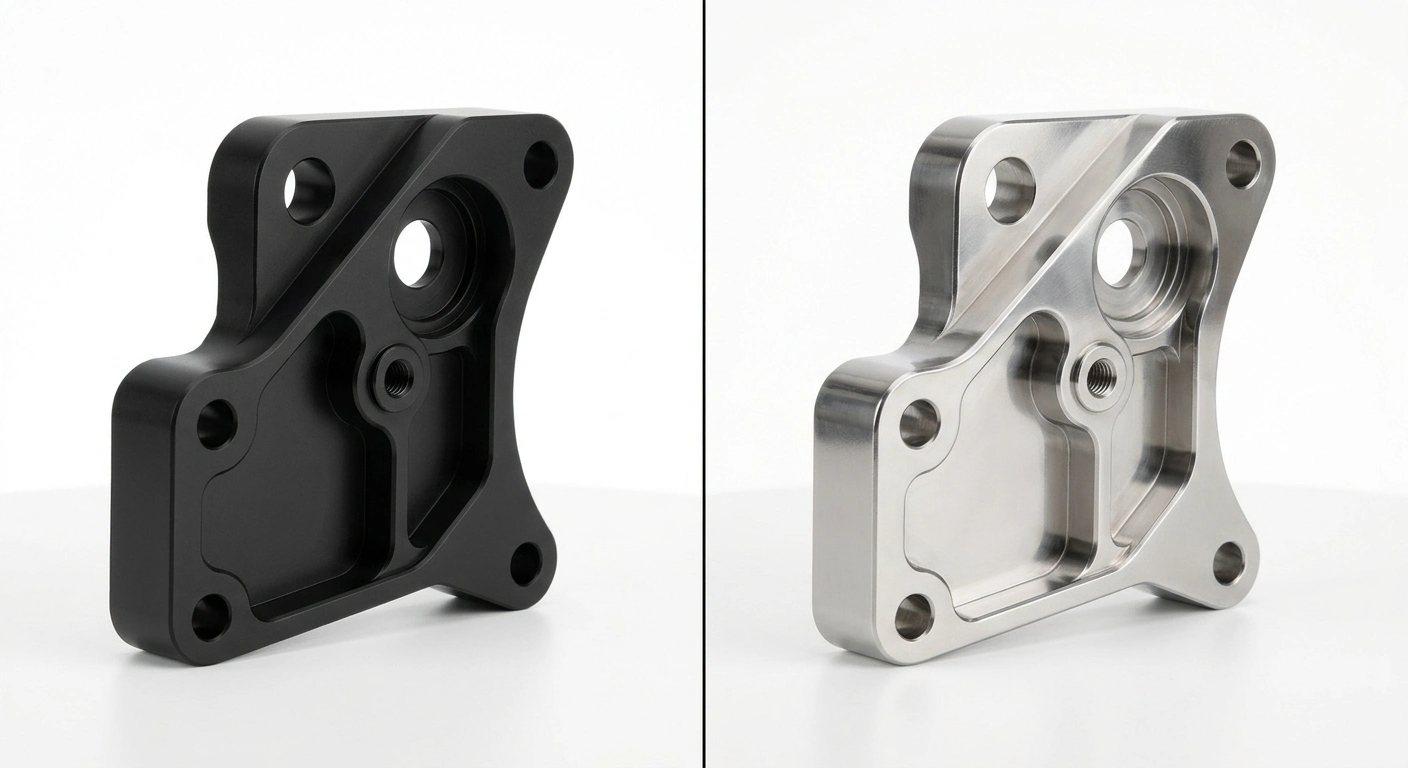
Aluminum and Stainless Steel Options for Metal 3D Printing
JLC3DP offers three metal 3D printing options for aluminum and stainless steel:
| Material | Printing Process | Key Characteristics |
|---|---|---|
| Aluminum 6061 | SLM | Lightweight, good thermal conductivity, suitable for structural and thermal components |
| Stainless Steel 316L | SLM | High strength, good corrosion resistance, suitable for functional structural parts |
| BJ-Stainless Steel 316L | Binder Jetting | No build-plate supports, suitable for relatively small and complex metal components |
Aluminum 6061 is a practical choice for lightweight housings, brackets, and thermal components. Stainless steel 316L is more suitable for parts requiring higher stiffness, strength, and corrosion resistance.
Although both metals can be used to produce functional metal parts, their different physical properties and manufacturing requirements affect the final part design. Learn about BJ vs SLM Metal 3D Printing.
Aluminum- or Stainless Steel-Filled FDM Printing
Metal-filled FDM filaments containing aluminum or stainless steel powder are not equivalent to conventional metal 3D printing. They use a polymer binder and may require debinding and sintering to produce metal parts.These are outside the scope of this section.
Why Is Binder Jetting Less Common for Aluminum Alloys?
One main challenge is the naturally occurring aluminum oxide layer on aluminum powder surfaces.
During binder jetting, a liquid binder holds the metal powder together to form a green part. The part is then debound and sintered, allowing metal particles to bond through solid-state diffusion. However, aluminum oxide has a high melting point and is difficult to remove under conventional sintering conditions. This oxide layer can inhibit particle bonding and limit densification, making it challenging to achieve the required density and mechanical properties.
SLM takes a different approach. A high-energy laser selectively melts the metal powder, forming a melt pool that solidifies into a dense metal structure. This melting-based process better addresses the bonding challenges associated with aluminum powder oxide films, making it a more established option for aluminum alloy 3D printing.
At JLC3DP, we focus on reliable industrial 3D printing services using established manufacturing processes. As technologies mature, we will continue to expand our capabilities and material options to meet evolving customer needs.
Weight and Build Size
Aluminum is approximately one-third the density of stainless steel, making it a better choice when reducing component weight is important. This is particularly useful for large housings, brackets, and structural components where excess weight can affect assembly, transportation, or overall performance.
Stainless steel offers higher stiffness and strength. It is worth considering when structural rigidity and durability are more important than weight reduction.
The available build size also affects material selection. At JLC3DP, the maximum build sizes are:
| Material and Process | Maximum Build Size |
|---|---|
| SLM Aluminum 6061 | 420 × 380 × 400 mm |
| SLM 316L | 390 × 390 × 290 mm |
| BJ-316L | 100 × 100 × 100 mm |
Both SLM aluminum and SLM stainless steel can accommodate relatively large components, while BJ-316L is limited to smaller parts. These are JLC3DP-specific equipment limits, not universal technology limits.
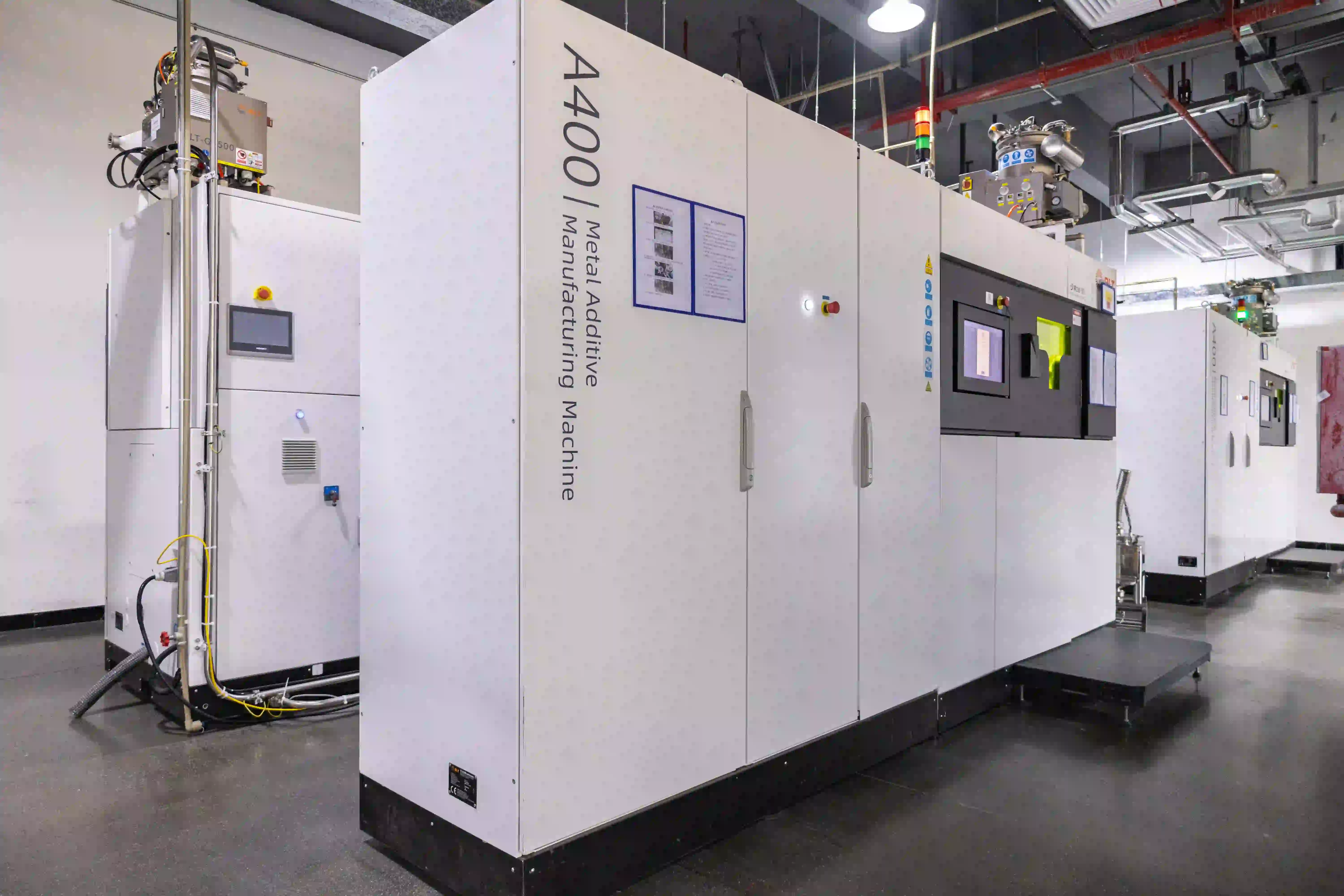
If a component exceeds the available build space, it may need to be divided into smaller sections and assembled later. The joint must provide sufficient strength without interfering with the part's function.
Strength, Dimensional Stability, and Design Considerations
The mechanical properties of printed aluminum and stainless steel depend on the alloy, printing parameters, build orientation, and post-processing. Typical wrought material properties should not be used directly to predict the performance of printed parts.
Both SLM Aluminum 6061 and SLM 316L use laser-based powder bed fusion. The localized heating and cooling cycles can generate residual stress, warping, and distortion. Part orientation, wall thickness, and support placement all affect the final result.
For binder-jetted 316L, dimensional changes mainly occur during debinding and sintering. As the binder is removed and metal particles bond together, the part shrinks. Manufacturing compensation accounts for this shrinkage, but final dimensions can still vary with geometry and sintering conditions.
The printing process also influences design freedom. SLM aluminum and stainless steel parts require support structures. These supports must be removed afterward, which can be difficult around internal features and hard-to-reach surfaces.
Binder jetting does not require any structures during printing. This can be useful for certain complex internal channels and lattice structures. However, suitable powder escape holes are necessary, particularly in hollow sections and enclosed channels, to allow loose powder to be removed.
According to JLC3DP's design guidelines, SLM parts have a general dimensional tolerance of ±0.3 mm for dimensions within 100 mm. BJ parts have a tolerance of ±0.3 mm or ±0.4% for dimensions up to 50 mm, and ±1.3% for dimensions above 50 mm.
For precision holes, threads, and mating surfaces, check the applicable tolerances and allow for additional machining where necessary. Actual results depend on material, part geometry, printing conditions, and post-processing.
Aluminum vs. Stainless Steel: Which Is More Cost-Effective?
An aluminum vs stainless steel cost comparison needs to separate material price from finished-part cost. They are not the same number.
1Raw Material Cost
On a per-kilogram basis, aluminum often costs less than stainless steel, though prices move with the market and alloy. Because aluminum is lighter than stainless steel, a part of the same shape also uses less mass. However, raw material price is only one component of the total manufacturing cost.
2CNC Machining Cost
For many comparable CNC-machined parts, Aluminum 6061 is generally more economical because it is faster to machine and typically involves lower tooling costs.
Aluminum machines are faster and cause less tool wear than stainless steel, reducing machining time and tooling costs. However, CNC machining is subtractive, and material utilization can be low for parts with complex geometries because a significant amount of the original billet may be removed as chips. Complex parts may also require multiple machining operations and setups, increasing labor and production time. Features such as enclosed internal cavities, lattice structures, and conformal channels can be difficult or impossible to produce with conventional CNC machining. These limitations can make CNC machining costly for certain complex designs.
3Metal 3D Printing Cost
Printed part cost follows the process, not just the metal. Material consumption depends on volume, density, and supports. Geometric complexity affects build preparation. SLM adds support design and removal. Binder jetting adds debinding and sintering. Larger batches may improve machine utilization, but the actual advantage depends on geometry, build layout, and process requirements. It would be wrong to say that aluminum is always cheaper than stainless steel, or that binder jetting is always cheaper than SLM.
4Post-Processing Cost
Anodizing, polishing, tumbling, and tapping each add a step. A part that needs a cosmetic finish and threaded holes can carry meaningful finishing cost compared with a bare as-built part.
5Total Finished-Part Cost
The meaningful comparison is the cost of the finished part: printing or machining, post-processing, inspection, and quantity. Two parts with the same raw material can have very different quotes depending on geometry and finish, and two parts in different metals can quote close together once everything is counted. The stainless steel vs aluminum price question is best answered by requesting a quote on the actual design. For a deeper breakdown, read our metal 3D printing cost guide.
Applications of Aluminum and Stainless Steel
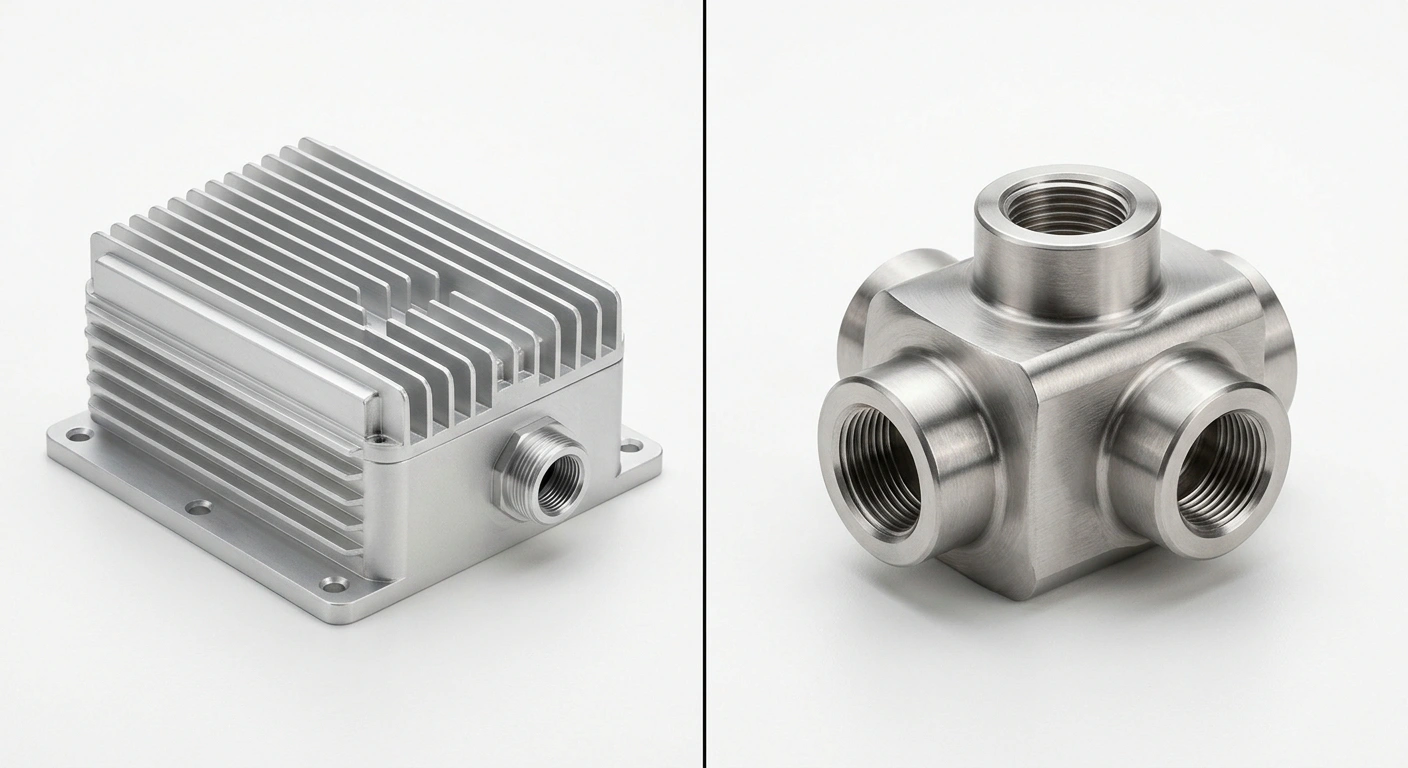
aluminum electronics enclosure vs stainless steel compact industrial valve body
Industries do not choose a metal for tradition. They choose it because a specific property solves a specific problem. The table summarizes the reasoning.
| Application area | Typical choice | Why |
|---|---|---|
| Aircraft structures and brackets | Aluminum (6061, 7075) | Best strength per unit weight, easy to machine |
| Automotive body and chassis parts | Aluminum | Weight reduction improves efficiency and handling |
| Exhaust systems and high-heat components | Stainless steel | Holds strength and resists oxidation at temperature |
| Heat sinks and electronics housings | Aluminum | High thermal conductivity moves heat away |
| Industrial machinery frames and guards | Either | Aluminum for light moving parts, stainless for wear and washdown |
| Surgical and medical instruments | Stainless steel (316L, 17-4 PH) | Sterilizable, corrosion resistant, hard |
| Food processing equipment | Stainless steel | Cleanable surface, corrosion resistant |
| Marine hardware | Stainless steel 316, marine aluminum (5xxx) | Chloride resistance, with attention to galvanic coupling |
| Chemical handling parts | Stainless steel | Resistance to a broader range of chemicals |
Aerospace and Automotive
Weight savings compound in vehicles and aircraft, so aluminum's low density pays back in fuel, range, and payload. This is the usual answer in the aluminum vs stainless steel for automotive question for body and structural parts. Stainless steel appears where heat and corrosion dominate, such as exhaust components.
Electronics and Thermal Management
Aluminum's thermal conductivity makes it the default for heat sinks, LED housings, and device enclosures that must shed heat. Stainless steel is chosen where the enclosure needs strength or washdown resistance more than cooling.
Industrial Machinery
Guards, brackets, and fixtures lean toward aluminum for ease of handling and machining. Shafts, wear parts, and components exposed to washdown or abrasive media lean toward stainless steel.
Medical and Food Processing
Stainless steel dominates because surfaces must withstand repeated cleaning, sterilization, and contact with acidic or salty media. Passivation and electropolishing improve cleanability further. However, not all stainless steel grades or surface finishes meet medical-grade or food-contact requirements. Material selection must be carefully considered.
Marine and Chemical Environments
For aluminum vs stainless steel for marine applications, 316 stainless and marine-grade aluminum alloys both see use, but galvanic compatibility with other hardware must be planned. In aggressive chemical service, stainless steel is the more conservative choice.
How to Choose Between Aluminum and Stainless Steel
Choose a material based on your part's functional requirements, including weight, load, stiffness, corrosion resistance, operating temperature, and service environment.
Once you have identified a suitable material, consider the manufacturing requirements:
- Part design: Check geometry, wall thickness, internal features, and assembly requirements.
- Available Processes: Match the material and part design with the appropriate metal 3D printing process (BJ or SLM). Consider differences in support requirements, design constraints, and dimensional accuracy when selecting a process.
- Manufacturing constraints: Check build size, dimensional tolerances, and available post-processing options.
- Total cost: Consider material usage, build preparation, support removal, post-processing, and production volume.
This approach helps ensure the selected material meets the part's requirements and can be manufactured effectively.
Aluminum and Stainless Steel FAQs
Q: Is Aluminum Durable?
Yes. Aluminum is durable because it naturally forms a thin oxide layer that protects it from corrosion. However, its durability depends on the alloy, surface condition, and operating environment. Aluminum is generally softer and less wear-resistant than stainless steel, and prolonged exposure to saltwater, strong alkalis, or harsh chemicals can cause corrosion. Surface treatments such as anodizing can improve its wear and corrosion resistance, making it suitable for long-term use in many applications.
Q: Is aluminum stronger than stainless steel?
Not as a general rule. Strength depends on the alloy, temper, and process. A high-strength aluminum alloy can exceed a low-strength stainless grade, while 316L typically has higher tensile strength and hardness than 6061-T6. Per unit of weight, aluminum often performs better.
Q: Is stainless steel heavier than aluminum?
Yes. Stainless steel is about three times as dense as aluminum, with a typical density of 8.0 g/cm³ compared with 2.7 g/cm³. For parts of the same volume, stainless steel weighs roughly three times as much as aluminum.
Q: Does aluminum react with stainless steel?
In dry conditions, usually not significantly. When both are in contact and an electrolyte is present, aluminum corrodes preferentially through galvanic action. Isolation, sealing, and a favorable area ratio reduce the risk.
Q: How can you tell aluminum from stainless steel?
Weight is the easiest clue, since stainless feels about three times heavier for the same size. A magnet is unreliable because common austenitic stainless is mostly non-magnetic, though many other stainless grades are magnetic. Aluminum is usually softer and scratches more easily, and it has a duller, lower-pitched ring when struck. For certainty, use a density measurement or material testing.
Q: Can you weld stainless steel to aluminum?
Not with conventional fusion welding, because brittle iron-aluminum intermetallics form. Use fasteners with isolation, adhesive bonding, brazing, friction welding, or explosion-welded transition joints.
Q: Which is more expensive, aluminum or stainless steel?
Raw stock is often cheaper for aluminum, but the finished part depends on machining or printing time, post-processing, geometry, and quantity. Request a quote on the actual design for a reliable answer.
Popular Articles
Keep Learning
Aluminum vs. Stainless Steel: Choose a 3D Printing Route
Key Takeaways Stainless steel offers higher hardness, stiffness, and better resistance, while aluminum is lighter and conducts more heat. Neither material is always stronger. Strength depends on the alloy, temper or heat treatment, and manufacturing process. In the case of metal 3D printing, it also affects the quality of the parts and cost. The two technologies, SLM and Binder-jetting have different support needs, finishing steps, build sizes and costs. Real applications of Aluminum and stainless ste......
Nylon vs PETG: Strength, Toughness & Heat Resistance
Note: PETG is included in this article for technical comparison only. JLC3DP does not currently offer or recommend PETG as a printing material. The comparison is intended for educational purposes and should not be interpreted as a JLC3DP material recommendation. Nylon vs PETG is not a contest with a single winner. Nylon generally leads in toughness, wear resistance, fatigue resistance, and higher-temperature applications. PETG is easier to print, easier to store, and more cost-effective for general-pu......
PEEK vs PEKK: Key Differences and How to Choose for 3D Printing
PEEK vs PEKK is a common comparison when selecting high-performance thermoplastics for 3D printing. Both belong to the polyaryletherketone (PAEK) family and offer high strength, thermal stability, and chemical resistance. However, differences in their molecular structures, crystallization behavior, and processing requirements can significantly affect part performance and manufacturing. PEEK has a long history in demanding industrial applications, while PEKK offers a range of grades with different melt......
Resin vs Filament 3D Printing: Which One Should You Choose?
Getting into 3D printing can feel a little like opening a toolbox without knowing what half the tools do. If you’ve ever stood between a resin printer and a filament printer, scratching your head, wondering which one’s for you, you’re not alone. Resin vs filament 3D printing is one of the most common beginner dilemmas. Each has its pros, cons, quirks, and learning curves. And choosing the right one can make all the difference in how enjoyable and successful your 3D printing journey becomes. In this gu......
Resin vs Filament: Which is Better for 3D Printing?
Resin printing and filament printing (FDM) are the two most widely used methods in 3D printing. To help you make an informed choice, this article will compare the two printing methods in detail from the perspectives of materials, resolution and quality, speed, ease of use, price, etc. If you don't have a 3D printer yet and just want to compare the two printing methods first, JLC3DP can meet your needs. Just upload your 3D model to our platform, choose the printing method and corresponding materials yo......
ABS vs PLA: Which Filament Should You Print?
Key Takeaways The ABS vs PLA choice is a trade between certainty and headroom: PLA prints easily, precisely, and cheaply; ABS survives heat, absorbs impact, and can be smoothed with acetone, but it makes you earn every print. Warping is the deciding pain: ABS parts curl as layers shrink unless you print in a heated, enclosed chamber; PLA barely warps on the same machine. "Stronger" splits into three answers: ABS is stiffer and tougher, but well-printed PLA holds layer-to-layer more consistently — pick......