Which Resin Is Best for 3D Printing Fine Details vs Functional Parts?
15 min
- What Type of Resin Is Best for Printing Complex Fine Details?
- What Type of Resin Is Best for Functional Parts That Require Strength?
- How Do Resin Properties Affect Printing Performance and Surface Finish?
- How Do You Choose Between Fine-Detail and Functional Resins for Hybrid Parts?
- How Do Different Resins Compare in Key Performance Metrics?
- How Do Post-Processing and Curing Affect Resin Choice?
- Common Pitfalls
- Conclusion: How Should You Choose the Right Resin for Your 3D Prints?
- FAQs about 3D Printing Resins
Resin 3D printing is often marketed as a single category, but in practice, the resin you choose matters more than the printer itself. A photosensitive resin optimized for ultra-fine surface detail behaves very differently from a resin designed for load-bearing or heat-resistant parts. Treating them as interchangeable is one of the most common reasons resin prints fail to meet expectations.
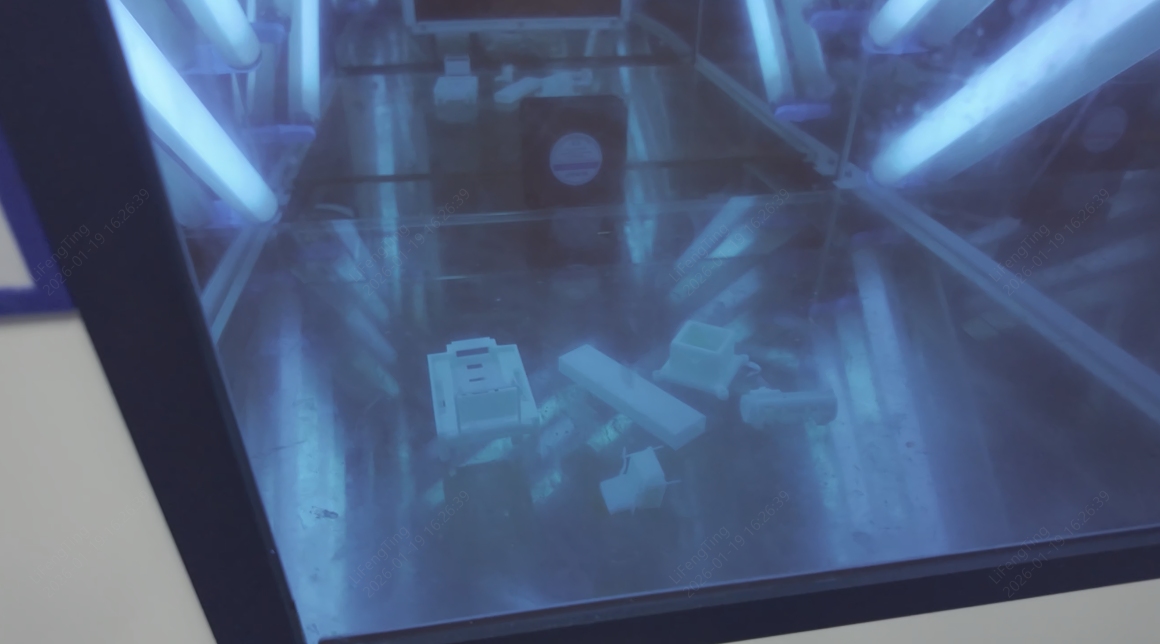
When comparing 3D printing resin types, the real question isn’t which resin is “best” overall, it’s what the part needs to do. Highly detailed models, miniatures, and cosmetic components prioritize resolution, sharp edges, and smooth surfaces. Functional parts, on the other hand, demand strength, toughness, dimensional stability, and predictable mechanical behavior after curing.
This resin 3D printing comparison focuses on how resin properties for 3D printing affect print resolution, durability, and long-term performance. We’ll break down why low-viscosity resins excel at fine detail, why engineering resins outperform standard materials in functional applications, and how resin printing vs model resolution changes depending on formulation. By the end, you’ll know exactly which resin for 3D printing makes sense for your use case, and just as importantly, which ones don’t.
This is also where working with an experienced resin printing service makes a difference. At JLC3DP, resin selection isn’t treated as an afterthought. Our SLA workflow is built around matching 3D printing resin types to real-world use cases. Instead of pushing a single “best” resin, the focus stays on choosing the right material for the job, from first print to final finish.

What Type of Resin Is Best for Printing Complex Fine Details?
If you're doing high-detail prints, viscosity is the silent killer. Thicker resins, including many tough formulations, tend to pool in fine features, softening sharp edges and reducing detail fidelity. You really want something that runs like water, so it drains off the build plate fast. Also, watch out for shrinkage; Even minor shrinkage, such as a 2% warp, can render precision features unusable and ruin the fit. Stick to the jewelry-grade stuff if you really need those micro-details to pop.
While castable resins are optimized for burnout rather than strength, they still excel at detailed resin 3D printing due to their clean curing behavior and fine feature retention. These materials are typically not designed for load-bearing use, but they deliver excellent surface quality straight off the printer.
Layer height also plays a major role. To fully benefit from a detailed resin, layer heights below 0.05 mm are usually required. At higher layer heights, the resin’s resolution advantage is partially lost, regardless of formulation. This is why resin printing vs model resolution is always a combined material-and-process decision, not just a resin choice.
In terms of hardware, SLA and DLP systems generally extract the most detail from these resins, but modern LCD printers can also perform well when exposure settings are properly tuned. For visual models, miniatures, and cosmetic parts, this category is widely considered the best resin for fine details, just don’t expect it to behave like a structural material.
What Type of Resin Is Best for Functional Parts That Require Strength?
Functional parts should be printed with engineering-grade or tough resins that prioritize mechanical performance over ultra-fine detail. These materials are designed to handle real loads, repeated stress, and elevated temperatures, things standard or detail resins simply aren’t built for.
When you're looking at functional resin prints, start with the balance between tensile strength and elongation at break. Basically, tensile strength is your load capacity, but elongation is what actually matters if you don't want the part to shatter the second it's under pressure. If you're printing clips or snap-fits, you'll want to lean toward "tough" or "durable" resins, they aren't as stiff, but that extra flex keeps them from snapping. Also, don't overlook the Heat Deflection Temperature (HDT); it doesn't matter how strong the part is if it turns to noodles the moment it gets warm. If the part will see warm environments, electronics enclosures, or sunlight exposure, a high-temp resin becomes far more reliable than standard formulations.
Common options include tough resin, durable resin, high-temperature resin, and flexible resin. Tough and durable resins cover most mechanical use cases, while high-temp resins are chosen for fixtures, tooling, or parts near heat sources. Flexible resins fill a different niche, offering impact absorption and bendability rather than rigidity. Common options include tough, durable, high-temperature, and flexible resins, which consistently rank higher for strength but lower for surface sharpness in resin 3D printing comparisons.
Engineering resins are usually higher viscosity, which can reduce print success on extremely thin features. They also tend to show slightly softer edges compared to detail-focused photosensitive resin 3D printing materials. That’s the cost of strength. Post-processing matters too, many functional resins reach full performance only after proper UV and thermal curing, and skipping this step can cut strength dramatically.
If you’re unsure which high-strength resin for 3D printing fits your part, this is where experience matters.
Get an instant quote with JLC3DP to access production-grade resin printing and material guidance for prototypes, enclosures, and end-use components, so your part doesn’t just look right, it actually works.
How Do Resin Properties Affect Printing Performance and Surface Finish?
Print quality and surface finish really come down to three key properties: viscosity, curing behavior, and shrinkage. While they all matter, viscosity usually has the most immediate impact. A thinner resin flows better between layers, which is why they’re the go-to for miniatures or micro-features, it helps bubbles escape and keeps edges from rounding off. Thicker, high-strength resins are tougher to work with and often require slower lift speeds just to avoid surface artifacts.
Shrinkage is the other big hurdle. While all resins shrink, detail-focused formulas are engineered to minimize it. If you’re working with functional resins, you’re often trading dimensional accuracy for toughness, which can lead to warping or internal stress on thin-walled parts.
There’s also the trade-off between layer adhesion and detail retention. Stronger resins form incredible bonds, but that toughness often rounds out the sharpest features. You see this constantly in resin 3D printing comparisons, it’s almost always a choice between resolution and mechanical performance. Finally, don't overlook color; dark or opaque resins give you the sharpest edges by controlling light bleed, even if they need a bit more exposure time to stay strong.
How Do You Choose Between Fine-Detail and Functional Resins for Hybrid Parts?
Hybrid parts, those that need both visual detail and mechanical strength, require deliberate compromise or process planning. There is no single resin that excels equally at both, so the choice depends on how critical each requirement truly is.
One approach is using engineered resins designed to balance resolution and toughness. These materials sit between detail and functional resins in most resin properties for 3D printing charts, offering acceptable surface quality with usable strength. They work well for enclosures, clips, and cosmetic mechanical parts where neither extreme is required.
For higher demands, multi-step workflows are often more effective. Some users split a design into functional and cosmetic sections, printing structural elements in resin printing functional parts and high-detail features in a separate fine-detail resin. These parts are then bonded or mechanically assembled after printing. While this adds complexity, it preserves both performance and appearance without forcing a material compromise.
Another option, in controlled prototyping environments, is resin swapping within the same printer, printing strength-critical areas first, then switching to a detail resin for outer shells or visual features. This requires careful calibration and is only practical on machines that support reliable resin changes without contamination.
If you’re still deciding between resin and filament printing altogether, our detailed breakdown on resin vs filament: which one to choose explains how resolution, strength, cost, and post-processing differ between the two technologies.
How Do Different Resins Compare in Key Performance Metrics?
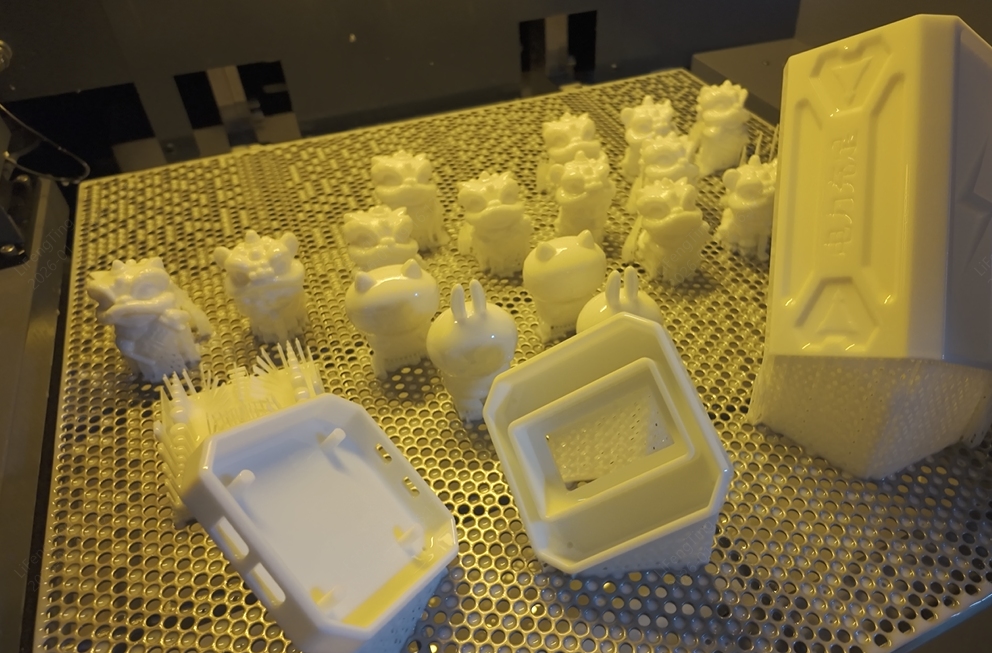
3D printing resin types differ less in brand and more in performance trade-offs. When engineers compare resins, the real decision comes down to viscosity, achievable resolution, tensile strength, elongation at break, and heat resistance. Each of these metrics directly affects whether a resin is better suited for fine-detail models, functional parts, or something in between.
| Resin Type | Best For | Viscosity | Typical Layer Height | Tensile Strength | Elongation at Break | Heat Deflection Temp |
| Standard Detail Resin | Fine models, visual parts | Low | 0.025–0.05 mm | Low | Moderate | Low |
| Castable / Jewelry Resin | Miniatures, casting masters | Low | 0.025–0.05 mm | Low | Moderate | Low |
| Tough / Durable Resin | Functional parts, enclosures | Medium | 0.05–0.1 mm | High | High | Medium |
| High-Temp Resin | Engineering fixtures, housings | Medium | 0.05–0.1 mm | High | Moderate | High |
| Flexible Resin | Snap-fits, wearables | Medium | 0.05–0.1 mm | Moderate | High | Medium |
Model-level reference for engineering selection
The table below maps common resin categories to real-world material models used in production and service environments.
| Resin Model | Best For | Viscosity | Typical Layer Height | Tensile Strength | Elongation at Break | Heat Resistance | Notes |
| Imagine Black Resin | Miniatures, cosmetic parts | Low | 0.025–0.05 mm | Low | Moderate | Low | Excellent surface sharpness and edge definition |
| Black Resin / Grey Resin | Visual models, enclosures (light duty) | Low | 0.025–0.05 mm | Low–Medium | Moderate | Low | Stable printing, good balance of detail and usability |
| CBY Resin | Detailed display parts | Low | 0.025–0.05 mm | Low | Moderate | Low | Optimized for resolution, not load-bearing |
| 8001 Resin | Functional parts, clips, snap-fits | Medium | 0.05–0.1 mm | High | High | Medium | Tough resin suitable for repeated stress cycles |
| 8228 Resin | Mechanical enclosures, brackets | Medium | 0.05–0.1 mm | High | Medium–High | Medium | Better dimensional stability than detail resins |
| LEDO 6060 Resin | Engineering parts, housings | Medium | 0.05–0.1 mm | High | Medium | Medium | Good strength-to-stability balance |
| 9600 Resin | High-temp fixtures, tooling | Medium | 0.05–0.1 mm | High | Moderate | High | Designed for thermal stability |
| JLC Temp Resin | Heat-resistant functional parts | Medium | 0.05–0.1 mm | High | Moderate | High | Suitable for warm environments and fixtures |
| JLC Black Resin | Cosmetic + light functional parts | Low–Medium | 0.03–0.05 mm | Medium | Moderate | Low–Medium | Better surface consistency than generic black resin |
Why These Properties Matter in Real Printing
Viscosity controls resolution before strength even comes into play. Low-viscosity resin for 3D printing flows easily between layers, which is why it dominates detailed resin 3D printing and miniature work. The downside is weaker interlayer bonding and lower overall strength.
Layer height reveals the resolution–strength trade-off clearly. The best resin for fine details performs best at a thickness of below 0.05 mm, but pushing functional resins that thin often causes failed layers or brittle behavior. Most resin for functional parts prints reliably at thicker layers because strength matters more than micro-features.
Tensile strength and elongation decide whether a part survives use. High-strength resin for 3D printing can carry a load, resist cracking, and tolerate repeated stress. Detail and castable resins simply aren’t designed for this, even if the surface finish looks perfect.
Heat resistance separates cosmetic parts from engineering parts. High-temp resins maintain shape under load and temperature, while standard detail resins soften quickly. This is often the deciding factor in resin printing vs model resolution decisions for functional assemblies.
How Do Post-Processing and Curing Affect Resin Choice?
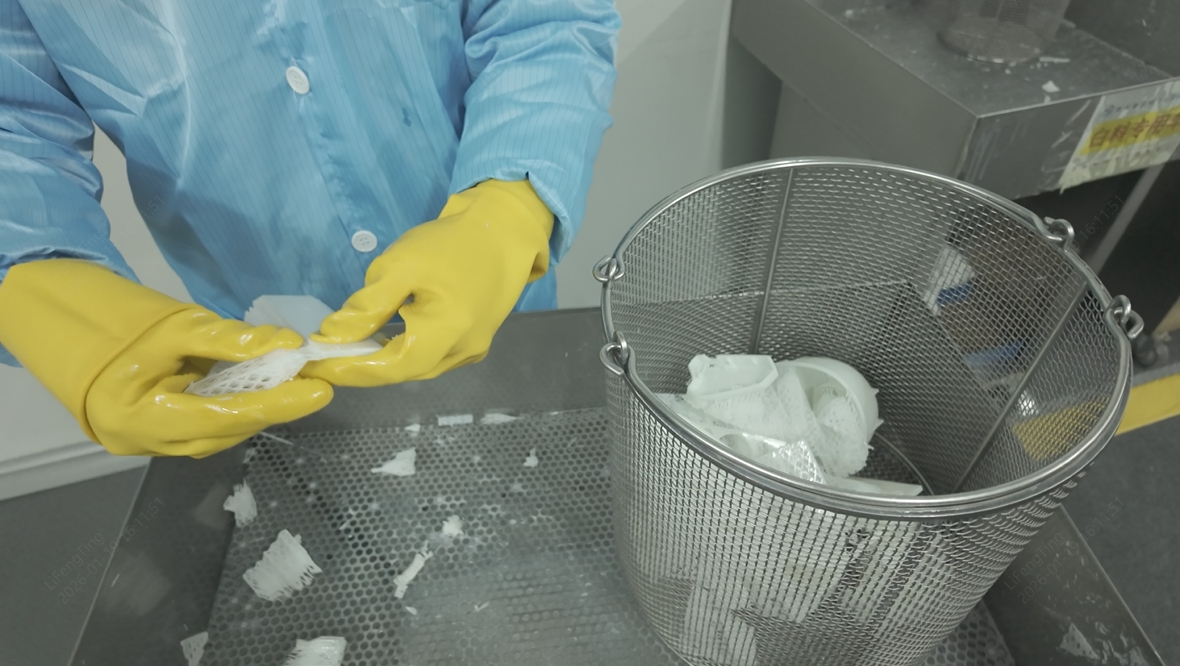
Post-processing is usually where resin prints either make it or break it. You can spend hours picking the right resin and obsessing over exposure settings, but if your workflow after the print finishes doesn't match the material, you’re going to end up with a warped or brittle mess.
Washing is really where you have to make a choice. If you’re chasing high-end surface quality, traditional resins cleaned with IPA are still the gold standard. IPA just cuts through the uncured gunk faster and cleaner, which is the only way to keep those sharp edges from rounding off. Water-washable resins are definitely a nice convenience, but they can be incredibly finicky. If you leave them soaking just a few minutes too long, they start to soften or develop that annoying chalky residue. It’s fine for a quick hobby project, but for anything precision-heavy, it’s a big risk.
UV curing determines the final mechanical properties. Detail resins reach dimensional stability quickly, but over-curing can make them brittle, especially on thin features. Functional and tough resins are the opposite. They may feel solid straight off the printer, but without extended UV exposure, they never reach their rated strength. Many engineering resins also benefit from controlled heat during post-curing, which improves crosslinking and significantly boosts impact resistance and heat deflection.
Support removal is where resin choice really shows. Delicate detail resins snap easily if supports are removed cold or too aggressively. Gentle clipping after a partial cure usually preserves surface quality. Functional resins tolerate rougher handling but often require more force to remove supports cleanly, increasing the risk of surface marks if support placement isn’t planned well.
Many surface defects, weak parts, and dimensional issues blamed on “bad resin” actually come from workflow mistakes. We’ve documented the most common issues, and how to fix them, in 8 resin print fails and their solutions.
Common Pitfalls
This is the part most resin guides skip, the mistakes you only make after burning time, resin, and patience.
The biggest one? Treating detail resins like tough resins. Early on, we over-cured high-detail prints thinking “stronger is better.” It isn’t. Over-curing detail resins wipes out fine edges and makes thin features brittle. Under-curing isn’t any better, parts look great, then snap during support removal. Detail resins live in a narrow curing window, and you have to respect it.
Functional resin strength is often overestimated, especially when design and post-curing factors are ignored. Just because a resin is labeled “tough” doesn’t mean it behaves like injection-molded plastic. Layer orientation, wall thickness, and post-curing matter more than the spec sheet. Functional resins are strong when designed correctly, not magically.
Shrinkage sneaks up on intricate models. On dense, highly detailed parts, even low-shrinkage resins can pull features slightly out of alignment. This shows up in press fits, mating surfaces, or fine geometric patterns. Ignoring shrinkage during design almost always means reprinting.
Hybrid parts bring their own pain. Poor support placement is brutal when you’re balancing detail and strength. Supports that are perfect for structural areas can destroy visible surfaces, while “light” supports often fail on load-bearing sections. Planning supports based on function, not just appearance, made a massive difference for me.
Conclusion: How Should You Choose the Right Resin for Your 3D Prints?
Choose resin the same way you choose tools, based on the job, not convenience.
If you're chasing surface quality above all else, you really need a low-viscosity, low-shrinkage detail resin. They’re unbeatable for miniatures or anything with crazy textures, though you do have to be a lot more careful during post-processing. On the flip side, if the part actually has to do something in the real world, skip the fine-detail stuff. Engineering resins are the better bet for things like impact resistance and thermal stability, even if you lose a bit of that ultra-fine crispness.
Hybrid parts sit in the middle. Sometimes that means engineered “balanced” resins. Other times, it’s smarter to split the workflow: print visual features in a detailed resin and structural components in a functional one, then assemble.
Cost, curing time, and post-processing effort all matter. So does printer calibration. A well-tuned printer with the right resin will outperform an expensive setup using the wrong material.
Pick resin based on end use first. Everything else is secondary.
FAQs about 3D Printing Resins
Q1: What resin is best for printing miniatures?
A: High-resolution, low-viscosity detail resins are best for miniatures. They capture sharp edges, textures, and small features with minimal layer visibility.
Q2: Can I use the same resin for details and functional parts?
A: You can, but it’s rarely optimal. Balanced or tough-detail resins work for light-duty hybrid parts, but dedicated resins perform better at their specific roles.
Q3: Does resin viscosity affect print resolution?
A: Yes. Lower-viscosity resins flow and drain more readily, allowing finer details, cleaner layer transitions, and an improved surface finish.
Q4: How does heat resistance vary between resin types?
A: Standard and detail resins have low heat resistance. Engineering and high-temp resins offer much higher heat deflection temperatures, especially after proper post-curing.
Keep Learning
Best Resin Printer for Miniatures in 2026
Choosing the best resin printer for miniatures in 2026 comes down to one thing: detail per dollar. After a hands-on review of this year's leading SLA and 4K/8K LCD resin printers, we ranked the top picks for D&D, Warhammer, and tabletop terrain — from a $149 beginner machine to an 8K showcase rig. This guide covers resolution (4K vs 8K), build volume, resin choices, and a buyer's checklist, so you can print crisp minis without overspending or drowning in failed prints. Why Resin 3D Printers Are Best f......
Strongest Resin for 3D Printing (2026): Tough vs High Strength Resins Compared
When people ask for the strongest resin for 3D printing, what they usually mean is “the strongest for my part.” A rigid bracket, a snap-fit enclosure, and a heat-exposed fixture all fail in different ways. This guide breaks it down clearly. What Is the Strongest Resin for 3D Printing? In pure tensile and flexural testing, high strength engineering resins are typically the strongest SLA resin options available. However, in real-world applications, parts often fail from impact, repeated stress, or stres......
ABS-Like Resin vs Standard Resin: The Definitive Guide to Material Choice & Performance
Key takeaways Standard Resin: High stiffness, extreme brittleness, best for static visuals. ABS-Like Resin: High elongation, exceptional impact resistance, mandatory for snap-fits. Near-Isotropic Advantage: Unlike FDM-printed authentic ABS which suffers from weak interlaminar (Z-axis) bonds and anisotropy, SLA ABS-like resin cures via liquid cross-linking, providing near-isotropic advantage and uniform multi-directional strength. Water Washable Resin: Zero IPA needed, eco-friendly workflow, but sacrif......
Best Flexible Filament for 3D Printing: TPU vs PEBA vs TPE
You're staring at three flexible filament options and they all claim to be "flexible." That word covers a lot of ground. A phone case grip and an airless basketball both need flexibility, but they need completely different things from it. This guide breaks down what actually separates TPU, PEBA, and TPE so you pick based on what your part needs to do, not just what's available. What Is the Best Flexible Filament for 3D Printing? The softest 3D printing material depends entirely on the application. TPU......
What Is 9000HE Resin? The High Strength SLA Engineering Resin Explained
What Is 9000HE Resin? The High Strength SLA Engineering Resin Explained Most SLA resins are designed for one thing: looking good. Smooth surface, fine detail, accurate geometry. That's where the technology excels and that's what most resin materials are optimized for. 9000HE wasn't designed for that. It was designed for the parts that actually have to do something, carry load, survive assembly, hold up in functional testing, and behave like an engineering material rather than a display model. If you'v......
Which Resin Is Best for 3D Printing Fine Details vs Functional Parts?
Resin 3D printing is often marketed as a single category, but in practice, the resin you choose matters more than the printer itself. A photosensitive resin optimized for ultra-fine surface detail behaves very differently from a resin designed for load-bearing or heat-resistant parts. Treating them as interchangeable is one of the most common reasons resin prints fail to meet expectations. When comparing 3D printing resin types, the real question isn’t which resin is “best” overall, it’s what the part......