3D Printing Cost Comparison: Injection Molding, CNC, and Traditional Manufacturing
11 min
- Understanding the 3D Printing Cost Comparison
- 3D Printing vs Injection Molding Cost Comparison
- 3D Printing vs CNC Machining Costs
- Cost of 3D Printing vs Traditional Manufacturing
- When 3D printing makes the most economic sense
- FAQs about 3D Printing Cost Comparison
Understanding the 3D Printing Cost Comparison
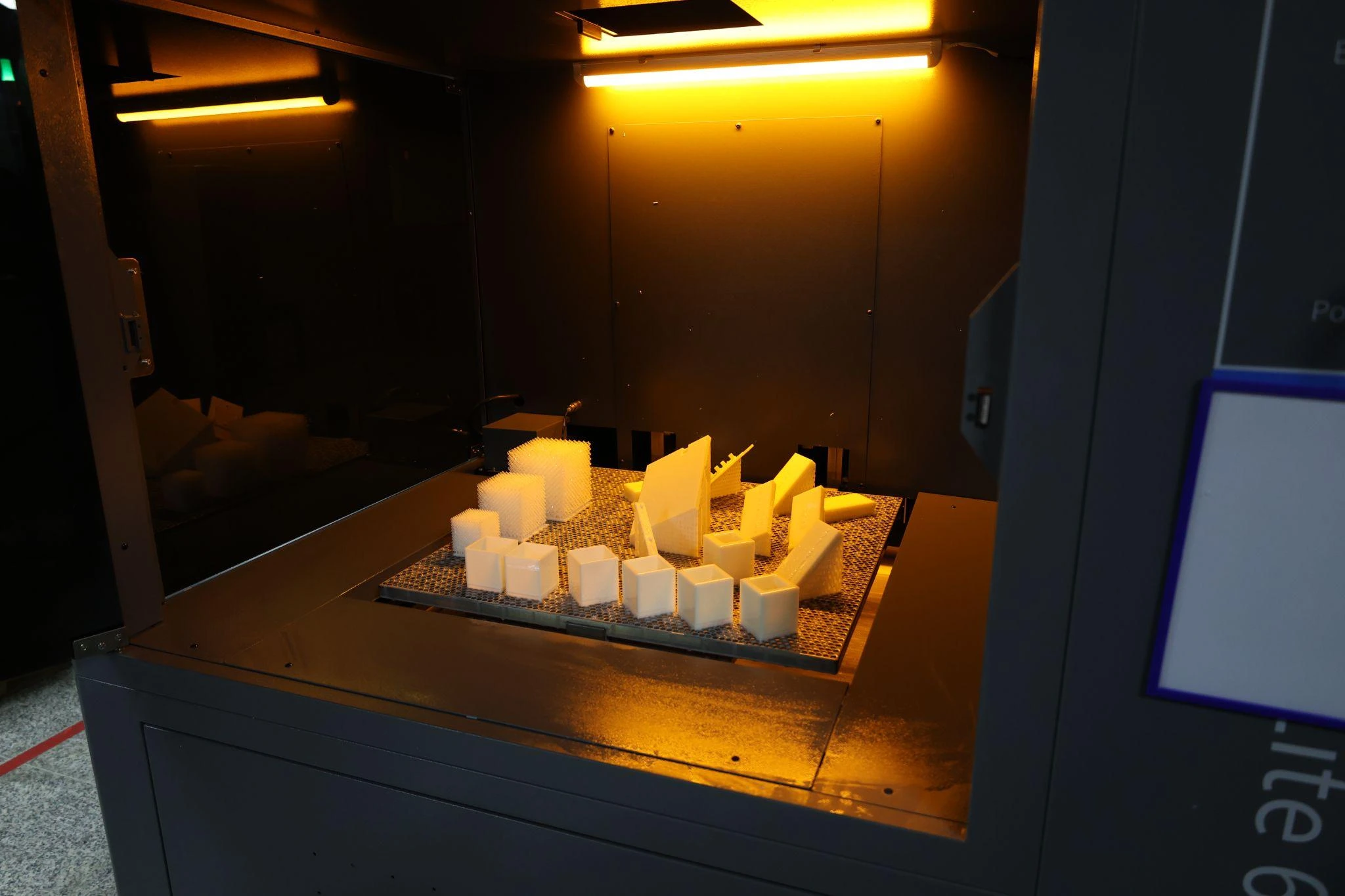
When an engineering team sits down for a 3D printing cost comparison, they can't just find the lowest quote for a single part. The engineers have to map how the price-per-unit shifts as you move from a "one-off" prototype to a thousand-unit production run.
A single 3D-printed housing might run you $40, while a traditional machined version could cost triple that due to setup time. However, the math flips once you scale. For hardware startups and product developers, the real challenge is identifying the "break-even" point, where the upfront investment in tooling actually starts to pay for itself through lower per-unit costs.
What Actually Drives 3D Printing Expenses?
Unlike a mill or a press, additive manufacturing doesn't care about "setup," but it’s highly sensitive to machine occupancy.
- Material Choice: You can’t compare $20/kg PLA to high-spec nylon powders or aerospace-grade metal resins. The material dictates the baseline.
- Printer "Real Estate": Pricing is usually a function of build time and volume. If a part is bulky or requires a high-resolution layer height, it stays in the machine longer, driving up the overhead.
- The "Hidden" Labor: Support removal, UV curing for resins, and surface finishing like bead blasting or dyeing add manual hours that a lot of people overlook in their initial estimates.
Here’s a full detailed 3D printing cost breakdown.
Every service provider has a slightly different algorithm for this, some favor volume, others favor complexity. You can usually get a reality check on these variables by pulling an instant quote.
Stop Guessing Your Part Costs Every geometry is different. Instead of estimating, get a precise breakdown in seconds.
3D Printing vs Injection Molding Cost Comparison
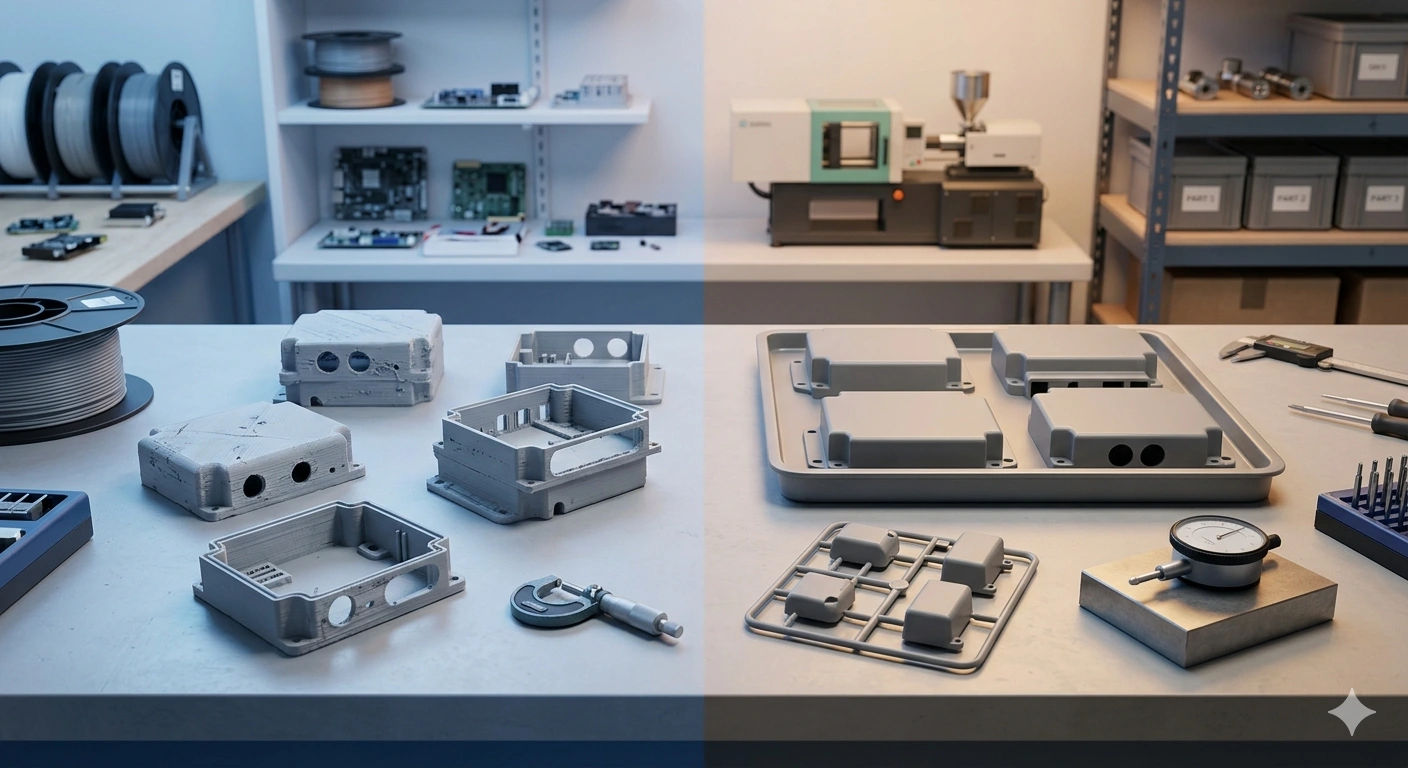
The biggest friction point in manufacturing is the Initial Mold Cost.
| Factor | 3D Printing | Injection Molding |
|---|---|---|
| Tooling | $0 | $2,000 – $50,000+ |
| Unit Cost | Flat/Higher | Pennies (at scale) |
| Lead Time | Hours/Days | Weeks/Months |
| Sweet Spot | 1–500 units | 1,000+ units |
In a vacuum, molding is unbeatable for speed and consistency. But if you only need 100 parts, paying $10k for a steel mold makes your "per-part" cost $100 plus materials. At 10,000 units, that same mold cost is amortized down to $1.00. That is the "Volume Break-Even" that dictates your production strategy. For a complete study on this, read injection molding vs 3D printing.
If you want to quickly estimate the cost of your part, you can upload your design to an online 3D printing service and receive an instant quote based on material, size, and process.

- $123 coupous for new users
- Supprots Metal, Nylon, Resins and Plastics materials
3D Printing vs CNC Machining Costs
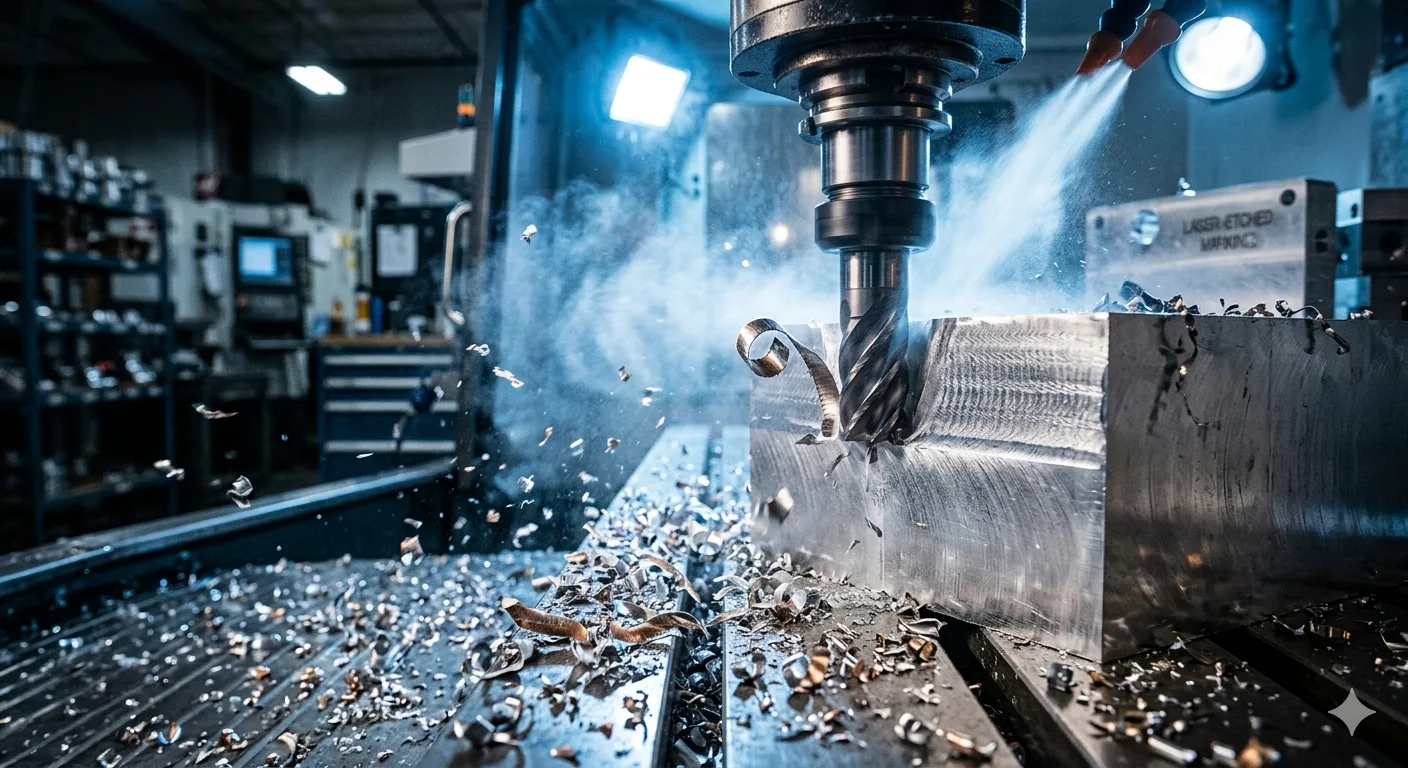
When you’re weighing 3D printing vs CNC costs, you aren’t just comparing two ways to make a part; you’re comparing two entirely different cost structures. CNC is a subtractive game, you’re paying for the material you throw away and the time it takes to carve it out. 3D printing is additive, you’re paying for machine "real estate" and the time the part sits in the chamber.
For most engineering teams, the "winner" isn't the cheapest process on paper, but the one that gets a functional part on the desk with the fewest headaches.
The Complexity Tax
In a 3D printing vs CNC machining cost comparison, "complexity" is a literal tax. Every deep cavity, undercut, or internal channel requires a new setup, specialized long-reach tooling, or a 5-axis machine that costs significantly more per hour. If a design requires a complex lattice or an organic internal flow, you might find that it’s actually impossible to machine at any price.
3D printing effectively "flattens" the cost of complexity. Because the laser or nozzle builds the part layer by layer, it doesn't care if the interior is a solid block or a complex honeycomb. For prototypes that would require four or five different setups on a mill, additive manufacturing is almost always the faster, cheaper path.
Material Waste and the "Billet" Problem
CNC machining starts with a solid block (a billet). If you’re machining a lightweight bracket out of a large chunk of aluminum, you might be turning 70% of your expensive material into "swarf" (metal chips) that just gets recycled. You're paying for the whole block, plus the time it takes to grind it down.
Additive processes only use what the part actually needs, plus a bit for supports. For hollow parts or high-end engineering plastics where the raw material is $100+/kg, the savings on "not-wasted" material can be the deciding factor in the 3D printing vs CNC cost equation.
The Setup Friction
This is the "hidden" killer of CNC budgets for small runs. Before the first chip even flies, an engineer has to:
- Map out the CAM strategy and toolpaths.
- Source or build custom fixtures to hold the part.
- Load and calibrate the specific tool library.
If you only need two parts, that setup time might represent 80% of the total bill. 3D printing has a much "shallower" entry point. Once the file is sliced, the "setup" is often as simple as hitting 'start' and ensuring the build plate is clean. This is exactly why additive dominates the rapid prototyping phase.
A Practical Roadmap
| The Scenario | The Smarter Play | Why? |
|---|---|---|
| Early Look-and-Feel | 3D Printing | Iteration speed is king; tooling is a waste of time. |
| Hyper-Complex Geometry | 3D Printing | If a tool bit can't reach it, you can't mill it. |
| High-Strength Metal Parts | CNC Machining | Billets offer superior grain structure and fatigue life. |
| Tight +/- 0.001" Tolerances | CNC Machining | Milling is still the gold standard for precision fits. |
Most successful workflows are hybrid. You print the first five versions to find the flaws, then you CNC the final version to ensure it survives the field. It’s about using the low cost of 3D printing to fail fast, so the high cost of CNC is only spent on a "final" design.
Cost of 3D Printing vs Traditional Manufacturing
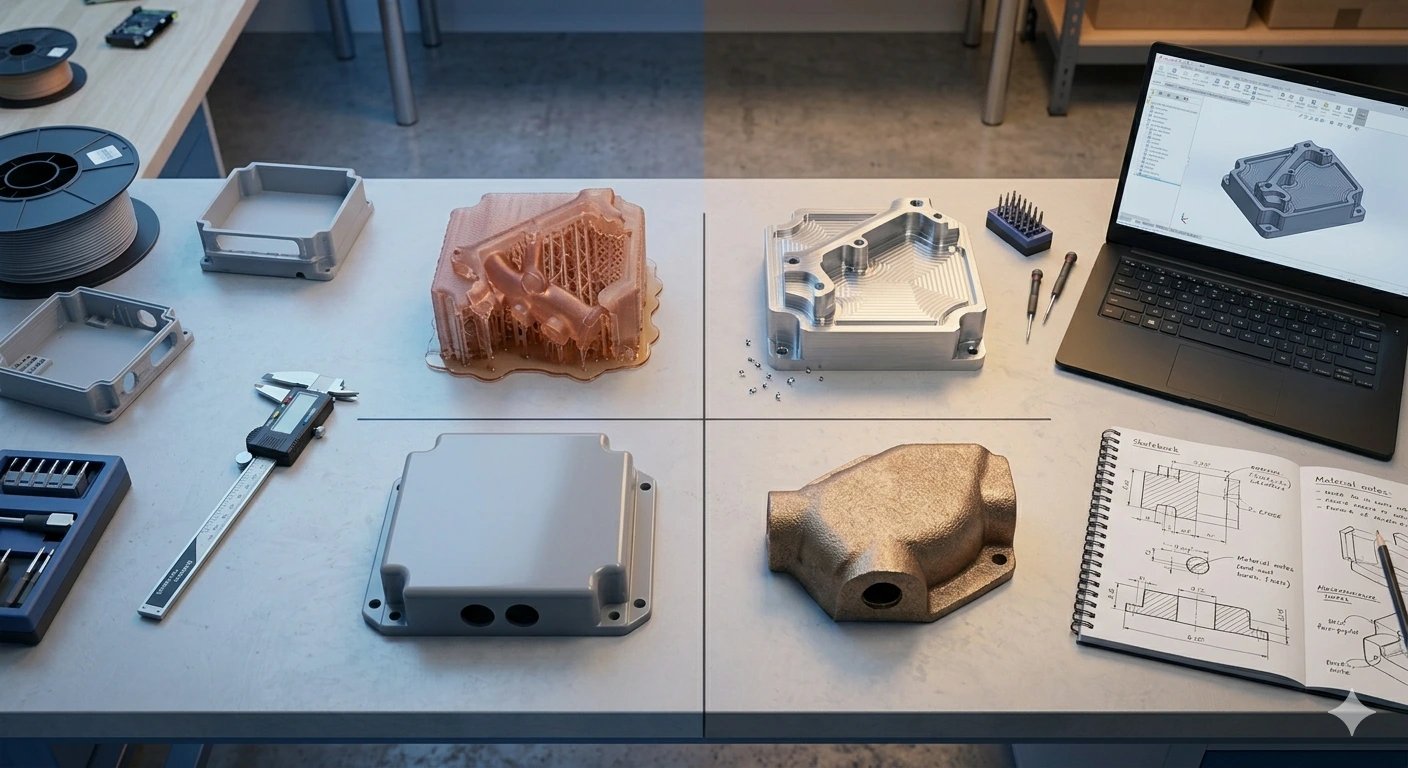
When we talk about traditional manufacturing, we’re really talking about the heavy hitters: injection molding, die casting, and high-speed machining. These processes own the world of mass production because they’ve mastered the art of the "penny-per-part." However, for an engineer in the middle of R&D, those same processes can feel like a brick wall. Comparing the cost of 3D printing vs traditional manufacturing is about how much capital you’re willing to lock up before you even know if the design works.
Setup cost
This is 3D printing and traditional methods live on different planets. In traditional manufacturing, you don't just "hit print." You have to build the machine's instructions from scratch.
- Injection Molding: To understand the cost of 3D printing vs Injection molding. You’re on the hook for a custom steel or aluminum mold that can easily clear $10,000.
- Die Casting: You need hardened tooling that can survive a literal bath of molten metal.
- CNC & Sheet Metal: You’re paying for custom jigs, fixtures, and the "tribal knowledge" of an operator setting up the run.
If you only need 50 parts, those upfront costs are a budget killer. 3D printing bypasses the "tooling tax" entirely. Your setup is the digital file. This lack of "barrier to entry" is why additive is the default for anything in the low-volume or "proof-of-concept" phase.
Scalability
Traditional processes are built for the long haul. Once that $10,000 mold is paid for, the incremental cost of making "one more part" is basically just the price of the raw plastic pellets and a few seconds of electricity. That’s how a part goes from costing $20 as a prototype to $0.20 as a product.
3D printing doesn't scale that way. The machine doesn't get faster just because you’re printing 1,000 parts instead of one. Your cost-per-part stays stubbornly flat. This is the "Additive Ceiling", at a certain volume, the efficiency of a mold or a die will always overtake the flexibility of a printer.
Lead time
In a traditional workflow, time is measured in weeks or months. You have to design the tool, wait for the tool shop to fab it, test it (T1 samples), and then finally start the run. If you find a mistake in the design during testing, you might be looking at a "tooling change" that costs more time and money.
3D printing operates in hours. It’s the difference between waiting for a cargo ship and sending an email. For rapid development, being able to hold a physical part on Tuesday that you designed on Monday is a value that doesn't always show up on a simple cost-comparison spreadsheet, but it's what keeps a project moving.
Design flexibility
Traditional methods are full of "No's." No, you can't have that undercut. No, that draft angle is too shallow. No, the drill bit can't reach that internal corner. You are constantly designing around the limitations of the tool.
3D printing says "Yes" to geometries that would be a nightmare to machine or mold. Internal cooling channels, complex lattices, and organic, "bionic" shapes are suddenly fair game because there’s no tool bit or mold pull to worry about. This freedom is why we see additive used so heavily in aerospace and medical, where performance is worth the higher per-unit price.
When 3D printing makes the most economic sense
Even with a higher price-per-part, 3D printing is the "smart" money in specific zones:
- Early R&D: When the design is still "fluid" and changing every week.
- Bridge Production: Making 200 parts to get to market while you wait three months for your production molds to arrive.
- Complex Manifolds: When the part is so intricate that a traditional process would require five different sub-assemblies.
- Legacy Parts: When you need a replacement gear for a machine from 1985 and the original molds are long gone.
In these cases, you aren't overpaying for a part, you’re paying for the speed and the lack of risk.
Cost Comparison Table
To make the cost of 3D printing vs traditional manufacturing easier to evaluate, the table below summarizes the major cost factors that engineers consider when selecting a manufacturing process.
| Process | Typical Setup Cost | Per-Unit Cost (Low Volume) | Per-Unit Cost (High Volume) | Lead Time | Design Flexibility | Material Waste | Best For |
|---|---|---|---|---|---|---|---|
| 3D Printing | Very low (no tooling) | Medium | Medium | Hours to days | Very high | Low | Prototypes, complex geometries, small production batches |
| Injection Molding | Very high (custom molds) | Extremely high | Very low | Weeks for tooling | Moderate | Very low | Mass production of plastic parts |
| CNC Machining | Medium (programming and setup) | Medium | Medium–low | Days to weeks | Moderate | Moderate to high | Precision metal or engineering plastic parts |
| Casting / Traditional Manufacturing | High (dies, molds, or tooling) | High | Low | Weeks to months | Low to moderate | Moderate | Large-scale production of metal components |
This comparison highlights the core principle behind most 3D printing cost comparisons:
- 3D printing minimizes setup cost and maximizes design flexibility.
- Traditional manufacturing minimizes per-unit cost at high production volumes.
For engineers and product developers, selecting the right manufacturing method usually depends on production volume, required tolerances, and product development stage.
FAQs about 3D Printing Cost Comparison
Q1: Is 3D printing cheaper than injection molding?
A: For low production volumes, yes. In most 3D printing vs injection molding cost comparison scenarios, 3D printing is cheaper for prototypes and small batches because it eliminates mold tooling costs.
Q2: When does injection molding become cheaper than 3D printing?
A: Injection molding typically becomes more economical once production reaches 1,000–10,000 units, depending on mold cost and part complexity. At higher volumes, the per-unit cost drops significantly.
Q3: Is CNC machining more expensive than 3D printing?
A: It depends on the part. In many 3D printing vs CNC cost comparisons, 3D printing is cheaper for complex prototypes, while CNC machining can become more cost-effective for functional parts that require tighter tolerances or stronger materials.
Q4: What is the cheapest manufacturing method for prototypes?
A: For most early-stage designs, 3D printing is usually the cheapest method because it avoids setup costs and allows parts to be produced directly from a CAD model.
Q5: How much does 3D printing cost at JLC3DP?
A: Pricing is highly transparent and volume-based. Industrial 3d printed parts start from $0.30, with instant online quotes available to help you manage your R&D budget in real-time.
Keep Learning
How Much Does 3D Printing Cost? A Complete Breakdown
We get this question a lot at JLC3DP: “How much does 3D printing cost?” And here’s the truth: Some projects can be surprisingly cheap, while others cost more than you’d expect. There’s a myth floating around that 3D printing is basically free once you own a printer. (If only it were that simple, right?) The reality is, whether you’re printing at home or outsourcing to a service like ours, the cost depends on a handful of important factors, machine type, materials, design complexity, and even how much ......
Top 5 3D Printer Tables of 2026: Boosting Your 3D Printing Experience
Choosing the right table for your 3D printer that enhances printing stability, reduces noise, and provides organized storage space is important for achieving high-quality prints and optimizing your workflow. In this guide, we'll look at what makes a good 3D printer table and recommend the best 3D printer tables on the market in 2026. Below are our top five 3D printer tables and stands for 2026, highlighting their features, benefits, and why they might be perfect for your printing space. Best 3D Printe......
Recommended Best Resin 3D Printers in 2024
In recent years, resin 3D printers have developed rapidly in the home 3D printer market. Compared with traditional FDM printing, resin printers can provide higher precision and more delicate printing details. The improvement of printing technology allows users to easily complete the production of high-precision models at home. This article will recommend several of the most competitive resin 3D printers in the 3D printing market in 2024 to help you choose the most suitable equipment and the factors to......
How Much is a 3D Printer? A Comprehensive Guide for Every Budget
3D printing is becoming more and more popular, bringing countless creative and practical possibilities. So how much is a 3D printer? 3D printers have a very wide price range, depending on the printing process, materials, and complexity of the 3D printing solution. This article will analyze the cost of 3D printers based on their type and intended use, helping you find a model that fits your budget. Types of 3D Printers and Their Costs 1. Entry-level 3D Printers ($100 - $500) Entry-level 3D printers are......
Best 3D Printers for Beginners
Embarking on your journey into the world of 3D printing can be both exciting and daunting. With a plethora of options available, choosing the right 3D printer as a beginner is crucial for a smooth transition into additive manufacturing. To simplify your decision-making process, we've curated a list of the top 10 beginner-friendly 3D printers that offer a perfect balance of affordability, ease of use, and quality output. Creality Ender 3 V2 Neo Price: $379.00 Features: Full-metal integrated design, CR ......
Recommended and Purchase Guide for Small 3D Printers in 2024
In previous blog posts, we have introduced many excellent 3D printers on the market. If you are a beginner and want to enter the field of 3D printing, but don’t want to spend too much money or need a large workspace, a small 3D printer is a suitable purchase option. In this article, we will introduce the most recommended small 3D printers in 2024, focusing on their functions and technical features. If you are still in the watch-and-wait stage for 3D printer consumption, it is recommended to use JLC3DP......