3D Printing Titanium Cost in 2026: Pricing, Factors & How to Save
14 min
- Introduction
- How Much Does It Cost to 3D Print Titanium?
- How Titanium 3D Printing Cost is REALLY Calculated
- Titanium Additive Manufacturing Cost Breakdown
- What Drives Titanium Additive Manufacturing Costs?
- Real-World 3D Printing Titanium Cost Examples
- Why Your Titanium Part Costs $80 vs $300 (Design Breakdown)
- How to Reduce Titanium 3D Printing Cost by 30–50%
- Titanium 3D Printing Specifications
- FAQ about the Cost of 3D Printing Titanium Parts
Key Takeaways
- 2026 Price Benchmarks: Titanium 3D printing typically costs $5–$20 per cm³. While raw powder costs ~$300–$600/kg, the primary expense is machine time.
- Time > Weight: Machine uptime (40–70%) and post-processing (20–50%) drive costs. A tall or solid part often costs more than a complex, lightweight lattice of the same mass.
- Design for Savings: You can reduce costs by 30–50% through hollowing, topology optimization, and orienting parts to minimize Z-height and supports.
- Efficiency in Numbers: Batching multiple parts in one build reduces unit costs by 20–50% by spreading setup and atmospheric overhead.
Introduction
(source: Reddit)
Titanium sounds expensive. The reality is more specific than that.
You’re not really paying for the metal. You’re paying for how hard it is to process titanium with lasers, layer by layer, without defects. That’s where titanium additive manufacturing cost builds up.
So if you’ve been asking how much does it cost to 3D print titanium? Here's the clean answer first.
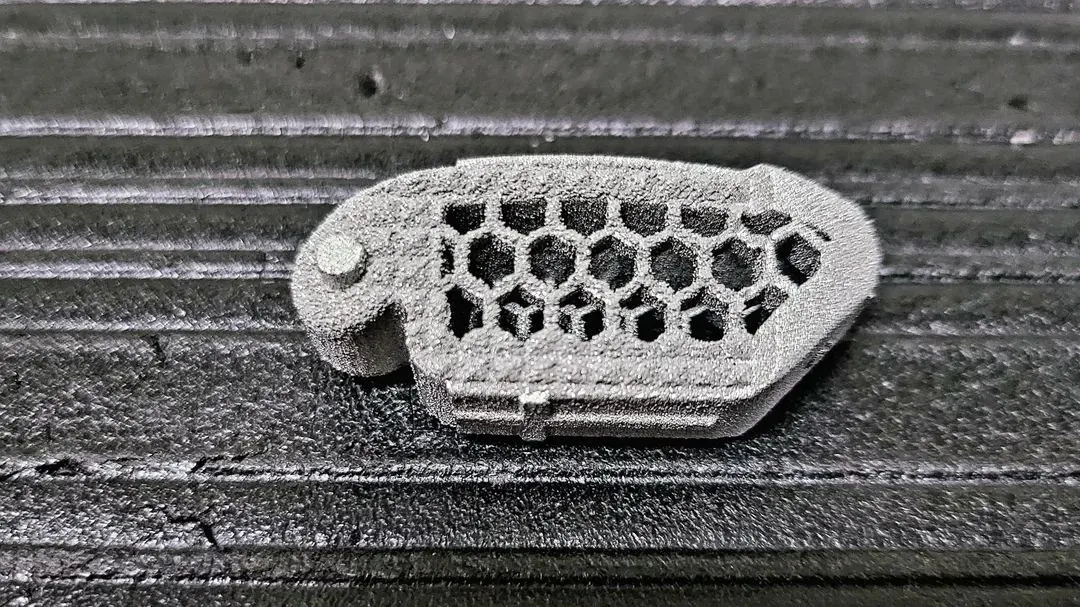
In 2026, titanium 3D printing cost typically ranges from $5 to $20/cm³ (High-end aerospace or medical parts may exceed this range due to certification and post-processing requirements.).
That covers most SLM titanium 3D printing cost and DMLS titanium cost scenarios using Ti6Al4V (Grade 5).
Simple parts stay affordable because they require less engineering and have a higher success rate. Conversely, complex geometries like lattice structures or internal channels drive prices up by requiring slower print speeds and intensive post-processing. To manage expenses, batch builds are essential. Maximizing tray space reduces the cost per unit in low-volume production by spreading setup and material overhead across more parts.
If you convert it another way, the 3D printed titanium price per kg usually falls between $300–$600/kg for powder depending on supplier, particle size distribution and certification grade, but that’s only a small piece of the final price.
The real driver is machine time.
If you want an exact number instead of estimates, upload your CAD file to JLC3DP and receive real-time pricing based on geometry and material.

| Factor | Typical Range (2026) | What It Means |
|---|---|---|
| Cost per cm³ | $5 – $20 | Base pricing for most titanium 3D printing |
| Material (Ti6Al4V) | ~$300 – $600/kg | Powder cost is stable but not the main driver |
| Machine time | 40% – 70% of cost | Laser exposure + build duration |
| Post-processing | 20% – 50% | Support removal, heat treatment, finishing |
| Batch size impact | -20% to -50% | Larger builds reduce cost per part |
How Much Does It Cost to 3D Print Titanium?
(source: Meld)
If you’re trying to estimate titanium additive manufacturing cost, size alone won’t give you the full picture. Two parts with the same dimensions can land in completely different price ranges depending on geometry, supports, and finishing.
Still, there are some reliable benchmarks you can use for quick estimation.
Typical Titanium 3D Printing Price by Part Type
| Part Type | Typical Size | Estimated Cost (USD) |
|---|---|---|
| Small Bracket | 30 × 20 × 10 mm | $80 – $150 |
| Functional Component | ~100 mm scale | $200 – $600 |
| Complex Lattice Structure | High complexity | $500+ |
For simple geometries, the 3d print titanium cost stays closer to the lower end. Once you introduce internal channels, lattice structures, or tight tolerances, the cost of 3D printing titanium parts rises quickly.
This is where SLM titanium 3D printing cost and DMLS titanium cost start to diverge from basic estimates. More supports, longer build time, and post-processing push the price up.
If you’re working with Ti6Al4V, which is the standard for most industrial applications, the Ti6Al4V 3D printing cost will follow these ranges closely. The same applies to Ti6AI4V Grade 5 titanium 3D printing price, since it’s essentially the same material.
For low volume titanium 3D printing cost, batching parts in a single build can reduce the price per unit significantly. That’s one of the easiest ways to move toward affordable titanium 3D printing without changing the design.
If you want a precise number for your part, the fastest way is to get a titanium 3D printing online quote. Geometry matters too much to rely on rough estimates alone.
How Titanium 3D Printing Cost is REALLY Calculated
(source: Meld)
To understand titanium pricing, you must move beyond the traditional "price per gram" mindset. In Powder Bed Fusion (SLM/DMLS), you aren't just paying for metal; you are paying for machine uptime and the controlled environment required to process reactive metals.
- Machine Hourly Rate: This is the primary cost driver, accounting for 40%–70% of the quote. High-end industrial printers represent a massive capital investment, and every second the laser is active—or the coating arm is moving—is billed to the part.
- Atmospheric Control: Titanium is highly reactive. The build chamber must be vacuum-purged and flooded with high-purity Argon gas to keep oxygen levels below 100ppm. The cost of maintaining this inert environment is a fixed overhead for every build.
- Support Structures & Manual Labor: Titanium generates immense internal stress during cooling. It requires robust support structures to anchor it to the build plate. Because titanium is incredibly hard, removing these supports (via manual grinding or EDM) is labor-intensive and expensive.
- Material Loss & Recertification: Not all unused powder is recoverable. Titanium powder oxidizes over time; the cost of sieving, testing, and blending recycled powder with virgin material is factored into the final service price.
When you zoom out, titanium pricing behaves like the wider metal AM costs, where machine time, powder handling, and post-processing dominate cost rather than raw material alone.
Titanium Additive Manufacturing Cost Breakdown
When you look at a quote, it’s easy to assume the biggest cost is the metal itself. It isn’t.
Most of the titanium 3D printing cost comes from machine time and everything that happens after the part is printed.
Here’s how the cost of 3D printing titanium parts typically breaks down in 2026:
| Cost Component | % of Total Cost | What You’re Actually Paying For |
|---|---|---|
| Machine Time (SLM/DMLS) | 40% – 70% | Laser exposure, build duration, controlled environment |
| Post-Processing | 20% – 50% | Support removal, heat treatment, surface finishing |
| Material (Ti6Al4V) | 10% – 30% | Powder consumption and reuse loss |
| Labor & Handling | 5% – 15% | Setup, monitoring, part removal, cleaning |
| Setup & Overhead | 5% – 10% | Build prep, machine calibration, quality control |
What this actually means
Machine time dominates both SLM titanium 3D printing cost and DMLS titanium cost. If your part is tall or requires long exposure time, the price climbs fast.
Post-processing is the second big driver. Complex supports or tight surface requirements can push titanium 3D printing service cost much higher than expected.
Material cost looks high on paper, especially for Ti6Al4V 3D printing cost or Grade 5 titanium 3D printing price, but it’s rarely the main reason your quote is expensive.
Where most people miscalculate
When estimating titanium 3D printing cost, many focus solely on weight. In reality, the cost structure shifts based on your design:
- Solid, Large Parts: Material cost is a major factor. The laser must "hatch" extensive areas, consuming both more powder and more machine time.
- Complex, Lightweight Parts: Machine time and post-processing dominate. Intricate lattices may weigh less but require complex laser paths and labor-intensive support removal.
Key Rule for 2026
> Time > Material and Geometry > Weight.
Two parts with the same mass can have vastly different prices based on their print complexity.
What Drives Titanium Additive Manufacturing Costs?
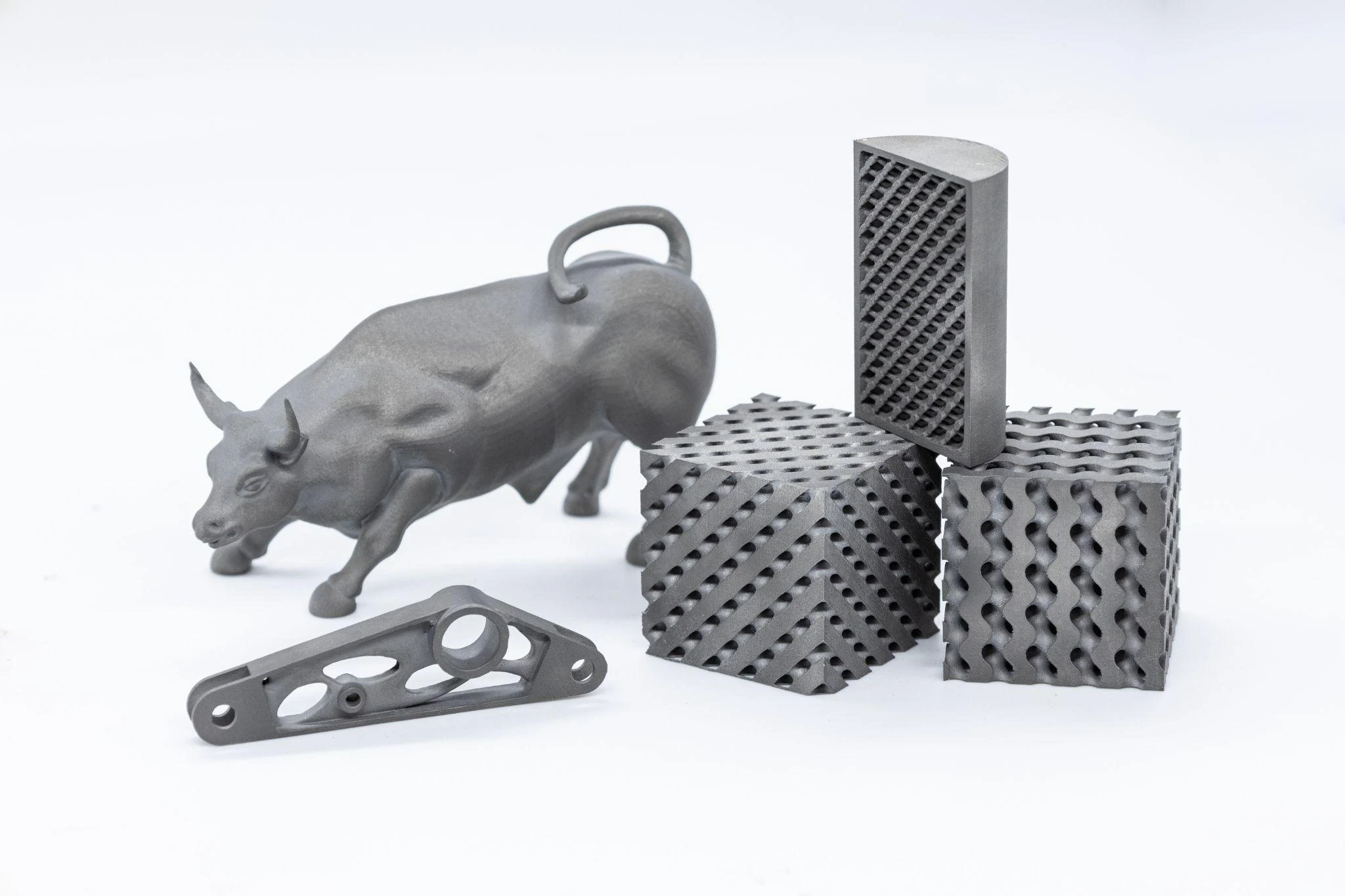
Once you understand the fixed costs, you can use these four design levers to directly influence and reduce your final quote.
1. Z-Height: The Silent Cost Driver
In 3D printing, height equals layers. Even a lightweight, thin part will be expensive if oriented vertically because it increases the total number of recoating cycles and the overall duration of the build.
- Optimization Tip: Lay parts flat whenever possible to minimize Z-height and reduce "machine rent."
2. Scan Area (Laser Exposure Time)
The laser doesn't care about weight; it cares about distance traveled. A Solid Block requires the laser to perform dense "hatching" across the entire surface, whereas a Lattice Structure only requires quick hits on the frame nodes.
- Optimization Tip: Embrace "Complexity is Free." Convert heavy solid sections into hollowed shells or topology-optimized ribs.
3. Overhang Angles and Support Volume
Any feature with an angle less than 45° relative to the build plate typically requires supports. In titanium, more supports don't just mean more wasted material—they mean hours of extra post-processing labor.
- Optimization Tip: Design with self-supporting angles (45° or greater) to eliminate the need for sacrificial structures.
4. Nesting Efficiency (Batching)
A single part carries the full weight of the machine setup and gas purging.
- Optimization Tip: By batching multiple parts in a single build, you spread the fixed setup costs across more units, significantly lowering the "Low Volume" cost per part.
Quick Comparison: Design Impact on Cost
| Design Lever | High-Cost Approach | Low-Cost Approach | Potential Savings |
|---|---|---|---|
| Internal Geometry | Solid / Overbuilt | Lattice / Topology Optimized | 30% - 50% |
| Orientation | Vertical (High Z-axis) | Horizontal (Low Z-axis) | 20% - 40% |
| Support Strategy | Steep Overhangs (<45°) | Self-Supporting Angles | 15% - 25% |
| Production Scale | Single Prototype | Batched / Nested Build | 20% - 50% |
Real-World 3D Printing Titanium Cost Examples
You don’t really understand titanium 3D printing cost until you see how small design changes shift real quotes.
Case A: Aerospace Bracket Based on Typical Industry Benchmarks
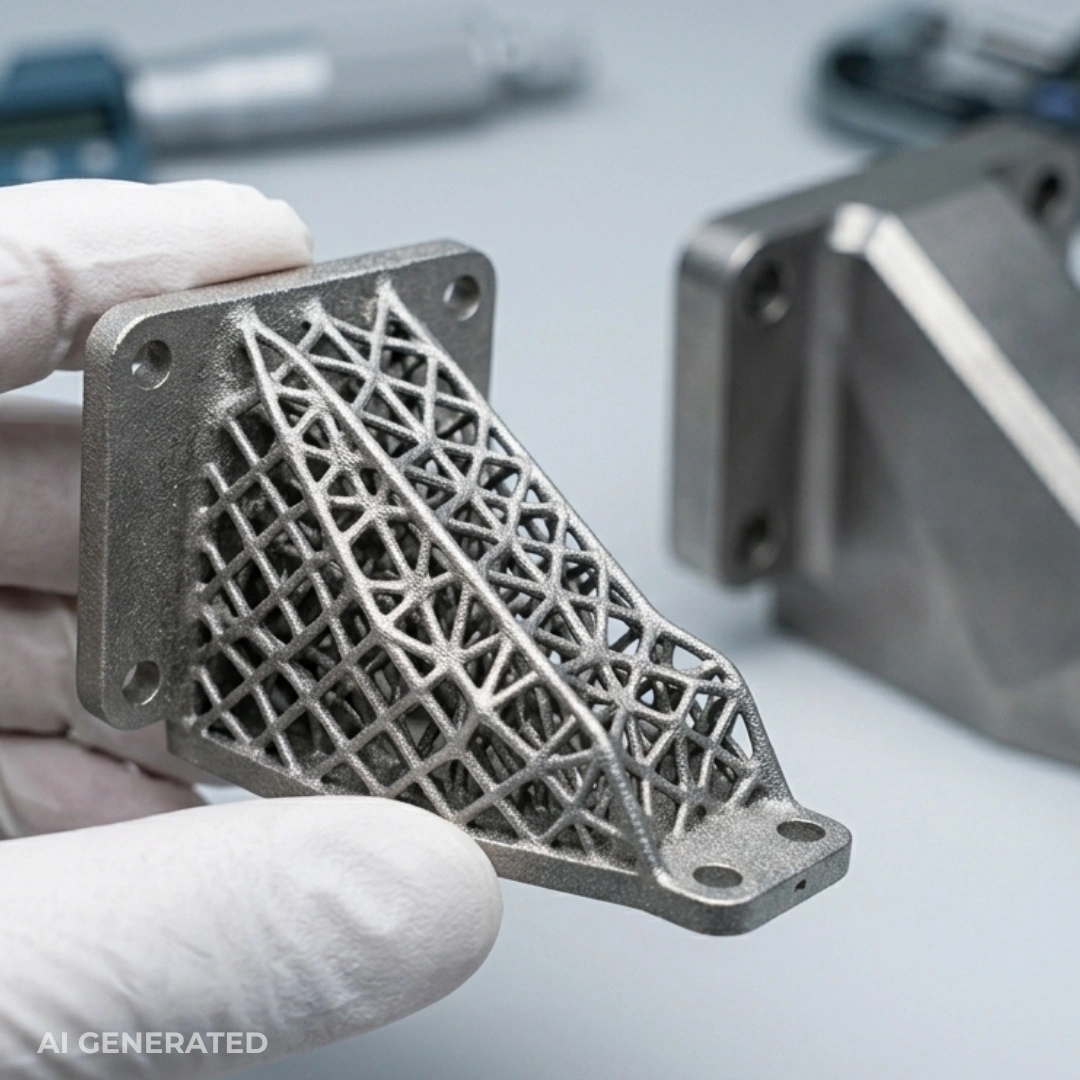
Weight reduction directly cuts both material usage and laser time. That’s where additive starts to outperform machining.
Original design (machined mindset):
A solid Ti6Al4V bracket, overbuilt for safety. Easy to machine, but heavy and inefficient for additive.
- Volume: ~65 cm³
- Build height: moderate
- Supports: minimal
- Estimated titanium 3D printing price: ~$320
Optimized design (additive mindset):
Topology-optimized bracket with internal voids and ribbing. Same load case, less material, less scan time.
- Volume: ~38 cm³
- Build height: unchanged
- Supports: similar
- Estimated 3d printing titanium cost: ~$190
What changed:
Material dropped ~40%, but more importantly, laser exposure per layer dropped, which pulled down machine time. That’s why the cost reduction is real, not just theoretical.
Case B: Medical Implant Based on Typical Industry Benchmarks
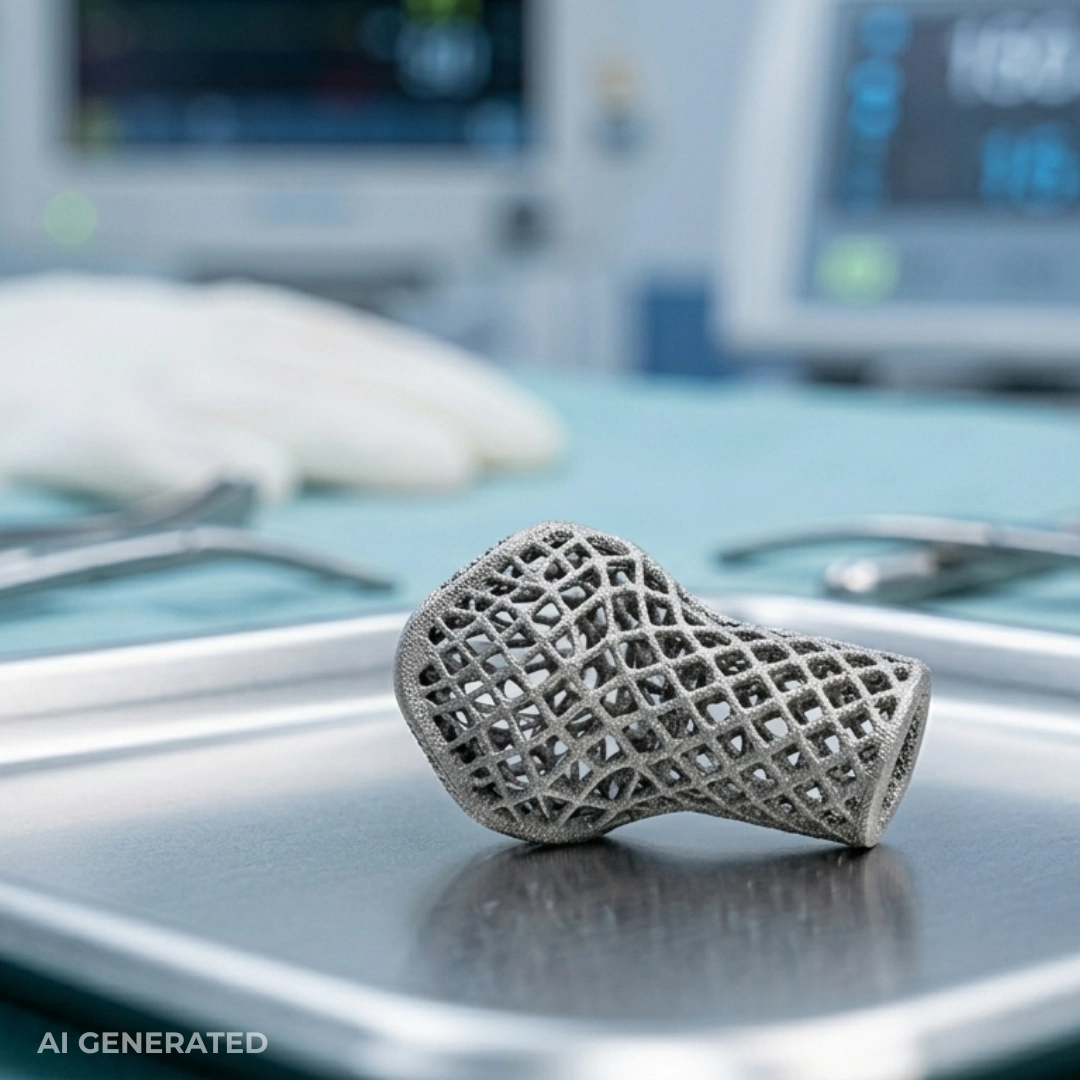
This is where CNC simply can’t compete.
Original design (CNC-compatible):
Solid implant geometry designed for subtractive manufacturing.
- Volume: ~25 cm³
- Internal structure: none
- Post-processing: machining + polishing
- Estimated cost of 3D printing titanium parts: ~$210
Optimized design (lattice implant):
Porous lattice structure for osseointegration. Lower weight, better biological performance.
- Volume: ~14 cm³ (effective solid)
- Internal lattice: complex, fully integrated
- Post-processing: similar finishing
- Estimated titanium 3D printing service cost: ~$160
What changed:
Material dropped, but the bigger shift is functionality added without cost explosion. The lattice increases geometric complexity, but doesn’t increase cost the way it would in CNC. In machining, this design isn’t even feasible.
Why Your Titanium Part Costs $80 vs $300 (Design Breakdown)
At this point, the pattern is clear. Cost doesn’t move linearly. It reacts to design decisions.
| Design Choice | Cost Impact |
|---|---|
| Solid block geometry | +150% |
| Hollow / optimized structure | -40% |
| Tall orientation (high Z-height) | +30% |
| Flat / optimized orientation | -25% |
| Heavy support requirement | +20–50% |
| Self-supporting angles (>45°) | -20% |
| Thick sections (overbuilt) | +15–30% |
| Uniform wall thickness | -10–20% |
Design decisions impact cost more than material.
That’s the part most people miss when estimating titanium additive manufacturing cost. You’re not just choosing a material. You’re choosing how efficiently the machine can build your geometry.
A small change in orientation or internal structure can shift your SLM titanium 3D printing cost more than switching suppliers ever will.
Once you understand the financial drivers, the next step is choosing the right process for your specific part. Explore how different methods and real-world use cases evolve in [3D Printing Titanium: Technologies and Applications].
How to Reduce Titanium 3D Printing Cost by 30–50%
If you’ve made it this far, you already know titanium 3D printing cost isn’t fixed. It’s design-driven. The same part, slightly reworked, can drop from $300 to under $200 without changing material or supplier.
This is what actually moves the needle.
Hollowing out parts is the most direct win. A fully solid model forces the machine to scan every layer completely. Replace that with internal honeycombs or lattice structures, and you reduce both material usage and laser exposure time. That’s why optimized parts consistently show 30–40% lower 3d printing titanium cost in real builds.
Orientation is the second lever, and most people ignore it. If you rotate a tall part flat, you’ll reduce layer count immediately. Fewer layers mean less machine time, which directly lowers SLM titanium 3D printing cost. At the same time, a better orientation reduces support structures. That cuts post-processing labor, which is often where hidden costs sit.
Assembly consolidation is where additive starts to outperform CNC in a very obvious way. If your design has five separate components, each one carries setup, handling, and alignment cost. Combine them into a single printable structure, and you eliminate those steps entirely. In low-volume production, this alone can shift titanium additive manufacturing cost by a large margin.
In 2026, titanium 3D printing is no longer limited to aerospace or large enterprises. Higher machine throughput, improved laser efficiency, and more mature powder recycling systems have reduced operational waste significantly. That shift has made industrial titanium 3D printing cost more accessible to SMEs compared to five years ago, especially in low-volume and prototype production.
Titanium 3D Printing Specifications
When engineers evaluate titanium 3D printing price, they usually ask about capability limits. These numbers define what’s realistic before cost even comes into play.
| Specification | Typical Range (2026) | Impact on Cost & Quality |
|---|---|---|
| Dimensional Tolerance | ±0.1 – 0.2 mm | Tighter tolerances require secondary CNC finishing (+Cost). |
| Layer Thickness | 20 – 60 µm | Thinner layers improve Ra (surface finish) but increase machine time. |
| Standard Material | Ti6Al4V (Grade 5) | The industry baseline for high-strength industrial parts. |
| High-Purity Grade | Ti6Al4V ELI (Grade 23) | Essential for medical/implants; involves stricter QC overhead. |
RFQ vs. Instant Quoting: Why Speed Matters in 2026
Traditional RFQs (Request for Quote) often take 24–72 hours, creating a bottleneck in the design cycle. In 2026, the shift toward Instant Quoting Platforms like JLC3DP has changed how engineers optimize for cost.
- Real-Time Iteration: Instead of waiting days, you can upload a CAD file and see how changing the orientation or hollowing a part affects the price in seconds.
- Transparency: No more "black box" pricing. You see exactly how much you pay for machine time vs. material.
- Efficiency: Instant feedback reduces the design-to-production cycle by up to 50%, allowing for more aggressive cost optimization before the first layer is even printed.
Ready to print your Titanium project? Experience high-performance SLM 3D printing with JLC3DP.
- Supprot Titanium TC4 and 316L Metal materials
- From $8.0|96h Lead Time
FAQ about the Cost of 3D Printing Titanium Parts
Q1: Is titanium 3D printing cheaper than CNC?
It depends on geometry. For complex internal structures and low volumes, titanium 3D printing cost is lower than CNC. For simple, high-volume parts, CNC machining is usually cheaper.
Q2:What is the cheapest titanium 3D printing service?
The lowest cost comes from optimized SLM or DMLS workflows with automated build preparation and shared batch production. Platforms with instant quoting typically reduce overhead.
Q3:Why is Ti6Al4V so expensive?
Ti6Al4V powder is costly due to controlled atomization, strict aerospace-grade quality requirements, and low production yield compared to standard metals.
Keep Learning
How Much Does 3D Printing Cost? A Complete Breakdown
We get this question a lot at JLC3DP: “How much does 3D printing cost?” And here’s the truth: Some projects can be surprisingly cheap, while others cost more than you’d expect. There’s a myth floating around that 3D printing is basically free once you own a printer. (If only it were that simple, right?) The reality is, whether you’re printing at home or outsourcing to a service like ours, the cost depends on a handful of important factors, machine type, materials, design complexity, and even how much ......
Top 5 3D Printer Tables of 2026: Boosting Your 3D Printing Experience
Choosing the right table for your 3D printer that enhances printing stability, reduces noise, and provides organized storage space is important for achieving high-quality prints and optimizing your workflow. In this guide, we'll look at what makes a good 3D printer table and recommend the best 3D printer tables on the market in 2026. Below are our top five 3D printer tables and stands for 2026, highlighting their features, benefits, and why they might be perfect for your printing space. Best 3D Printe......
Recommended Best Resin 3D Printers in 2024
In recent years, resin 3D printers have developed rapidly in the home 3D printer market. Compared with traditional FDM printing, resin printers can provide higher precision and more delicate printing details. The improvement of printing technology allows users to easily complete the production of high-precision models at home. This article will recommend several of the most competitive resin 3D printers in the 3D printing market in 2024 to help you choose the most suitable equipment and the factors to......
How Much is a 3D Printer? A Comprehensive Guide for Every Budget
3D printing is becoming more and more popular, bringing countless creative and practical possibilities. So how much is a 3D printer? 3D printers have a very wide price range, depending on the printing process, materials, and complexity of the 3D printing solution. This article will analyze the cost of 3D printers based on their type and intended use, helping you find a model that fits your budget. Types of 3D Printers and Their Costs 1. Entry-level 3D Printers ($100 - $500) Entry-level 3D printers are......
Best 3D Printers for Beginners
Embarking on your journey into the world of 3D printing can be both exciting and daunting. With a plethora of options available, choosing the right 3D printer as a beginner is crucial for a smooth transition into additive manufacturing. To simplify your decision-making process, we've curated a list of the top 10 beginner-friendly 3D printers that offer a perfect balance of affordability, ease of use, and quality output. Creality Ender 3 V2 Neo Price: $379.00 Features: Full-metal integrated design, CR ......
Recommended and Purchase Guide for Small 3D Printers in 2024
In previous blog posts, we have introduced many excellent 3D printers on the market. If you are a beginner and want to enter the field of 3D printing, but don’t want to spend too much money or need a large workspace, a small 3D printer is a suitable purchase option. In this article, we will introduce the most recommended small 3D printers in 2024, focusing on their functions and technical features. If you are still in the watch-and-wait stage for 3D printer consumption, it is recommended to use JLC3DP......