PolyJet Alternatives: Compare Full Color 3D Printing Technologies
17 min
- What Is PolyJet 3D Printing?
- How Material Jetting Works
- Why Companies Look for PolyJet Alternatives
- Top PolyJet Alternatives in Full-Color 3D Printing
- Technology Comparison: PolyJet vs Alternative Technologies
- Cost Comparison: PolyJet vs Alternative Technologies
- Applications: When to Choose PolyJet vs Alternatives
- How to Choose the Right Full-Color 3D Printing Technology
- FAQ about PolyJet Alternative
- Conclusion
What Is PolyJet 3D Printing?
PolyJet, commercialized by companies like Stratasys, is one of the most widely recognized material jetting technologies for high-resolution, multi-material 3D printing.
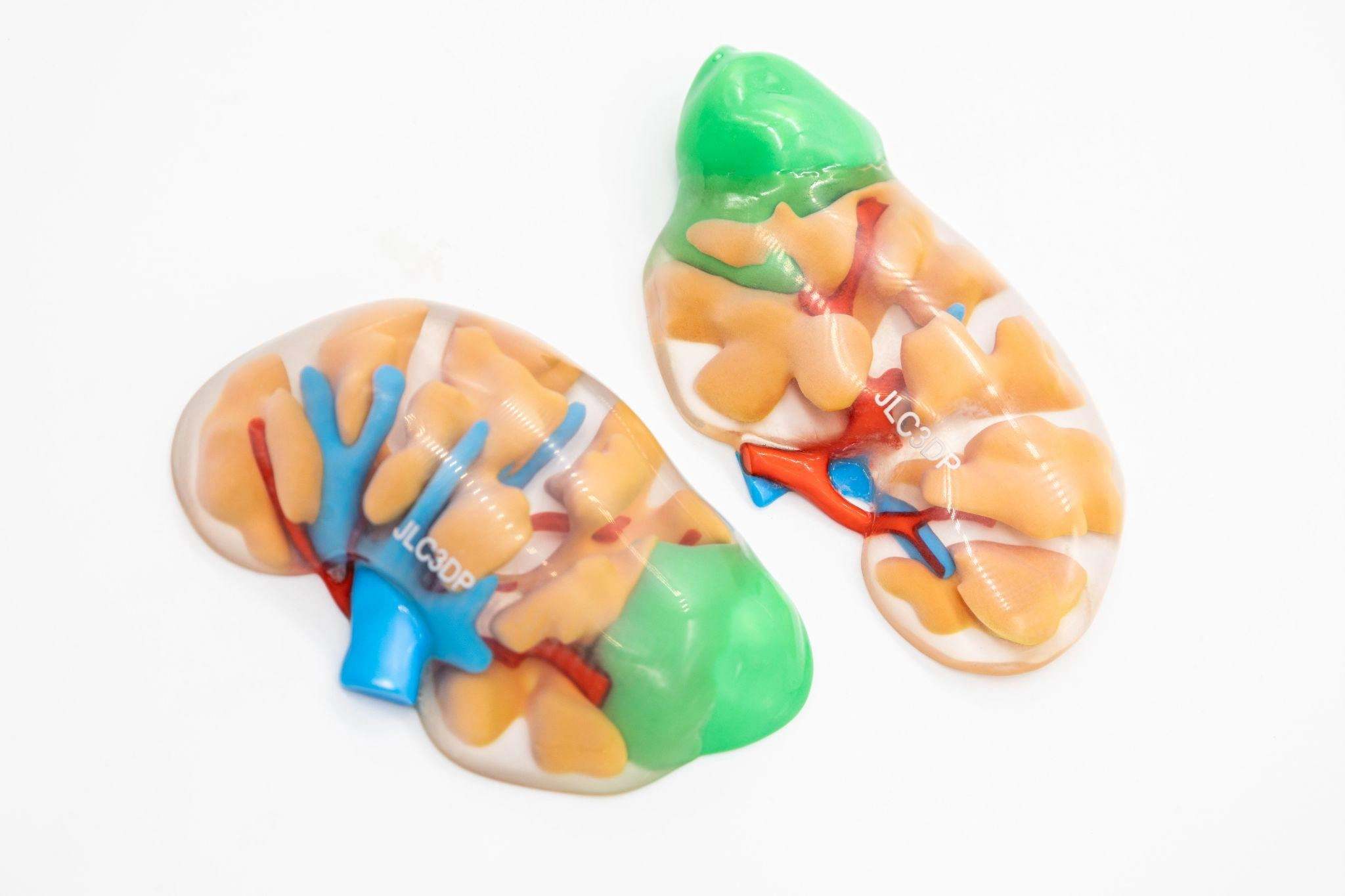
PolyJet usually enters the conversation when a project demands a level of detail that standard FDM or SLS just can't touch (Here’s a comparison of FDM vs SLS vs SLA if you want to look into that). Unlike other additive processes that extrude a bead of plastic or melt a bed of powder, PolyJet operates more like a high-end 2D inkjet printer, but with a UV-curable photopolymer.
The print head jets microscopic droplets of liquid resin onto the build tray, which are then instantly cured by a UV light source moving alongside the head. This layer-by-layer "jet and cure" method allows for incredibly thin layers, often as fine as 16 microns, resulting in parts that are dimensionally stable and virtually smooth to the touch right off the build plate.
For engineers, the real value lies in the aesthetic fidelity; it’s one of the few ways to produce a 3D-printed prototype that is visually indistinguishable from a finished, injection-molded product.
The problem with most PolyJet guides is that they read like a technical manual from 2012. If you're an engineer, you already know it "sprays resin." What you actually need to know is the functional trade-off: when does the extreme detail stop being an asset and start becoming a budget liability?
How Material Jetting Works
Think of PolyJet (and its counterparts like WJP) not as a traditional 3D printer, but as a high-precision 2D inkjet that just happens to stack its ink. While FDM struggles with "stair-stepping" and SLA deals with resin shrinkage, Material Jetting jets liquid photopolymer in droplets measured in microns.
The Physics of the "Instant Cure"
What sets this tech apart isn't just the spray, it’s the UV trailing edge. By curing the resin the millisecond it hits the bed, you eliminates the 'slumping' or 'sagging' common in slower-curing resin processes.. This immediate transition from liquid to solid is why your tolerances stay locked in, especially on thin-walled enclosures or complex interlocking gears where a fraction of a millimeter is the difference between a fit and a fail.
Multi-Material: The Real Strategic Advantage
Most printing technologies are "monolithic", you get one material per build. Material Jetting is one of the few places where you can print a rigid casing with an integrated, rubber-like gasket in a single pass.
- The Prototyping Benefit: You can simulate overmolding without the $10k tooling cost.
- The Aesthetic Benefit: This is the gold standard for full-color "Vero" style prints. If your project requires PANTONE-validated color accuracy for a stakeholder presentation, this is usually the only path forward.
The Cost vs. Quality Calculation
PolyJet is rarely the cheap option especially in multi-material builds where support material usage increases total cost. Between the specialized resins and the maintenance of the jetting heads, the cost per part is high.
PolyJet vs SLA: Key Differences
| Feature | Material Jetting (PolyJet) | SLA Resin |
|---|---|---|
| Layer Thickness | 16–30 Microns (Ultra-fine) | 25–100 Microns |
| Surface Finish | Smooth, injection-mold quality | Smooth, but may show supports |
| Color Accuracy | High (CMYK/Multi-color) | Limited (Monochrome/Translucent) |
| Primary Cost | High (Machine/Material) | Moderate |
Finding the "Smarter" PolyJet Alternative
Because of those high overheads, many engineering teams are shifting toward services like JLC3DP’s WJP (White Jet Process) , a material jetting–based full-color 3D printing process used for high-resolution visual models). It offers the same ultra-high resolution and smooth surface finish but at a price point that actually scales.
If your goal is to validate the look and feel of a consumer electronic device before cutting steel for a mold, WJP gives you that "final product" finish without the typical PolyJet price tag. It bridges the gap between a rough "proof of concept" and a high-fidelity marketing sample.
Upload your CAD file to JLC3DP to get an instant quote and compare PolyJet alternatives for your application.
Why Companies Look for PolyJet Alternatives
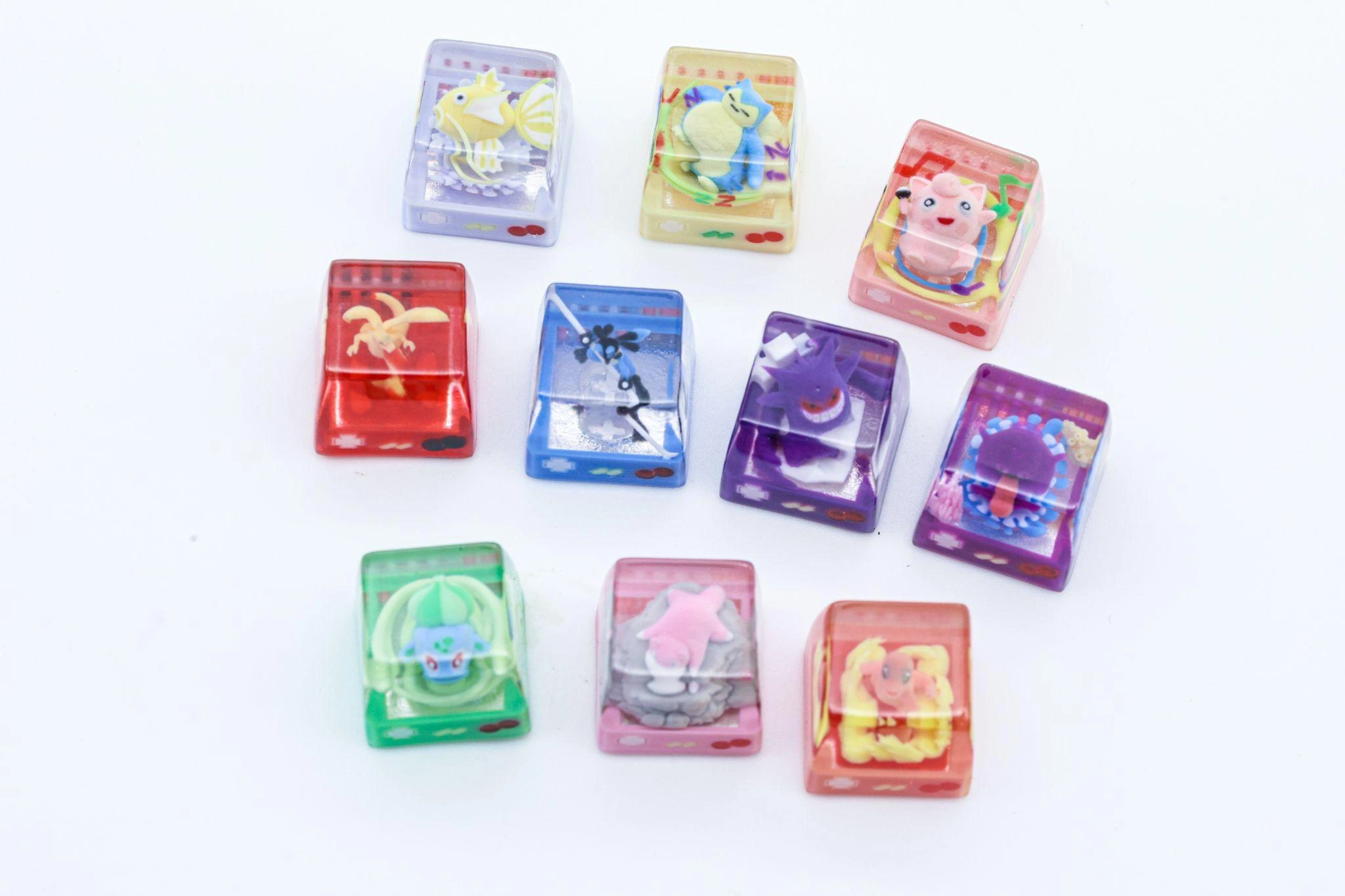
The shift typically happens after multiple design iterations, when the cost of “just one more prototype” starts adding up. PolyJet delivers strong surface quality, no question. But once teams move past early validation, the total spend becomes harder to ignore. That’s typically when a PolyJet alternative enters the discussion.
High Equipment Cost
The first barrier shows up at the machine level. Industrial PolyJet systems don’t sit in the “casual purchase” category. You’re looking at mid-to-high six-figure investments, often $100,000 to $500,000+, depending on configuration.
That limits ownership to larger labs or service providers. Smaller teams don’t usually bring that in-house. They outsource, which adds another layer of cost and dependency. At that point, evaluating a PolyJet alternative isn’t optional. It’s practical.
Expensive Materials
Then comes material pricing. PolyJet photopolymers don’t behave like standard resins in cost. In many cases, they run 2 to 3 times higher per kg, especially for specialty finishes or flexible variants.
That’s manageable for one or two parts. It breaks down when you’re running repeated design cycles. Ten iterations later, material alone becomes a budget line item. This is where most teams start actively looking for a PolyJet alternative just to keep recurring costs under control.
Limited Accessibility
Access is the quieter problem, but it shows up fast. Not every supplier offers consistent PolyJet capacity, especially when timelines are tight. Lead times stretch then priorities shift.
That delay hits development speed. And once timelines slip, teams don’t wait. They switch to a PolyJet alternative that’s easier to access and faster to quote.
Where the Shift Is Going
This is where the market has been moving. Many companies are now leaning toward more affordable full color 3D printing solutions instead of relying entirely on PolyJet.
The goal isn’t to replace quality. It’s to control cost while keeping output usable. Newer systems manage color well enough for most visual workflows without the same material overhead or access constraints.
So the decision becomes simple. If the part needs full material behavior, PolyJet stays in play. If the goal is visual validation at scale, a PolyJet alternative starts to make more sense.
Top PolyJet Alternatives in Full-Color 3D Printing
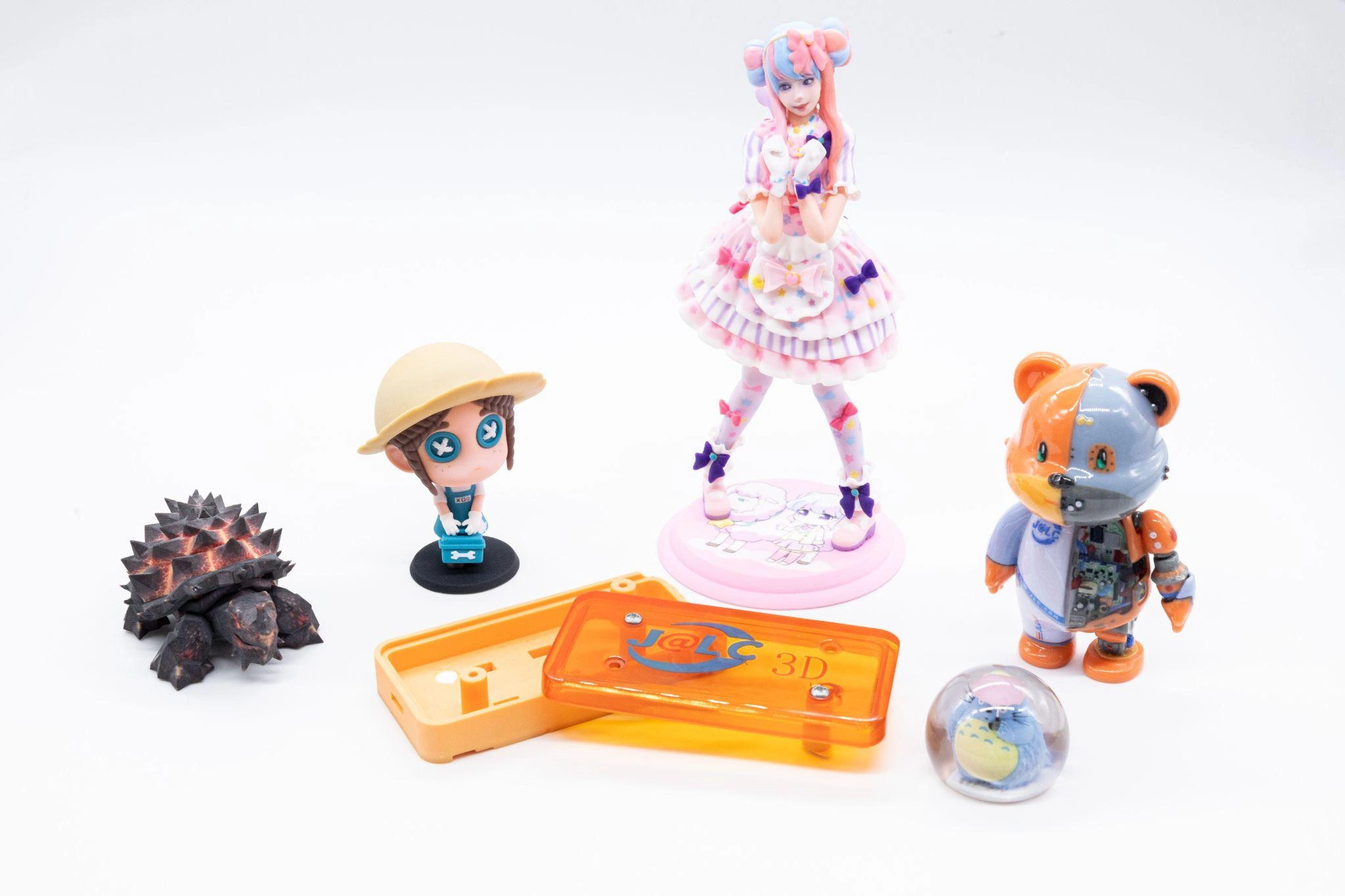
Teams don’t start looking for alternatives when everything is working. The shift usually happens when cost per part starts climbing or when output quality doesn’t justify the spend. That’s when teams begin evaluating PolyJet alternatives, especially in workflows tied to full color 3D printing technology.
Not every alternative solves the same problem. Some focus on color. Others reduce cost. A few try to balance both. The decision comes down to what the part is supposed to communicate.
1 WJP (White Jet Process)
WJP (White Jet Process) is a proprietary full-color 3D printing process based on material jetting principles. It uses a white photopolymer base combined with CMYK ink deposition during the build process to achieve high-resolution color output.
The result is controlled color output with a clean surface. Balanced surface finish without excessive gloss or color washout. Close to design intent. That makes it useful for visual prototypes where appearance matters more than material behavior.
Cost is where it starts to stand out. Material usage stays predictable, and the pricing model doesn’t spike with complexity. For teams running multiple iterations, this is usually where WJP becomes a practical PolyJet alternative.
Within the JLC3DP ecosystem, WJP is positioned as a functional alternative for iterative development. The process maintains a stable cost structure, as the pricing remains decoupled from geometric complexity. This predictability, combined with a 4-day turnaround, provides a scalable solution for teams transitioning from initial visual concepts to final-stage mockups.
- Pricing: Starts from $5.00
- Build Time: 4 days
2Binder Jetting Color Printing
This approach is similar to 3D Systems’ ColorJet Printing (CJP) technology.
Binder jetting solves cost from another angle. It uses gypsum powder and a liquid binder to form the part, then uses a liquid binder to join powder and applies color through inkjet deposition.
That process keeps material cost low. It also allows full color models at a larger scale without driving up price per part.
The tradeoff shows up in strength. Parts tend to be more fragile, especially without reinforcement. That’s why this method fits better for architectural models or concept pieces where handling is minimal.
3UV Inkjet Color Printing (Mimaki)
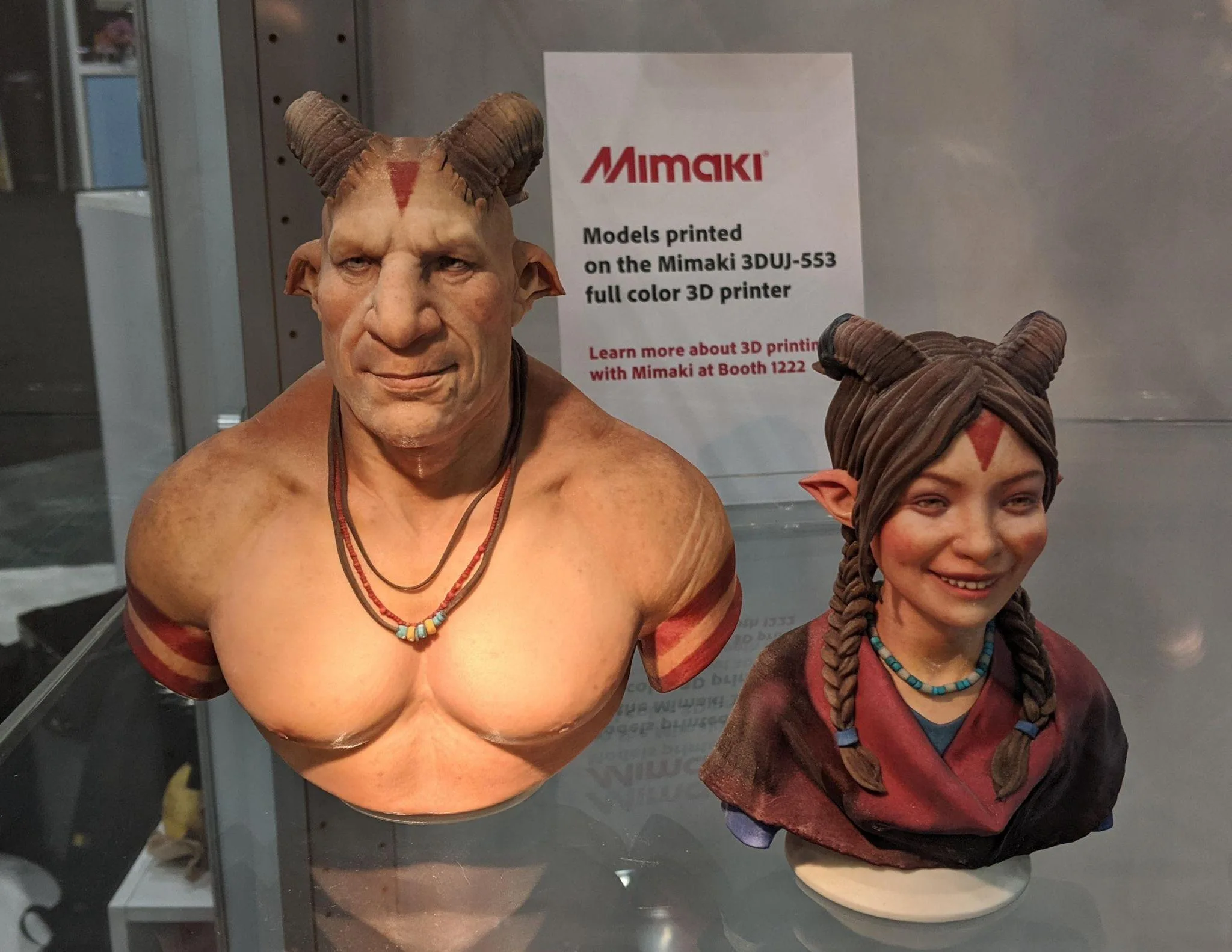
(source: Reddit) Models printed with Mimaki
Systems from Mimaki (such as the 3DUJ series) are known for their high color fidelity and voxel-level control.
UV inkjet systems push toward precision. Ink gets deposited and cured instantly, which locks in fine details and sharp edges.
Color accuracy is the main advantage here. Gradients come through cleanly. Textures hold up well under close inspection. For product mockups or presentation models, that level of control makes a difference.
It still sits as a strong PolyJet alternative, especially when the requirement is high resolution output within a full color 3D printing technology workflow.
Technology Comparison: PolyJet vs Alternative Technologies
Choosing a high-fidelity 3D printing path usually means balancing three competing variables: Chromatic Accuracy, Isotropic Strength, and The "Touch" Test.
While both use UV-curable resins, the output quality is fundamentally different. SLA (Stereolithography) draws with a laser, which can leave microscopic "stair-stepping" on curved geometries. PolyJet jets thousands of droplets simultaneously.
| Feature | PolyJet | WJP (White Jet Process) | Binder Jetting (Sandstone) | UV Inkjet (Mimaki) |
|---|---|---|---|---|
| Printing Process | Photopolymer Jetting | CMYK Inkjet on White Resin | Liquid Binder on Powder | UV-Curable Inkjet |
| Material Capability | Multi-material (Rigid + Flexible) | Single Base Resin | Gypsum/Sandstone | High-Performance Resin |
| Color Generation | Mixed Photopolymers | CMYK Ink Mixing | Inkjet on Powder Surface | 10M+ Color Tones |
| Surface Finish | Excellent (Smooth/Glossy) | Smooth & Vibrant | Grainy/Matte | Professional/Smooth |
| Durability | High (but UV sensitive) | Medium (Great for models) | Low (Brittle/Fragile) | High |
| Relative Cost | High | Cost-Efficient | Lowest | High |
1PolyJet vs WJP Key Differences
When comparing PolyJet 3D Printing vs WJP 3D Printing, the difference comes down to material capability, cost, and use case.
In practice:
- Choose PolyJet for multi-material functionality and engineering validation
- Choose WJP for full-color visual models, design reviews, and cost-efficient iteration
For most teams, WJP acts as a practical PolyJet alternative when material behavior is less critical than appearance and scalability.
2PolyJet vs Binder Jetting Key Differences
When comparing PolyJet 3D Printing vs Binder Jetting 3D Printing, the main difference lies in strength, cost, and application focus.
In practice:
- Choose PolyJet for durability, fine detail, and multi-material performance
- Choose binder jetting for large-scale, low-cost, full-color visual models
Binder jetting is often used for architectural models, figurines, and concept displays where appearance matters more than mechanical strength.
3PolyJet vs UV Inkjet Key Differences
When comparing PolyJet 3D printing vs. UV Inkjet 3D printing, the distinction lies in color depth and material versatility. Both technologies utilize UV-curable resins, yet their deposition logic differs to meet specific industrial needs.
In practice:
- Choose PolyJet for complex functional prototypes requiring multi-material properties (e.g., a rigid case with a rubber grip).
- Choose UV Inkjet for high-end visual models, medical anatomy, or collectibles where photorealistic color accuracy is the primary requirement.
While PolyJet offers tactile diversity, UV Inkjet provides a more scalable path for professional-grade, full-spectrum color output.
Cost Comparison: PolyJet vs Alternative Technologies
When a team starts comparing PolyJet vs alternative technologies, the mistake is focusing on a single part quote. The real question is how that cost behaves after the third, tenth, or fiftieth iteration.
| Cost Factor | PolyJet | WJP (White Jet Process) | Binder Jetting | UV Inkjet |
|---|---|---|---|---|
| Part Cost (Material) | High – photopolymers often cost 2–3× more than standard materials. PolyJet parts can cost 2–5× more than binder jetting for similar-sized visual models. | Moderate – lower material cost using ink on base resin | Low – powder systems reduce cost significantly | Moderate–High depending on resolution |
| Service Pricing | Premium due to machine and maintenance overhead | More competitive per gram pricing | Generally lowest service cost | Varies, often below PolyJet |
| Prototyping Budgets | High burn rate across iterations | Easier to control across multiple builds | Best for low-budget visual models | Balanced for quality vs cost |
Where the Cost Actually Hits
The first hit comes from machine economics. Industrial PolyJet systems can range from $20,000 up to $500,000+, and that’s before annual maintenance, which can add another 15–20% on top.
Then comes material. Photopolymer resins don’t behave like standard plastics in pricing. In many cases, they sit at 2 to 3 times the cost per kg, which directly pushes up PolyJet part cost.
That’s manageable for one prototype. Not for twenty.
This is where the shift happens. Teams stop asking “what’s the best output?” and start asking “what’s sustainable over multiple iterations?”
And in that moment, a PolyJet alternative stops being optional. It becomes part of the workflow.
What Teams Actually Do
Most teams don’t fully replace PolyJet. They limit it.
They use it where material behavior matters, then switch to more cost-efficient full color 3D printing for visual models, reviews, and repeated iterations.
At that stage, we at JLC3DP typically see teams move toward WJP full color printing because the price-per-gram stays predictable, especially when iteration cycles increase.
Applications: When to Choose PolyJet vs Alternatives
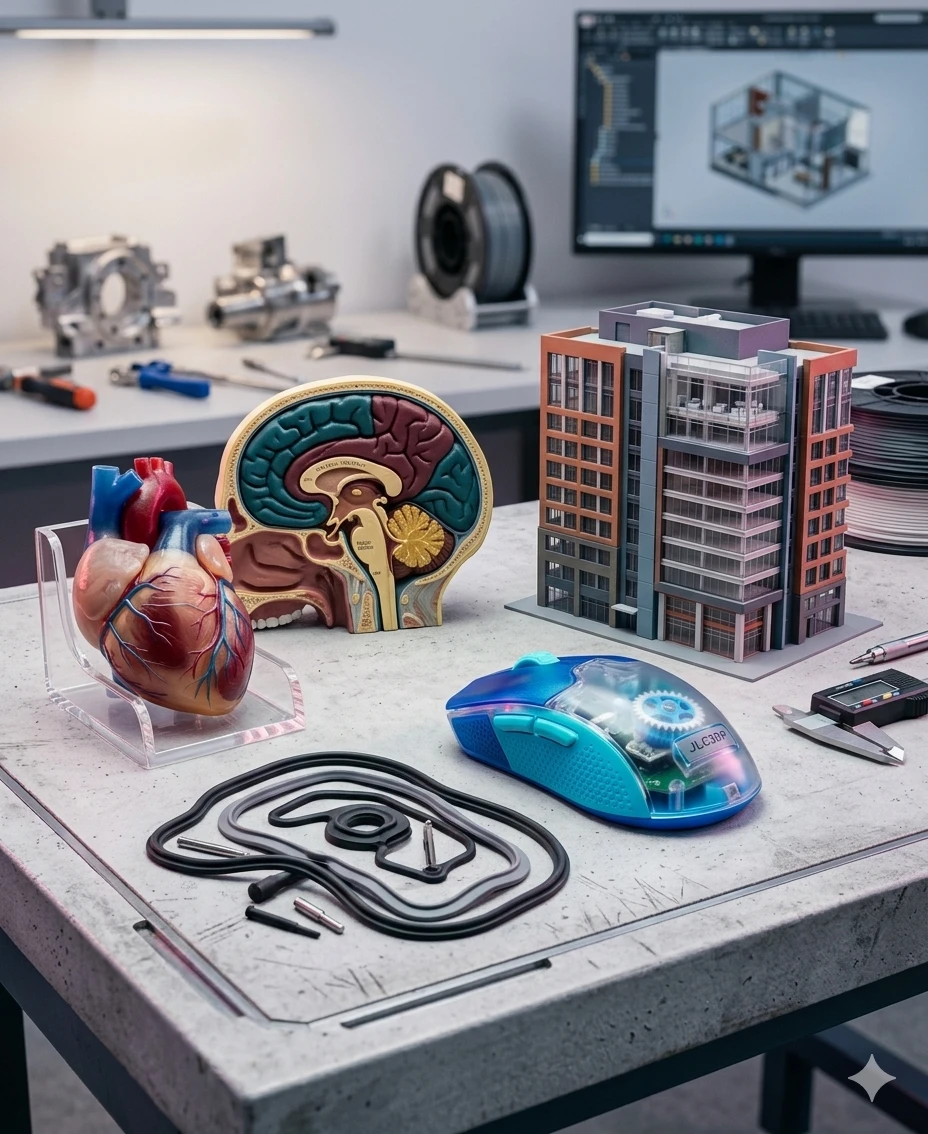
This decision usually shows up when the prototype has a job to do. Not just exist. Some parts need to behave like the final product. Others only need to communicate what the product will look like. That difference is what separates PolyJet from most alternatives.
- PolyJet
PolyJet 3D printing comes into play when function starts to matter, not just appearance.
- Multi material prototypes
Some designs don’t work as single-material parts. You need rigid sections, flexible joints, maybe even soft-touch areas in the same build. PolyJet handles that in one go. No assembly. No splitting the model into parts. That makes it easier to validate how components interact before moving to production.
- Medical models
In medical use, detail isn’t optional. You’re dealing with structures where texture and variation matter. PolyJet can replicate soft and hard regions in a single model, which is why it’s used in surgical planning and training scenarios where visual accuracy alone isn’t enough.
- Flexible components
Some parts need to bend, compress, or snap into place. PolyJet allows controlled flexibility inside the same geometry. That gives engineers a more realistic sense of how the design will behave under load, instead of guessing based on rigid prototypes.
- Alternatives
The shift to alternatives usually happens when the goal changes. Less about behavior. More about communication.
- Visual prototypes
At this stage, the part needs to look right. Color, shape, and finish take priority over mechanical performance. That’s where full color 3D printing technologies do the job without the added cost of PolyJet.
- Product design reviews
Design teams iterate fast. They need models they can produce repeatedly without stretching the budget. Alternatives allow that. You still get clear visual feedback, but without paying for capabilities you’re not using.
- Architectural models
Scale becomes the challenge here. Larger models need to stay cost-efficient while maintaining visual clarity. Alternatives handle that better, especially when strength isn’t a requirement.
- Marketing models
When the part is going in front of a client or on display, appearance carries the weight. Color accuracy and surface finish matter more than internal structure. Alternatives are built for that use case.
Quick Takeaway
PolyJet fits when the part needs to behave like a final product.
Alternatives fit when the part needs to explain the product without driving up cost.
Quick Takeaway
PolyJet fits when the part needs to behave like a final product.
Alternatives fit when the part needs to explain the product without driving up cost.
How to Choose the Right Full-Color 3D Printing Technology
Most teams don’t struggle with what exists. They struggle with what to pick. The confusion usually shows up when multiple technologies can produce a similar-looking part, but behave very differently in cost and performance.
In practice, the decision comes down to three variables. Miss one, and the entire workflow starts breaking down after a few iterations.
Color Accuracy
This is the first filter for any full color model. Not all systems handle color the same way, even if they claim to.
PolyJet blends photopolymers to simulate color. It works well for smooth gradients, but it can drift slightly from true CMYK references. Systems like UV inkjet push higher fidelity, often supporting millions of color variations, which makes a difference in branding, product mockups, and texture-heavy designs.
For most teams, the question isn’t “does it print color?” It’s “does it match what I designed on screen?” If the answer is no, the prototype loses value immediately.
Material Properties
Color solves the visual side. Material decides whether the part behaves correctly.
PolyJet stands out because it can mix rigid and flexible materials in a single build. That’s useful for assemblies, seals, or anything that needs movement. But that capability comes at a cost.
Other technologies simplify this. WJP and binder-based systems typically use a single base material. That limits mechanical variation but keeps the process stable and predictable.
So the decision becomes straightforward. If the prototype needs to simulate real-world behavior, material flexibility matters. If it only needs to represent form, simpler materials usually get the job done.
Cost per Prototype
This is where most decisions land, even if teams don’t admit it upfront.
PolyJet part costs can run significantly higher due to material pricing and machine overhead. In many cases, you’re looking at 2 to 3 times the material cost compared to other full color 3D printing options. Over 10 to 20 iterations, that gap compounds fast.
Alternatives reduce that pressure. Lower material cost and simpler workflows bring down the cost per prototype, which allows teams to iterate more freely without re-evaluating budget on every revision.
What Actually Drives the Decision
Most teams don’t pick one technology and stick to it. They adjust based on stage.
Early on, cost and speed dominate. Later, material behavior starts to matter. The mistake is trying to force one process to handle everything.
The better approach is simple. Match the technology to the job.
FAQ about PolyJet Alternative
Q1:What is PolyJet 3D printing?
A: PolyJet is a material jetting process that deposits photopolymer droplets and cures them with UV light. It supports high detail and multi material output in a single build.
Q2:Is WJP a PolyJet alternative?
A: Yes. WJP (White Jet Process) is widely used as a PolyJet alternative for visual models, offering stable color output with lower and more predictable cost per part.
Q3:When should you choose a PolyJet alternative?
A: Once iteration count increases or cost per prototype starts rising, teams usually shift to a PolyJet alternative. It helps maintain output quality while controlling budget across multiple builds.
Q4:Does full color 3D printing affect prototype cost?
A:
A:Yes. Color processes add material and processing steps, which increase cost. The impact depends on the technology, with some methods keeping costs more stable than others.
Conclusion
Most teams don’t replace PolyJet outright. They limit where it makes sense.
PolyJet still holds its ground when the part needs to behave like a finished product, especially in multi material or flexible applications. But the cost curve stays high, and it doesn’t flatten with volume or iteration.
That’s where alternatives step in. For visual prototypes and design reviews, newer full color 3D printing technologies deliver usable accuracy without the same cost pressure.
The pattern is simple. Use PolyJet for function. Use alternatives for speed and scale.
Popular Articles
Keep Learning
SLS vs SLM 3D Printing: Differences, Cost, Materials & Applications
SLS vs SLM 3D printing is often treated as a head-to-head contest, but the two processes exist for different material classes. SLS, or selective laser sintering, is mainly used to produce polymer parts. SLM, or selective laser melting, manufactures metal parts by fully melting metal powder layer by layer. For most engineering applications, the choice between SLS and SLM comes down to material requirements, mechanical performance, geometry, support structures, post-processing, lead time, and cost. This......
The Limits of 3D Printing: Comparison with Traditional Manufacturing
3D printing technology provides new solutions for the manufacturing industry in rapid prototyping, customized production and manufacturing complex geometric structures. So can 3D printing replace traditional manufacturing? Compared with traditional manufacturing processes, 3D printing still has some obvious limitations in terms of scale speed, material selection, cost efficiency, size and accuracy. This article explores the main limitations of 3D printing from several key perspectives and makes a deta......
3D Printed Articulated Animals: Design & Print Guide
Key Takeaways Design for movement first: Define how the animal should bend or move, then design joints before building the body around them. Critical dimensions matter: For FDM print-in-place joints, start with 0.2-0.3 mm clearance per side (0.4-0.6 mm total gap). Keep walls at 1.2-1.6 mm minimum, and 1.6-2.0 mm around stressed joints. Never scale functional geometry proportionally: A 0.6 mm joint gap scaled to 50% becomes 0.3 mm, falling below reliable manufacturing limits. Scale visual details, but ......
3D Printing vs CNC Service: How to Choose the Right Manufacturing Method
3D printing and CNC (Computer Numerical Control) service are two popular manufacturing methods that have gained widespread attention in recent years. 3D printing, also known as additive manufacturing, involves building 3D objects layer by layer from a digital model, while CNC service, also known as subtractive manufacturing, involves cutting away material from a solid block to create a desired shape. Both methods offer unique capabilities and advantages, and understanding their key characteristics is ......
Micro 3D Printing Explained: Technologies, Materials and Applications
Introduction Standard 3D printing builds parts you can hold in your hand. Micro Printing — and more precisely Micro 3D printing builds parts you need a magnifying glass to see, and sometimes a microscope. A microneedle array for drug delivery. A microfluidic chip with channels thinner than a human hair. A miniature optical lens with surface accuracy measured in microns. These aren't just smaller versions of parts you'd make on a standard FDM printer. They're a different category of manufacturing entir......
Future of 3D Printing 2026: Trends, Technologies & Applications
What Is the Future of 3D Printing? The future of 3D printing is defined by a structural transition from prototyping-centric workflows to production-integrated manufacturing systems. Rather than replacing conventional processes such as CNC machining or injection molding, additive manufacturing is increasingly positioned as a complementary production method for geometrically complex, low-to-medium volume, and highly customized components. This transition is being driven by concurrent improvements in pro......