Future of 3D Printing 2026: Trends, Technologies & Applications
22 min
- What Is the Future of 3D Printing?
- Why 2026 Is a Turning Point for Additive Manufacturing
- Key Technological Advancements in 2026
- Latest 3D Printing Technologies Explained
- Real-World Applications of 3D Printing Innovations
- Challenges in the 3D Printing Industry (2026)
- How to Apply These 3D Printing Advancements
- How JLC3DP Enables Advanced 3D Printing
- FAQ About Advanced 3D Printing
- Conclusion about AM technologies
What Is the Future of 3D Printing?
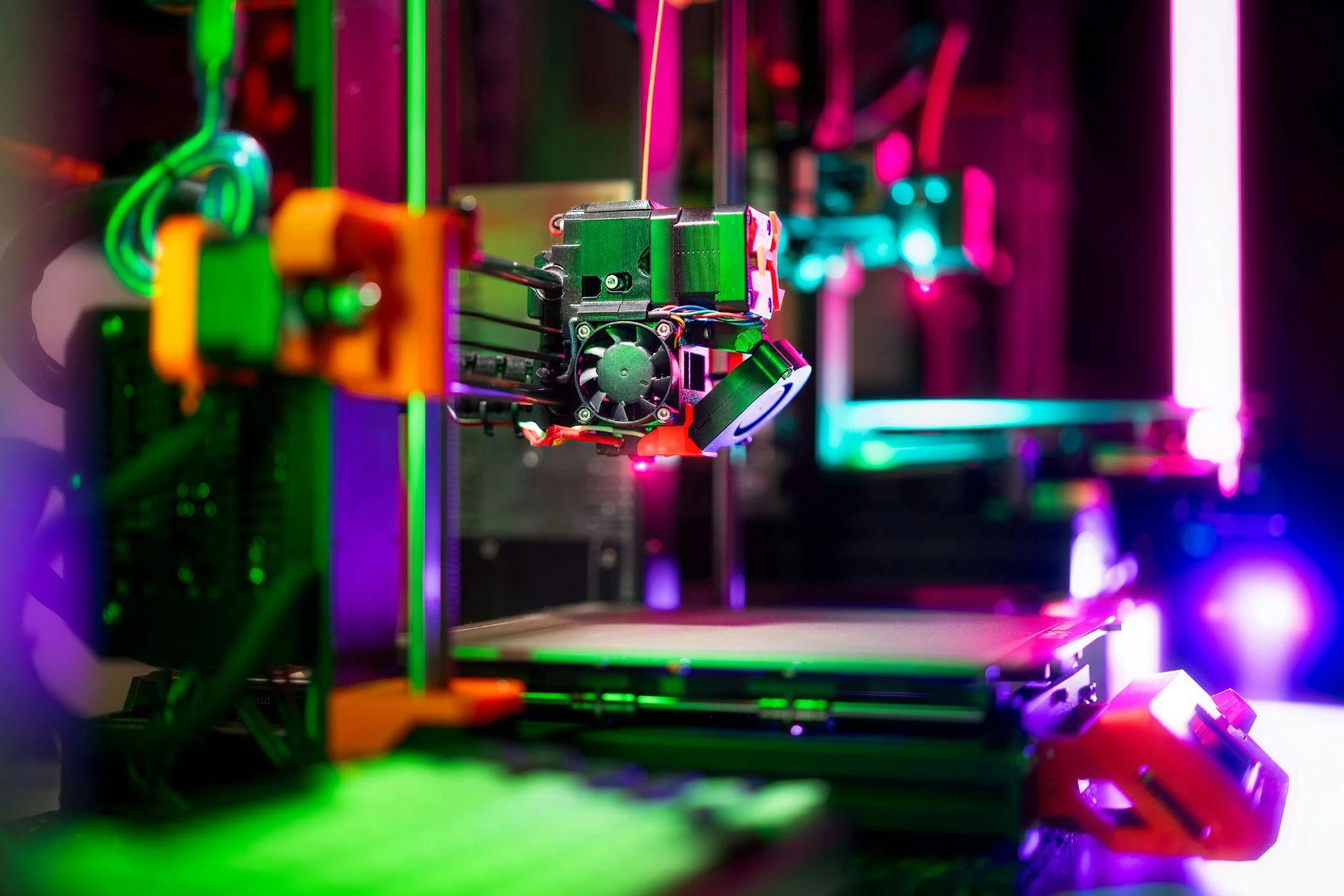
The future of 3D printing is defined by a structural transition from prototyping-centric workflows to production-integrated manufacturing systems.
Rather than replacing conventional processes such as CNC machining or injection molding, additive manufacturing is increasingly positioned as a complementary production method for geometrically complex, low-to-medium volume, and highly customized components.
This transition is being driven by concurrent improvements in process stability, material performance, and digital manufacturing infrastructure.
(Pexels)
Trends in 3D Printing and Industry Evolution
The future of 3D printing is driven by steady improvements rather than a single breakthrough. Key trends in Additive Manufacturing include the shift from prototyping to production, tighter integration of digital workflows, and rapid advances in materials.
As part of the evolution of additive manufacturing, stronger polymers, new metal alloys, and AI-driven automation are making 3D printing more reliable and scalable. Instead of replacing traditional manufacturing, it is becoming a complementary solution for complex, low-volume, and high-performance applications.
Why 2026 Is a Turning Point for Additive Manufacturing
2026 marks a real inflection point for additive manufacturing, not because of a single breakthrough, but because multiple bottlenecks across hardware, software, and production workflows are being solved at the same time.
Past Limitations of Additive Manufacturing
For many years, 3D printing was constrained by several structural challenges that limited its use in real production environments:
Cons
- High machine costs made industrial adoption difficult for most companies
- Slow throughput restricted production to prototyping and low-volume parts
- High failure rates reduced reliability, especially in metal printing
- Expensive powder materials increased overall cost per part
- Post-processing labor significantly extended production time and cost
As a result, additive manufacturing remained largely positioned as a prototyping or design validation tool rather than a scalable manufacturing solution.
What Has Changed in 2026
In 2026, these limitations are being actively addressed through advancements in both machine capability and digital manufacturing systems:
- Multi-laser systems significantly improve build speed and production throughput
- AI monitoring and closed-loop control reduce failure rates by adjusting parameters in real time
- Powder reuse and material optimization lower consumable costs
- Automated nesting and build preparation improve machine utilization and efficiency
- Fully digital workflows streamline design-to-production processes
- Localized manufacturing networks reduce logistics cost and lead time
These improvements are not isolated upgrades—they collectively reshape how additive manufacturing operates at an industrial level.
The Result: Additive Manufacturing Becomes Economically Viable
With these advancements converging, additive manufacturing is no longer limited to prototyping or niche applications.
Instead, it is becoming economically viable for:
- Low to medium volume production
- High-complexity geometries that are difficult or impossible to machine
- Custom and patient-specific medical components
- Lightweight aerospace and automotive structural parts
- Rapid tooling, jigs, and fixtures for manufacturing lines
- On-demand localized production and spare parts supply chains
This shift represents a fundamental transition: additive manufacturing is moving from a design and prototyping technology to a production-ready manufacturing solution integrated into real industrial workflows.
Key Technological Advancements in 2026
(Pexels)
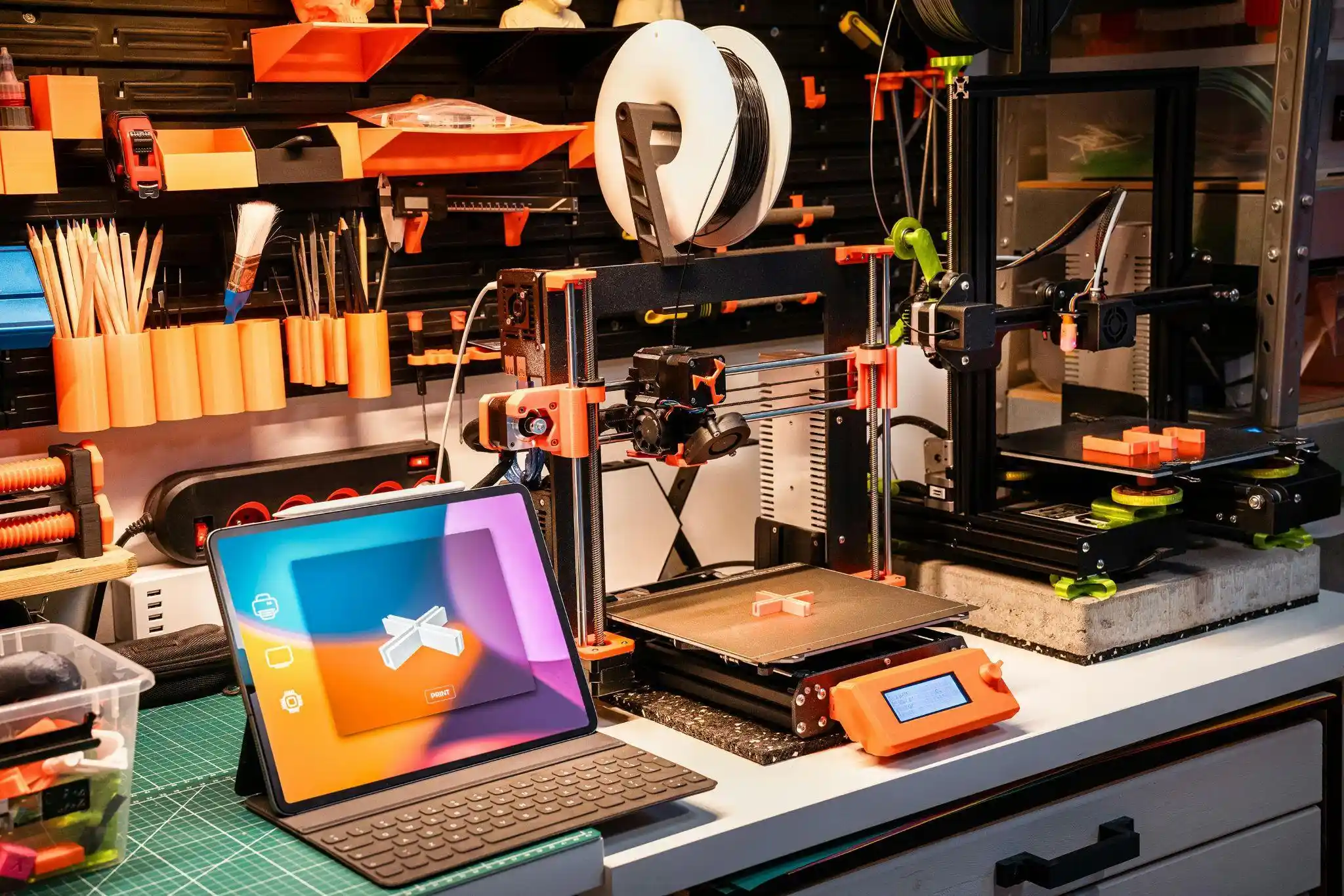
The industry has finally stopped asking is it possible? and started asking what’s the yield? In 2026, the tech has matured into something actually repeatable. We’re seeing a move away from the one-off mentality toward a process that can actually sustain a production schedule without constant babysitting.
Faster Production Technologies
The speed bottleneck is finally breaking, but not just because the print heads move faster. The real win is in total cycle time. In metal systems, we’re seeing multi-laser arrays and better thermal management that allow for faster builds without the part warping or cracking during cooling.
In specific low-volume or complex geometries, production time can be significantly reduced compared to traditional manufacturing.
It’s about the whole window, prep, print, cool-down, and breakout. If you can cut the cooling and post-processing time in half, the printer starts looking like a viable alternative to traditional casting or machining for mid-sized runs.
High-Performance Materials
Materials are finally catching up to the marketing. We’ve moved beyond brittle resins and standard PLA into reinforced composites and certified metal alloys that can actually handle a mechanical load.
This change is critical because the part is only as good as its weakest bond. We’re seeing more road-ready materials that don't degrade under heat or chemical exposure. In the medical field, the focus has shifted to bio-compatible materials that can be printed to match a patient’s specific anatomy without the body rejecting the implant.
We’re also seeing AI-driven material design enter the space. In some studies, new alloys have demonstrated significantly improved strength and ductility.
Automation & AI Integration
Automation is taking over the tedious parts of the job, removing supports, recycling powder, and finishing surfaces, which used to be done by hand.
AI is being used here for closed-loop feedback. Instead of just hitting print and hoping for the best, the machines now use sensors to monitor the melt pool in real-time. If the system detects a flaw even forming, it adjusts the parameters on the fly to save the build. It’s making the process less about the skill of the operator and more about the reliability of the system.
By 2025, around 35% of manufacturers were already using additive manufacturing for end-use parts, more than doubling from 15% in 2020.
At the same time, about 60% of industrial users are integrating digital tools like simulation and digital twins into their workflows.
Sustainable Manufacturing
Sustainability is becoming a mechanical requirement rather than just a PR move. Additive manufacturing is inherently less wasteful because you aren't turning 70% of a titanium block into scrap chips on a mill.
In powder-based systems, we’re getting much better at reclaiming and refreshing unused material, which keeps the cost per part down. There’s also the logistical side: printing a replacement part at a local hub instead of shipping it across an ocean is a massive win for the carbon footprint. For most shops, the fact that sustainability happens to save money on material and shipping is what’s actually driving the adoption.This also helps companies comply with environmental regulations by reducing material waste and enabling localized production.
Latest 3D Printing Technologies Explained
(Pexels)
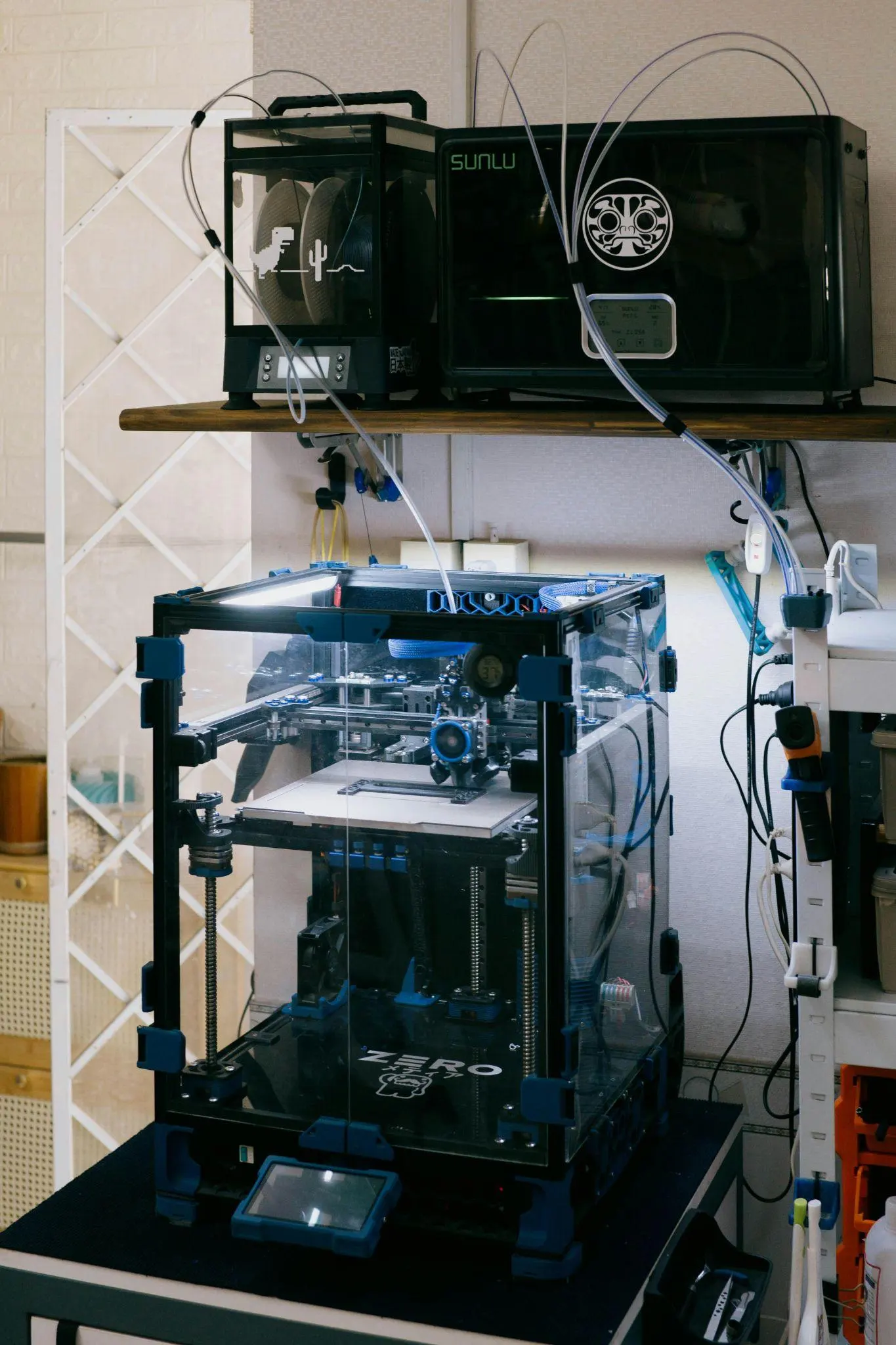
The gap between 2023 and 2026 isn’t incremental. It’s operational.
Machines didn’t just get better. They became production-capable systems with measurable gains in speed, cost, and material range. That’s what’s driving the current 3d printing evolution.
Performance Shift: 2023 vs 2026
The table below highlights the key advancements in AM technologies between 2023 and 2026.
| Metric | 2023 Typical | 2026 Current Trend | What Changed |
|---|---|---|---|
| Build Speed | Baseline | 2×–5× faster (multi-laser, optimized scanning) | Parallel lasers + AI toolpaths |
| Cost per Part | High for low volume | 20–40% reduction | Better material reuse + automation |
| Material Range | Limited metals & polymers | Expanded (copper, composites, biomaterials) | New laser systems + material science |
| Failure Rate | Operator-dependent | Reduced significantly | AI monitoring + simulation |
| Production Use | Mostly prototyping | Increasing end-use production | Repeatability + certification progress |
This is the real shift. Not “new tech exists,” but existing tech became viable at scale.
SLA vs SLS vs MJF
These aren’t interchangeable. Each one sits in a different performance envelope.
- SLA (Stereolithography) is still unmatched for surface finish and fine detail. It’s used where precision matters more than strength, dental, medical models, and high-detail prototypes.
- SLS (Selective Laser Sintering) handles functional parts better. It produces durable nylon components with no need for support structures, which makes it ideal for complex geometries.
- MJF (Multi Jet Fusion) has been pushed into production because of its consistency and speed. Compared to SLS, it often delivers more uniform mechanical properties and shorter build cycles, which is why it’s showing up in real industrial 3d printing applications.
Here’s a deeper comparison of SLA vs SLS.
The choice is to consider geometry, load, and batch size.
Metal 3D Printing Evolution (SLM, Binder Jetting)
This is where the biggest shift is happening.
Selective Laser Melting (SLM) has matured into a reliable method for high-performance parts. It delivers dense, strong metal components, but historically struggled with speed and cost.
That’s being offset by:
- multi-laser systems
- improved scan strategies
- better thermal management
At the same time, Binder Jetting (BJ) is gaining traction for higher-volume production. It skips the laser melting step during printing and instead sinters parts afterward, which allows:
- faster build speeds
- lower cost per part at scale
- better scalability potential for batch production
But the real breakthrough in 2026 is material access.
Green laser systems are changing what metals can actually be printed. Traditional infrared lasers struggled with highly reflective materials like copper. New green laser technology enables stable processing of copper, gold, and silver.
That’s not a niche improvement.
This is especially important in applications where thermal conductivity matters more than structural strength.
Metal additive manufacturing is now routinely used to consolidate assemblies.
Cons
- Parts that previously required 20–30 individual components are now printed as a single unit
- Weight reductions of 40–60% are common in optimized lattice or topology-designed parts
This isn’t experimental anymore. It’s standard practice in high-performance sectors.
This is where the evolution of additive manufacturing becomes a design shift, not just a manufacturing upgrade.
Multi-Material Printing
This is still early, but it’s moving fast.
Multi-material systems allow different materials to be printed within a single part. That means:
- rigid + flexible regions in one component
- conductive + insulating sections
- gradient material transitions
This reduces assembly and enables designs that weren’t possible before.
Right now, it’s not fully mainstream. But it’s one of the clearest 3d printing innovations that will define the next phase of the industry.

Real-World Proof: Where Metal Additive is Actually Winning
It’s one thing to talk about the potential of Additive Manufacturing , but it’s another to see it surviving on a jet engine or a supercar. We’re past the point of lab experiments. In 2026, the biggest players in aerospace and automotive are using additive manufacturing (AM) to bypass the physical limits of a CNC mill.
1. Consolidating the Complex: GE’s Fuel Nozzle
The poster child for metal AM remains the GE Aviation fuel nozzle. Traditionally, this was a nightmare to manufacture, it required welding together 20 separate parts. By moving to a 3D-printed design, GE consolidated that entire assembly into a single component.
The part came out 25% lighter and proved to be 5 times more durable than the original.
2. The Weight-Loss Program: Airbus and Bugatti
In aerospace, weight is quite literally money. Airbus has been swapping out traditionally machined cabin brackets for topology-optimized printed versions. These aren't just minor tweaks, they’re seeing weight reductions between 30% and 55%. When you scale that across thousands of parts on an aircraft, the fuel savings are massive.
Bugatti took a similar over-engineered approach with their titanium brake calipers. Using Selective Laser Melting (SLM), they built a caliper that can withstand over 3 tons of force. It’s arguably the strongest caliper ever made, proving that 3D-printed titanium can handle extreme mechanical stress better than most conventionally machined alloys.
3. Mass Production: Scaling with Binder Jetting
If SLM is about extreme performance, Binder Jetting is about the assembly line. BMW has moved this into their production workflows to target hundreds of thousands of parts per year.
While it doesn't offer the same raw strength as laser-based systems for every application, it’s significantly cheaper at scale. It’s the first real time we’ve seen additive manufacturing actually compete with traditional casting for high-volume, mid-complexity parts.
4. Hybrid Logic: Multi-Material Medical Models
Finally, we're seeing a shift toward functional realism in the medical field. Stratasys is now combining rigid and flexible materials in a single print. Surgeons are using these to practice on anatomical models that actually feel like real bone and tissue. By removing the need to assemble different plastic pieces, they've created a surgical planning tool that is far more accurate and faster to produce.
Industrial 3D Printing Applications in 2026
Industrial 3D printing applications in 2026 go far beyond prototyping. It is widely used for functional prototypes, production tooling, and low-volume end-use parts.
With evolving metal 3D printing technologies, industries like aerospace, automotive, and medical are producing strong, lightweight, and customized components. As costs decrease and consistency improves, 3D printing capabilities are making it a practical solution for real manufacturing, not just design validation.
Real-World Applications of 3D Printing Innovations
In 2026, it’s visible in how parts are designed, produced, and deployed across industries.
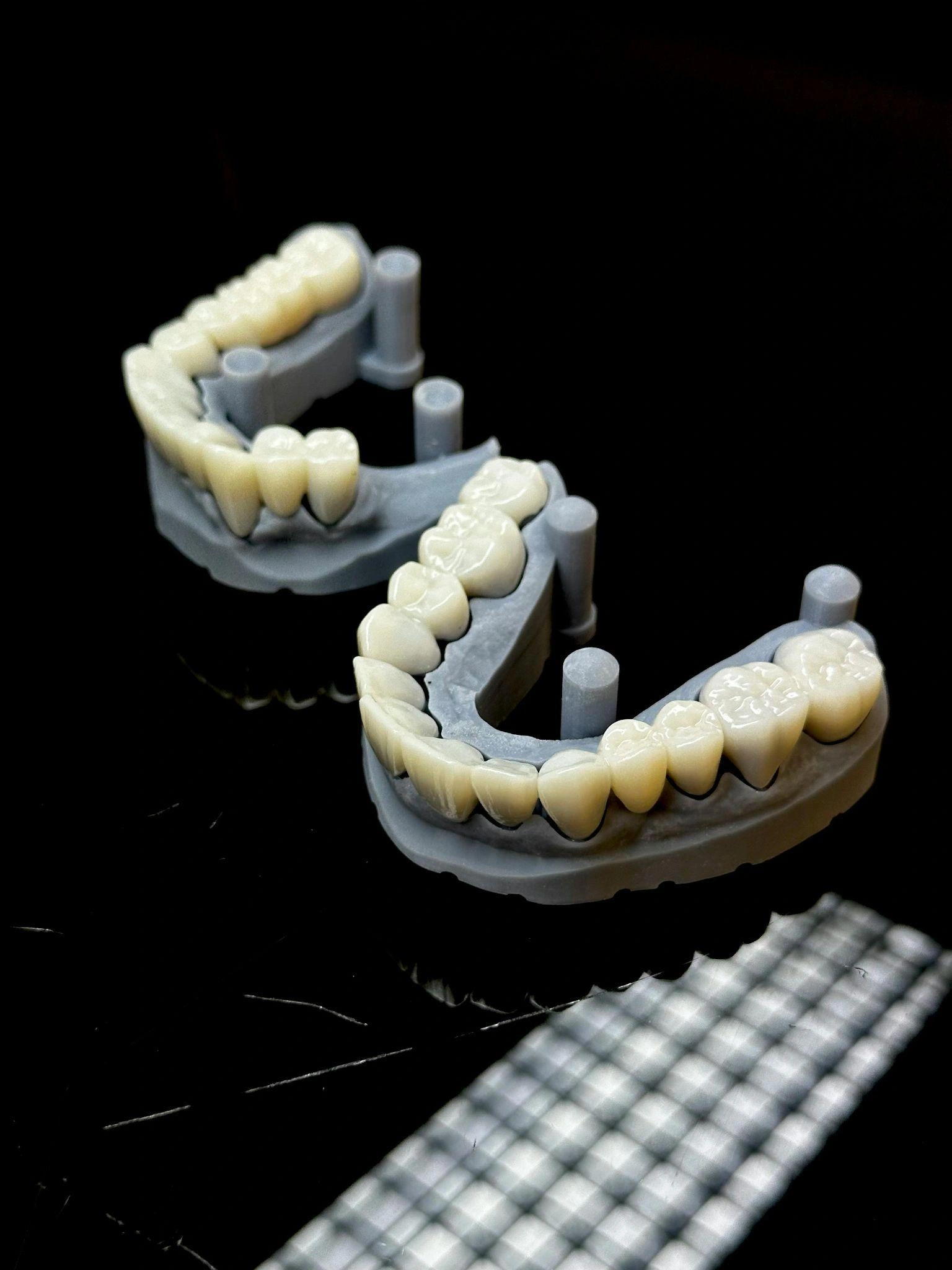
The 2026 3D Printing Reality
(Pexels)
The biggest headache in a metal shop right now is the scrap rate. You can buy a million-dollar SLM machine, but if your titanium powder picks up too much moisture or your bed isn't heated exactly right, you end up with a $5,000 paperweight. Most of the advancements in 2026 are just basic sensors trying to keep the lasers from blowing holes in the part when the powder layer is uneven.
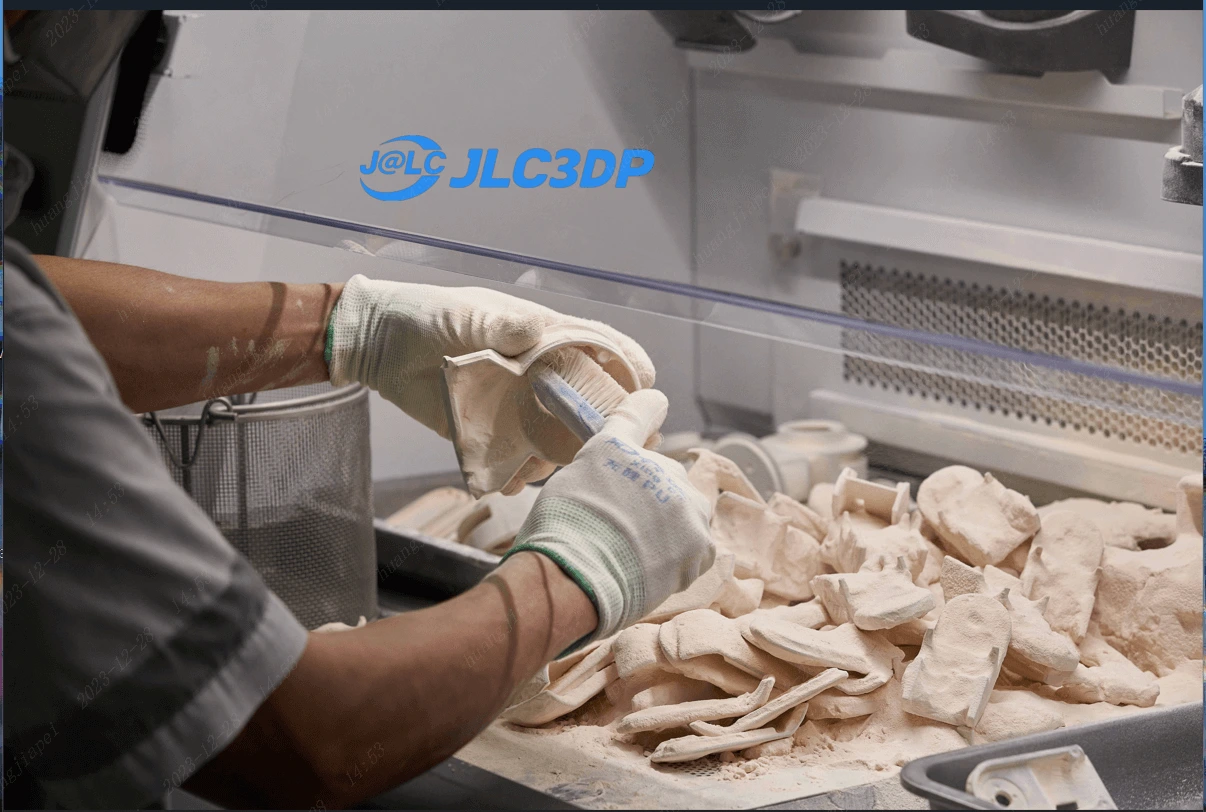
The Post-Processing Tax Everyone ignores the fact that a 3D printer doesn't actually finish a part. You pull a metal bracket off the plate and it’s covered in support structures that are basically welded on. You spend half your day with a wire EDM or a bandsaw just getting the part free, then you still have to send it to a CNC mill to get the tolerances tight enough for a real assembly. If you aren't accounting for that labor, you're losing money.
The Copper Problem Printing pure copper used to be a joke because the infrared lasers would just reflect off the surface and melt the inside of the machine instead of the powder. The green lasers from Farsoon and BLT finally fixed the physics of that. It's not revolutionizing anything; it just means we can finally stop using messy binder jetting for heat exchangers and start using a direct laser, which gives you much better thermal conductivity.
Health Care Stryker and the other big medical players aren't printing custom shapes just for the fit. They’re doing it because of trabecular bone structures. If the titanium isn't porous, the body treats it like a rock. The 3D printer is the only way to get that specific lattice where the bone actually anchors into the metal. If it doesn't anchor, the implant loosens in six months and you're back in surgery.
Scale and Humidity The reason you don't see 3D printers replacing injection molding for 100,000 parts is the hidden variables. A slight change in the room's humidity or a different batch of powder can change the tensile strength of the part. In 2026, the real struggle is just getting the digital standards (ISO/ASTM) to a point where a part printed in one shop is actually identical to a part printed in another. Right now, it's still a bit of a coin toss.
Challenges in the 3D Printing Industry (2026)
(JLC3DP)
Growth is accelerating, but so are the constraints that come with scaling. The global metal segment alone is projected to pass $11 billion in 2026, which sounds like momentum, but it also exposes the friction points that still limit full adoption.
Scaling Beyond Prototyping
The biggest challenge is producing that same part hundreds or thousands of times with identical quality.
Additive manufacturing still struggles with process variability. Small fluctuations in temperature, powder quality, or scan strategy can affect internal structure and performance. That’s manageable in prototyping, but in production, inconsistency becomes expensive.
To address this, newer systems are moving toward closed-loop manufacturing, where sensors monitor melt pools, layer quality, and thermal behavior in real time. Startups like Freeform are pushing this further with autonomous systems that adjust parameters mid-build to prevent defects before they occur.
The goal isn’t just printing parts. It’s achieving zero-defect manufacturing, which is still a work in progress.
Process Stability in High-Performance Applications
As additive manufacturing moves into aerospace and energy systems, the tolerance for failure drops sharply.
In early 2026, companies like i-Space have moved beyond prototyping into full-scale production of rocket components using large-format metal printing. Complex parts like fuel injectors and thrust chambers are now manufactured as integrated units.
This reduces assembly and shortens development cycles, but it introduces new challenges:
- managing thermal stress in large builds
- ensuring consistent microstructure across the part
- maintaining dimensional accuracy over complex geometries
When you’re dealing with propulsion systems, even minor inconsistencies can affect performance. That’s why process control and validation remain major barriers.
Cost Structure and Economic Viability
While costs are dropping, additive manufacturing is still not universally cost-effective.
Material prices, especially for metal powders, remain high. Machine costs and post-processing steps (heat treatment, surface finishing, inspection) add to the total.
Even with 20–40% reductions in cost per part in some workflows, traditional manufacturing still wins for:
- high-volume production
- simple geometries
- parts that don’t benefit from complexity
This creates a gap where 3D printing is powerful, but not always the most economical choice.
Post-Processing Bottlenecks
Printing is only part of the workflow.
Most industrial parts require:
- support removal
- surface finishing
- heat treatment
- machining for critical tolerances
In many cases, post-processing can account for 30–60% of total production time. That slows down throughput and introduces additional variability.
Until post-processing becomes more automated and integrated, it remains one of the biggest constraints on scaling.
Workforce and Design Limitations
The technology has moved faster than the workforce.
Designing for additive manufacturing requires a different mindset, topology optimization, lattice structures, and load-driven geometry. Many engineers are still trained for subtractive methods, which limits how effectively they use the technology.
At the same time, there’s a shortage of operators who understand both machine-level process control and material behavior at microstructural level
Without that expertise, even advanced systems don’t reach their full potential.
Certification and Standardization
For industries like aerospace, medical, and energy, certification is non-negotiable.
The challenge is that additive manufacturing introduces variability that’s harder to standardize compared to traditional processes. Each machine, material batch, and parameter set can influence the final result.
Regulatory frameworks are improving, but certification cycles are still slow. That delays adoption in high-risk applications where reliability must be proven over time.
How to Apply These 3D Printing Advancements
Most teams don’t struggle with access to technology. They struggle with applying it correctly.
Material choice comes first, and it should be driven by function, not familiarity. If the part carries load or sees heat, you move toward metal or high-performance polymers. If it’s a housing or enclosure, standard nylon through MJF often gives a better balance of cost, strength, and turnaround. The mistake is treating 3D printing materials like interchangeable options. They aren’t. Each one defines how the part behaves in real conditions.
Design is where the real advantage shows up. If you design a part the same way you would for machining, you lose most of the benefit. The shift is subtle but important. You start removing unnecessary material, merging assemblies, and shaping geometry around load paths instead of tooling constraints. A good example is injection mold tooling. Conformal cooling channels, which follow the shape of the mold instead of being drilled straight, can reduce cycle times by 20–40% and improve part consistency. The upfront cost is higher, but the long-term gain comes from faster production and better yield.
Cost has changed more than most people realize. Three years ago, metal additive manufacturing was hard to justify outside of niche applications. In 2026, that’s no longer true. With localized powder supply stabilizing and multi-laser systems from companies like BLT and HP improving throughput, cost per part has dropped by roughly 30–50% in many workflows. That shift makes low-volume, high-complexity parts economically viable in ways they weren’t before.
The pattern is simple. Choose materials based on real conditions, design for the process instead of around it, and evaluate cost over the full lifecycle, not just the first print.
How JLC3DP Enables Advanced 3D Printing
(JLC3DP)
Industrial-Grade Hardware
The difference between prototype-level output and production-ready parts usually comes down to hardware.
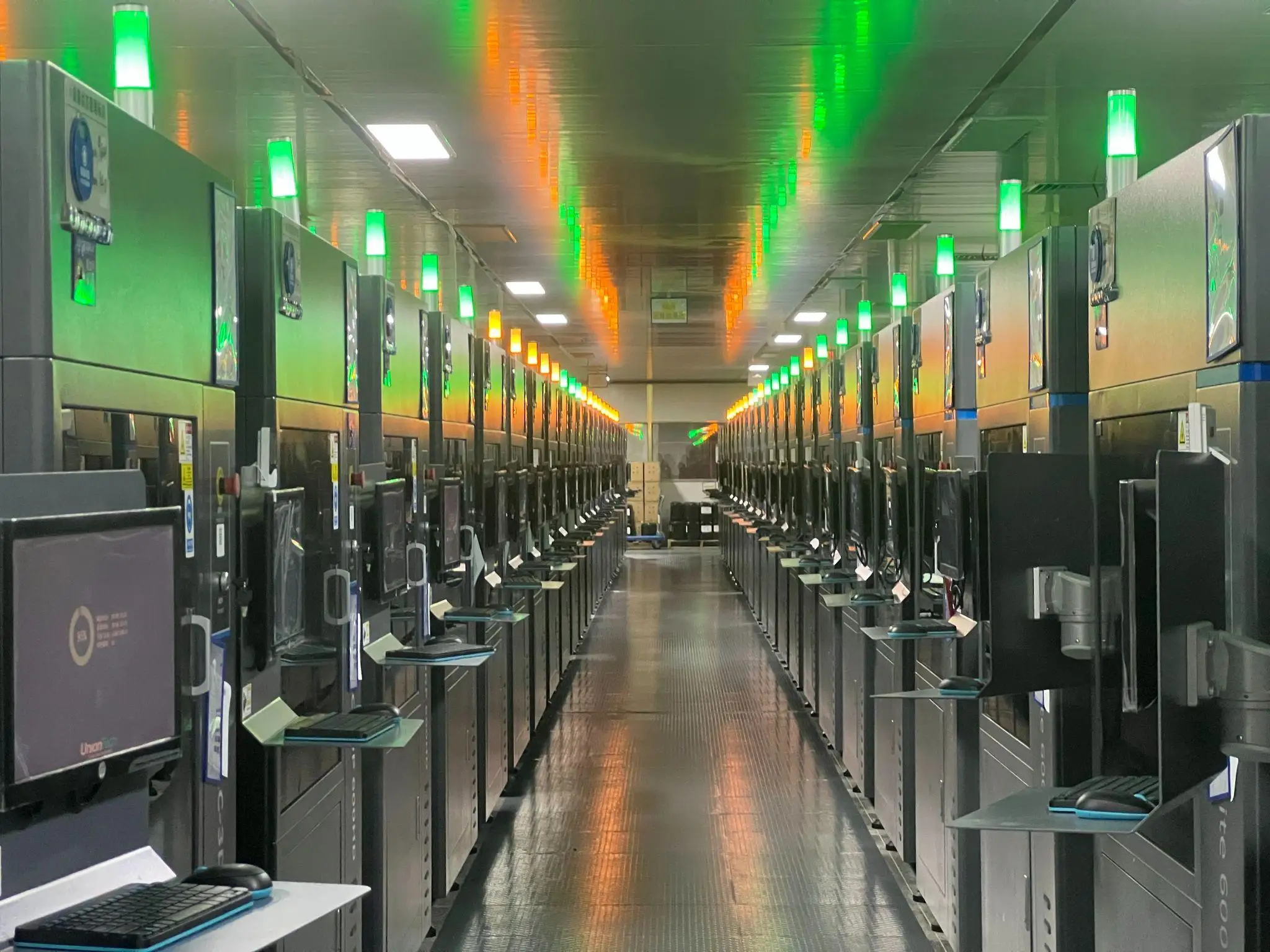
JLC3DP operates a fleet built on the latest 3d printer technology, including systems from HP, BLT, and Farsoon.
In many workflows, the real challenge is the cost and inconsistency of industrial systems. Multi-laser platforms from BLT address that directly by increasing throughput while maintaining density and structural integrity across full builds, not just individual parts.
On the polymer side, HP MJF 5200 systems deliver high-speed production with near-isotropic properties, solving a common issue where parts behave differently depending on orientation. This is what allows printed components to move beyond prototyping into real functional use.
Digital Workflow & AI Efficiency
Hardware gets attention, but workflow is where efficiency is actually gained.
JLC3DP’s system integrates automated analysis from the moment a file is uploaded. The platform can quickly detect key manufacturability risks such as part size, thin walls, and basic structural features, helping users identify potential issues early and reduce unnecessary iteration.
However, additive manufacturing still requires engineering judgment. For more complex geometries — such as thin walls, embossed or engraved text, organic models, multi-shell structures, small holes prone to clogging, or fine pillars that may fail during printing — manual review remains essential.
This hybrid approach combines speed with reliability.
Automated checks accelerate the quoting and validation process, while experienced engineers verify critical details that algorithms may miss. This reduces failed builds, improves part quality, and ensures designs are not only printable, but production-ready.
Behind the scenes, build optimization and intelligent nesting further improve efficiency by maximizing material usage and reducing idle space. These factors contribute to the broader industry trend of 30–50% cost reduction in optimized additive manufacturing workflows.
Ultimately, maximizing 3D printing efficiency isn’t just about faster machines. It’s about combining automation with engineering expertise to deliver consistent, reliable results at scale.
There’s also a cost side to this. In many systems, poor nesting and low build utilization quietly inflate part cost without being obvious. Here, AI-driven packing algorithms optimize how parts are arranged inside each build chamber. That reduces wasted space and directly improves material efficiency, which is one of the reasons the industry is seeing a 30–50% cost reduction trend in 2026 for well-optimized workflows.
Comprehensive Material Ecosystem
Material choice is where most design compromises happen in additive manufacturing. If the material library is limited, the design usually has to adjust to fit the machine. JLC3DP flips that relationship.
The platform supports more than 29+ industrial-grade materials, ranging from standard engineering polymers to high-performance metals and functional composites. This includes advanced options used in 3d printing of biomaterials, structural resins, and aerospace-grade alloys where both thermal and mechanical stability are critical.
This flexibility changes how engineers approach design. Instead of forcing a geometry into a printable constraint, the material is selected based on actual performance requirements, load, heat, conductivity, or biocompatibility.
For example, applications requiring thermal efficiency can move toward copper-based materials processed through advanced laser systems, while high-strength structural parts often rely on titanium alloys. The key point is not just material availability, but material relevance to real-world conditions.
This is where modern additive manufacturing starts to separate itself from older workflows. The limitation is no longer whether a part can be printed, but whether it is being printed with the right material for the job.
Material selection plays a critical role in determining strength, conductivity, and biocompatibility across applications. Explore 30+ industrial-grade materials
FAQ About Advanced 3D Printing
Q: What is the future of 3D printing?
It is moving toward fully automated, AI-driven, production-scale manufacturing with faster turnaround and lower costs.
Q: What are the latest 3D printing technologies?
Multi-laser metal systems, HP MJF, and AI-optimized additive manufacturing workflows are leading current advancements.
Q: Are metal 3D printing technologies evolving?
Yes, they now enable full-strength end-use parts, not just prototypes, across aerospace, automotive, and industrial sectors.
Q: What are recent advances in 3D printing of biomaterials?
They include biocompatible implants and patient-specific structures derived from medical imaging data like CT scans.
Q: What does additive manufacturing evolution mean?
It refers to the shift from prototyping to scalable, production-ready manufacturing with integrated digital workflows.
Q: What are industrial 3D printing applications today?
They include aerospace components, medical implants, robotics parts, and high-performance industrial tooling.
Q: Can 3D printing reduce manufacturing costs?
Yes, optimized workflows and multi-laser systems can reduce part costs by up to 30–50% in many cases.
Q: Is 3D printing replacing traditional manufacturing?
Not fully, but it is replacing traditional methods in low-volume, complex, and high-customization production.
Conclusion about AM technologies
The future of 3D printing isn’t about a single breakthrough. It’s about everything getting better at the same time, machines, materials, and process control.
That’s why additive manufacturing is moving out of the lab and into real production. Faster systems, stronger materials, and smarter workflows are turning what used to be a niche capability into a practical manufacturing solution.
If you’re working on a part that pushes beyond standard manufacturing limits, complex geometry, tight timelines, or low-volume production, this is where it starts to make sense.
Get an instant 3D Printing quote for industrial parts and See how it performs in a real production environment.
Popular Articles
Keep Learning
SLS vs SLM 3D Printing: Differences, Cost, Materials & Applications
SLS vs SLM 3D printing is often treated as a head-to-head contest, but the two processes exist for different material classes. SLS, or selective laser sintering, is mainly used to produce polymer parts. SLM, or selective laser melting, manufactures metal parts by fully melting metal powder layer by layer. For most engineering applications, the choice between SLS and SLM comes down to material requirements, mechanical performance, geometry, support structures, post-processing, lead time, and cost. This......
The Limits of 3D Printing: Comparison with Traditional Manufacturing
3D printing technology provides new solutions for the manufacturing industry in rapid prototyping, customized production and manufacturing complex geometric structures. So can 3D printing replace traditional manufacturing? Compared with traditional manufacturing processes, 3D printing still has some obvious limitations in terms of scale speed, material selection, cost efficiency, size and accuracy. This article explores the main limitations of 3D printing from several key perspectives and makes a deta......
3D Printed Articulated Animals: Design & Print Guide
Key Takeaways Design for movement first: Define how the animal should bend or move, then design joints before building the body around them. Critical dimensions matter: For FDM print-in-place joints, start with 0.2-0.3 mm clearance per side (0.4-0.6 mm total gap). Keep walls at 1.2-1.6 mm minimum, and 1.6-2.0 mm around stressed joints. Never scale functional geometry proportionally: A 0.6 mm joint gap scaled to 50% becomes 0.3 mm, falling below reliable manufacturing limits. Scale visual details, but ......
3D Printing vs CNC Service: How to Choose the Right Manufacturing Method
3D printing and CNC (Computer Numerical Control) service are two popular manufacturing methods that have gained widespread attention in recent years. 3D printing, also known as additive manufacturing, involves building 3D objects layer by layer from a digital model, while CNC service, also known as subtractive manufacturing, involves cutting away material from a solid block to create a desired shape. Both methods offer unique capabilities and advantages, and understanding their key characteristics is ......
Micro 3D Printing Explained: Technologies, Materials and Applications
Introduction Standard 3D printing builds parts you can hold in your hand. Micro Printing — and more precisely Micro 3D printing builds parts you need a magnifying glass to see, and sometimes a microscope. A microneedle array for drug delivery. A microfluidic chip with channels thinner than a human hair. A miniature optical lens with surface accuracy measured in microns. These aren't just smaller versions of parts you'd make on a standard FDM printer. They're a different category of manufacturing entir......
Future of 3D Printing 2026: Trends, Technologies & Applications
What Is the Future of 3D Printing? The future of 3D printing is defined by a structural transition from prototyping-centric workflows to production-integrated manufacturing systems. Rather than replacing conventional processes such as CNC machining or injection molding, additive manufacturing is increasingly positioned as a complementary production method for geometrically complex, low-to-medium volume, and highly customized components. This transition is being driven by concurrent improvements in pro......