How Much Electricity Does a 3D Printer Use? Energy Consumption and Cost Explained
18 min
- Introduction
- Do 3D Printers Use a Lot of Electricity?
- How Much Power Does a 3D Printer Use?
- How Much Electricity Does a 3D Printer Use Per Hour and Per Print?
- How Much Does a 3D Print Cost in Electricity?
- What Factors Affect 3D Printer Energy Consumption?
- How Much Energy Do Different 3D Printing Technologies Use?
- Is 3D Printing More Energy Efficient Than Traditional Manufacturing?
- Energy Considerations for Industrial 3D Printing
- How to Reduce 3D Printer Power Consumption Without Affecting Quality
- FAQ About 3D Printer Electricity
- Conclusion about 3D Printer Energy Consumption
Key Takeaways
Desktop printers consume little electricity: Typical FDM printers draw 50-150W, costing $0.05-$0.30 per print regardless of duration.
Industrial systems consume more but produce more parts: SLS/SLM machines draw 2,000-10,000W, but energy cost per finished part can drop to $0.07 with dense builds.
Energy cost per part matters more than machine wattage: A 4kW SLS system producing 200 parts per build achieves far better energy efficiency per part than a 100W desktop printer producing one part.
Need industrial-quality parts without investing in expensive equipment? Upload your CAD files to JLC3DP for instant quotes.
Introduction
How much electricity does a 3D printer use? The answer depends on several factors, including printer type, power consumption, print duration, and production requirements.
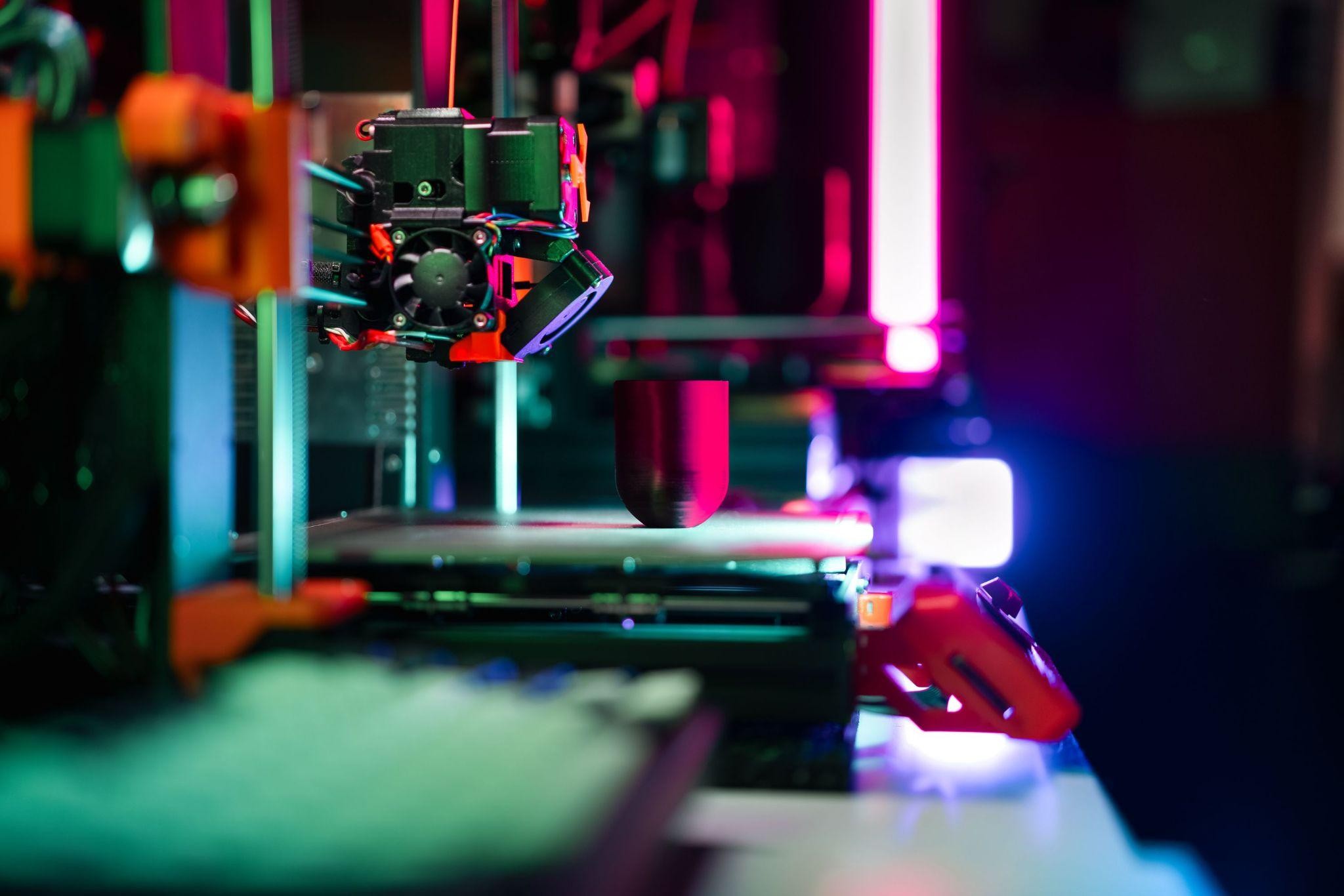
A compact desktop FDM printer may consume relatively little electricity during a typical print, while industrial additive manufacturing systems require more energy to support larger build volumes, advanced materials, and production-scale applications.
This guide explains 3D printer energy consumption across different technologies, how to estimate electricity costs, and the factors that affect overall energy efficiency.
Do 3D Printers Use a Lot of Electricity?
Most people who ask about 3D printer electricity use assume the worst, that a printer behaves like a space heater running nonstop. In reality, 3D printers sip electricity compared to many household appliances. Even an eight-hour print often costs less than a single cup of coffee.
Desktop 3D Printing
Does 3D printing use a lot of electricity at the desktop level? For most home users, the answer is no, 3D printer energy consumption has minimal impact on household electricity costs.
To put that in perspective, a standard microwave oven draws 1,000-1,500 watts. A desktop 3D printer at 100 watts running for an hour uses less electricity than a microwave running for four minutes.
Industrial 3D Printing
Industrial additive manufacturing is a different story. Industrial SLS printers require much more energy, typically drawing between 2,000 and 5,000 watts. Industrial metal 3D printing technologies consume the most power, sometimes reaching 10,000 watts.
Industrial 3D printing does use a lot of electricity, but the output per kWh, measured in finished parts or production value, often compares favorably to traditional manufacturing alternatives.
Here's a detailed guide to desktop vs industrial 3D printing.
Running SLS or MJF machines with full, dense build volumes costs the same electricity as running them half-empty.
How Much Power Does a 3D Printer Use?
How many watts does a 3D printer use? The answer depends almost entirely on the technology. Here's the breakdown by printer type:
| Printer Type | Typical Wattage | Peak Wattage | Notes |
|---|---|---|---|
| Desktop FDM | 50-150W | 300W+ | A heated bed is usually the largest power consumer. |
| Industrial FDM | 500-2,000W | 3,000W+ | Large build volumes, heated chambers, and multiple heating zones significantly increase energy usage. |
| Desktop LCD/MSLA | 30-100W | 150W+ | UV LED array, Z-axis motor, and control electronics account for most power consumption. No heated bed is required. |
| Industrial SLA | 500-2,500W | 3,500W+ | Laser systems, resin heating, motion systems, and auxiliary equipment increase energy demand. |
| Industrial SLS | 2,000-5,000W | 7,000W+ | Heated powder beds and laser systems dominate power consumption. |
| HP Multi Jet Fusion (MJF) | 3,000-6,000W | 8,000W+ | Fusing lamps and heated build chambers require significant energy. |
| Industrial SLM/DMLS | 5,000-10,000W | 15,000W+ | High-power lasers, inert gas systems, cooling units, and chamber control consume substantial power. |
| Binder Jetting | 1,000-3,000W | 5,000W+ | Printing itself is relatively efficient, but drying, curing, and sintering can increase total energy use. |
FDM printers show the widest variation in power consumption because heated bed size, material temperature requirements, and chamber heating significantly affect energy usage. A desktop FDM printer typically averages 80-150W during printing, while industrial FDM systems with heated chambers can consume several kilowatts.
Desktop resin printers based on LCD/MSLA technology generally consume relatively little electricity (around 30-100W) because they use UV LED arrays instead of heated beds. Industrial SLA and DLP systems require significantly more energy due to larger optical systems, resin heating, and automated production equipment.
Does Higher Power Consumption Mean Higher Manufacturing Cost?
Before comparing 3D printing energy consumption, it is important to understand the difference between energy consumption and energy efficiency.
A machine with higher power consumption does not always mean higher manufacturing costs. For industrial 3D printing, overall efficiency depends not only on the electricity used by the machine but also on how effectively that energy is utilized during production.
Several factors influence the energy efficiency of industrial 3D printing, including:
- Number of parts produced per build
- Material waste
- Tooling requirements
- Production volume
- Part complexity
For example, SLS, MJF, and metal 3D printing systems may consume several kilowatts during operation. However, these industrial machines can manufacture multiple parts in a single build. This allows the energy consumption of the entire process to be distributed across many finished components.
Therefore, for production applications, the more meaningful measurement is not the printer's total wattage, but the energy consumption per finished part.
A desktop printer may consume less electricity overall, but industrial 3D printing can achieve better energy efficiency for low-volume production, complex geometries, and customized parts by reducing tooling requirements and improving material utilization.
How Much Electricity Does a 3D Printer Use Per Hour and Per Print?
Per Hour
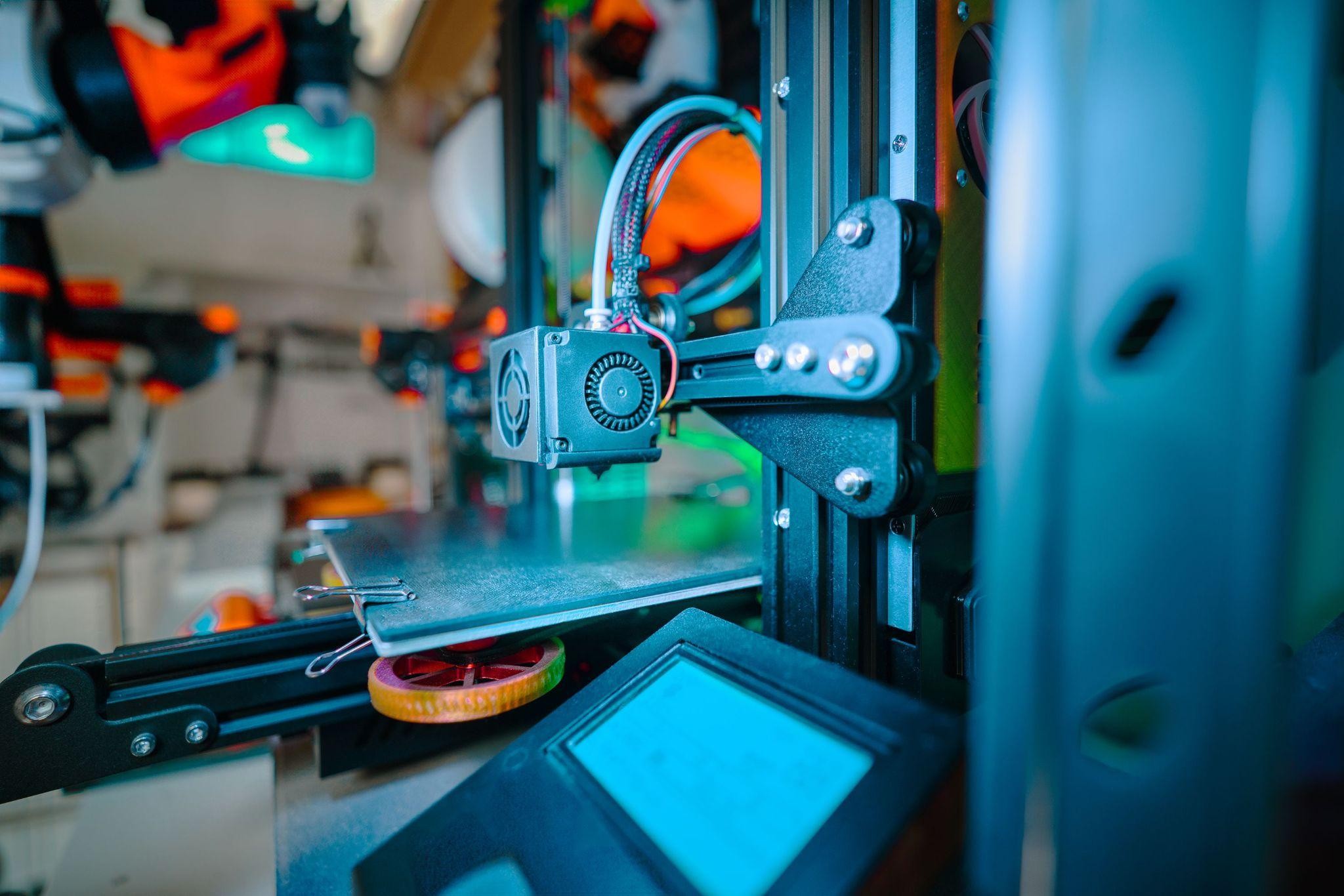
FDM printers typically draw 50-250 watts during operation, consuming approximately 0.05-0.25 kWh per hour. Even professional FDM printers with heated chambers rarely exceed 500W average draw. Resin printers (SLA/DLP) are generally more efficient due to LED-based curing systems. SLS printers can draw anywhere from 1 to 5 kWh per hour.
So how much electricity does a 3D printer use per hour in practical terms:
| Technology | Typical Energy Consumption |
|---|---|
| Desktop FDM | 0.05-0.25 kWh/hour |
| Desktop LCD/MSLA Resin | 0.03-0.10 kWh/hour |
| Industrial SLA | 0.5-2.5 kWh/hour |
| Industrial SLS | 2-5 kWh/hour |
| Industrial HP Multi Jet Fusion (MJF) | 3-6 kWh/hour |
| Industrial Binder Jetting | 1-3 kWh/hour |
| Industrial SLM/DMLS | 5-12 kWh/hour |
Per Print
How much does a 3D printer use in electricity per complete print? This depends on wattage and print duration together.
During testing of an Ender 3 V2, the printer averaged 95W over a 4-hour print job, consuming 0.38 kWh total, costing approximately $0.06 at average electricity rates. Printers with build volumes require more power due to larger heated beds.
A typical 6-hour medium-sized PLA print averaging 90 to 120 watts uses 0.54 to 0.72 kWh total. A typical desktop printer set to 205℃ for the nozzle and 60℃ for the heated bed uses about 70 watts, and printing continuously for 10 hours uses about 0.7 kWh.
How much electricity does a 3D printer use per day if running continuously? At 100 watts average, 24 hours of continuous printing consumes 2.4 kWh, about the same as running a refrigerator for a day, or slightly more than leaving a 100W incandescent bulb on all day.
How Much Does a 3D Print Cost in Electricity?
The formula for 3D printing electricity cost is simple:
Electricity Cost = Wattage (W) / 1000 × Hours (h) × Electricity Rate ($/kWh)
Worked Examples
Desktop FDM, 8-hour print:
100W / 1000 = 0.1 kW → 0.1 kW × 8 h = 0.8 kWh → 0.8 kWh × $0.16/kWh = $0.13
Industrial SLS, 24-hour build:
3000W / 1000 = 3 kW → 3 kW × 24 h = 72 kWh → 72 kWh × $0.12/kWh = $8.64
Industrial SLM, 40-hour metal build:
8000W / 1000 = 8 kW → 8 kW × 40 h = 320 kWh → 320 kWh × $0.12/kWh = $38.40
The electricity cost for desktop 3D printing is relatively small, typically $0.05-$0.30 per print depending on size and duration. This is why 3D printing electricity cost almost never appears as a significant line item in home printer budgets; filament or resin costs far exceed electricity costs in every realistic scenario.
For industrial 3D printing, electricity becomes a real production cost, but it's usually a modest percentage of total operating cost compared to material, machine amortization, labor, and post-processing.
Electricity is only one part of the total printing expense. Here's our guide on How Much Does 3D Printing Cost, breaking down material, machine time, labor, post-processing, and real-world pricing for different technologies.
What Factors Affect 3D Printer Energy Consumption?
Printing Technology
This is the dominant factor. The difference between a resin printer at 50W and a metal SLM system at 8,000W isn't a matter of efficiency, it's fundamentally different physics. Melting plastic requires less energy than sintering metal powder with a fiber laser inside an inert gas environment.
Material Type
Within FDM, material choice significantly affects 3D printer power consumption. PLA prints at 200℃ nozzle and 60℃ bed, relatively low temperatures. ABS needs 230-250℃ nozzle and 100-110℃ bed. Nylon requires 250-270℃ nozzle and 70-90℃ bed. Higher temperatures mean more sustained power draw to maintain them throughout the print. For high-temperature materials like ABS, which require higher bed temperatures, the average power may rise to 100 to 200 watts.
Temperature Requirements
Heated beds are the single largest 3D printer power consumption variable in FDM printing. A large heated bed (300mm x 300mm or above) draws 300-500W just during heat-up, and cycles on periodically throughout the print to maintain temperature. Enclosed printers that heat a build chamber add another sustained power draw. Resin printers require neither heated bed nor heated chamber in most cases, which explains their dramatically lower 3D printer energy consumption.
Print Duration
Total electricity consumption scales directly with time. A 30-hour SLM build uses 30 times more electricity than a 1-hour print on the same machine. A printer may draw 400W, but if a part takes 30 hours to print, the overall cost rises even with modest wattage. With long, high-temp prints, sustained heating becomes the dominant power factor.
Build Volume
Larger build volumes mean larger heated beds, larger chambers, and longer print durations for equivalent part size. Printers with build volumes over 300mm³ require more power due to larger heated beds, and can cost $0.03-0.08 per hour to operate, but their larger build volumes often provide better cost-per-cubic-inch efficiency.
Enclosure
Enclosed printers that heat their build chambers use substantially more 3D printer power consumption than open-frame printers, but the thermal stability they provide often improves part quality and reduces failed prints, which has its own energy efficiency argument: a failed print wastes all the energy that went into it.
How Much Energy Do Different 3D Printing Technologies Use?
| Technology | Typical Energy Level | Main Energy Factor | Electricity Cost per Hour |
|---|---|---|---|
| FDM (desktop) | Low - Medium | A heated bed and hotend | $0.008-0.04 |
| LCD/MSLA Resin (desktop) | Low | UV LED array, Z-axis motor, electronics | $0.005-0.024 |
| Industrial SLA | Medium - High | Laser system, resin heating, motion system | $0.08-0.40 |
| Industrial SLS | High | Heated powder bed, chamber heating, laser system | $0.24-0.72 |
| HP MJF | High | Fusing lamps and heated build chamber | $0.48-0.96 |
| Binder Jetting | Medium - High | Print head system, drying, debinding and sintering | $0.12-0.36 |
| SLM/DMLS (metal) | Very High | High-power fiber laser, inert gas, cooling systems | $0.60-1.44+ |
Different 3D printing technologies consume different amounts of electricity because they use fundamentally different heating, curing, and material processing methods.
Desktop printers generally have relatively low energy consumption.
Industrial 3D printing systems require more energy due to heated chambers, lasers, temperature control systems, and auxiliary equipment. However, industrial additive manufacturing can achieve better energy efficiency per finished part by producing multiple components in a single build.
Different technologies consume different amounts of power because they work in fundamentally different ways. Here's our guide comparing FDM vs SLA vs SLS 3D Printing to understand how each process affects speed, materials, quality, and operating requirements.
For projects where 3D printer power consumption at industrial scale matters alongside per-part cost, JLC3DP's industrial printing services spread energy consumption across optimized production builds, helping reduce energy cost per part compared with low-volume desktop printing.
Is 3D Printing More Energy Efficient Than Traditional Manufacturing?
This question comes up in sustainability impact discussions, and the answer depends on the production scale, part complexity, and manufacturing process.
When 3D Printing Can Reduce Energy Consumption
For low-volume production and complex geometries, 3D printing can achieve lower energy consumption per finished part. By building parts layer by layer, additive manufacturing can reduce energy-intensive processes such as tooling production and material removal in certain low-volume and complex-part applications.
For industrial 3D printing, the most important factor is not only the machine's total power consumption but also how many parts are produced in each build. Technologies such as SLS, MJF, and metal 3D printing can consume several kilowatts during operation, but their energy consumption can be distributed across many parts in a single production cycle.
When Traditional Manufacturing Is More Energy Efficient
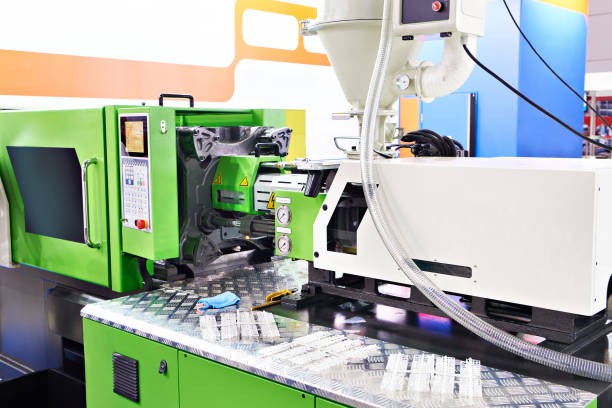
For high-volume production of simple parts, traditional manufacturing methods such as injection molding often achieve lower energy consumption per part because the energy used for tooling and setup is distributed across thousands or millions of components.
However, for small batches or customized production, the energy required for tooling, setup, and additional processing can make traditional manufacturing less efficient compared with direct 3D printing.
The Key Factor: Energy Consumption Per Finished Part
The most meaningful comparison is not the printer's wattage or the machine's total energy use, but the energy consumption per finished part.
A desktop 3D printer may use only hundreds of watts, while industrial systems can consume several kilowatts. However, industrial additive manufacturing can achieve better energy efficiency when machines are fully utilized and multiple parts are produced in one build.
Energy Considerations for Industrial 3D Printing
When 3D printer power consumption hits industrial scale, electricity becomes a real cost input that production planning must address.
Production Efficiency
Running SLS or MJF machines with full, dense build volumes costs the same electricity as running them half-empty, the machine draws similar power whether it's producing 50 parts or 25. Maximizing build density (parts per build) reduces the electricity cost per part by spreading fixed energy costs across more output. Industrial facilities that achieve 80%+ build volume utilization pay dramatically less electricity per part than those running sparse builds.
Cost Per Part
For an industrial SLS system drawing 4kW and running a 30-hour build cycle at $0.12/kWh industrial rate: 4kW x 30h x $0.12 = $14.40 per build in electricity. If that build contains 200 nylon parts, the electricity cost per part is $0.072, genuinely negligible against material and machine amortization costs. The energy cost becomes meaningful only when builds are sparse (few parts per cycle) or when the parts themselves are inexpensive commodity items where margins are thin.
Machine Utilization
Industrial 3D printer power consumption during idle or standby is much lower than during active printing, typically 5-15% of active draw. But idle time is still wasted machine investment. Facilities optimizing for energy efficiency and cost per part focus on keeping machines in active production as much as possible, queuing builds efficiently, and avoiding the partial-build inefficiency that inflates energy cost per unit.
For businesses producing functional prototypes or low-volume production parts, choosing a professional industrial 3D printing service can improve production efficiency by leveraging optimized equipment, high machine utilization, and expert manufacturing workflows.
For companies evaluating whether to purchase industrial equipment, leveraging industrial 3D printing capabilities from an experienced manufacturing partner can reduce energy costs, equipment investment, and maintenance burden.
How to Reduce 3D Printer Power Consumption Without Affecting Quality
1Optimizing Print Settings for Efficiency
Use the lowest viable temperatures for your material, every degree above the minimum needed for good adhesion and layer bonding is wasted energy maintaining a higher temperature across a potentially very long print. PLA often prints fine at 195℃ instead of the commonly recommended 210℃, reducing hotend power draw slightly across long prints.
You can reduce power consumption by 15-25% through proper temperature calibration, adding enclosure insulation, positioning the printer away from drafts, and using the lowest viable temperatures for the material being printed.
Reduce print speed where you're already time-limited by other factors, faster printing generates more heat per unit time and can increase 3D printer power usage slightly while also increasing failure risk. Slower printing with better cooling can produce better results at similar energy consumption.
2Using Energy-Efficient 3D Printers
Modern printers are more energy efficient than machines from 3-5 years ago. Improved firmware that intelligently manages heated bed cycling, more efficient stepper motor drivers, and better insulated hotends all reduce 3D printer energy consumption without affecting output quality. If you're running an older machine and printing heavily, the energy savings from a modern efficient printer may partially offset the machine cost over time.
Are 3D printers energy efficient compared to each other? Resin printers are the most energy efficient per print for small detailed parts. FDM with a properly insulated enclosure is more efficient for large-volume parts than open-frame printing in cold environments. Matching the technology to the job is the most impactful energy efficiency decision available.
3Consider Industrial 3D Printing Services
For makers and small businesses printing regularly at desktop scale, the per-print electricity cost is low but accumulates. More importantly, failed prints waste all the electricity (and time and material) that went into them. An industrial printing service that runs production-optimized equipment with high utilization, minimized failed builds, and full build volumes often produces lower total energy per finished part than distributed desktop printing, and with better quality and consistency.
FAQ About 3D Printer Electricity
Q: How many watts does a 3D printer use?
A 3D printer's power consumption depends on the printing technology and machine size. Desktop FDM printers typically use around 50-250 watts during operation. Desktop LCD/MSLA resin printers generally consume around 30-100 watts. Industrial printers require significantly more power due to lasers, heated chambers, and additional processing systems.
Q: How do you calculate 3D printer electricity cost?
Multiply printer wattage by print hours, divide by 1,000 to get kWh, then multiply by your local electricity rate.
$$(\text{Watts} \div 1000) \times \text{Hours} \times \text{Electricity Rate} = \text{Cost}$$
For example, a 100W printer running for 8 hours consumes: 0.1 kW x 8 hours = 0.8 kWh
At an electricity rate of $0.16/kWh, the electricity cost is approximately $0.13.
For most desktop 3D printing projects, electricity is usually a small part of the total cost compared with materials and machine time.
Q: Do resin printers use less electricity?
Desktop LCD/MSLA resin printers generally consume less electricity than desktop FDM printers because they do not require a heated bed.
A typical desktop resin printer uses around 30-100 watts, with most power consumed by the UV LED array, Z-axis motor, and control electronics.
However, industrial SLA and DLP systems can consume significantly more energy because they require larger optical systems, resin heating, and automated production equipment.
Q: Does a 3D printer increase your electricity bill?
For desktop use, the impact on your electricity bill is usually minimal.
A typical desktop 3D printer consuming 50-150 watts continuously for 24 hours would use approximately 1.2-3.6 kWh of electricity.
Even with regular printing, electricity usually represents only a small portion of total 3D printing costs compared with filament, resin, or other operating expenses.
Q: How Much Electricity Does an Ender 3 Use?
An Ender 3 typically consumes around 80-120 watts during printing.
For an 8-hour print:
Average power consumption: 80-120W
Energy used:
At 80W: 0.08 kW x 8 hours = 0.64 kWh
At 120W: 0.12 kW x 8 hours = 0.96 kWh
Assuming an electricity rate of $0.15/kWh:
Low estimate: 0.64 kWh x $0.15 = about $0.10
High estimate: 0.96 kWh x $0.15 = about $0.14
So, an Ender 3 running for 8 hours typically costs around $0.10-$0.15 in electricity.
Conclusion about 3D Printer Energy Consumption
How much electricity does a 3D printer use? For most desktop users, the answer is surprisingly little, typically $0.05-$0.30 per print regardless of duration. Industrial 3D printing systems consume significantly more power, but the energy cost per finished part can be remarkably low when build volumes are fully utilized, often just pennies per part.
The key takeaway is that energy cost per part is the metric that truly matters, not raw machine wattage. By optimizing print settings, matching technology to application, and leveraging industrial services for production-scale needs, businesses and makers alike can keep 3D printer electricity costs where they belong: a minor footnote in the total cost of additive manufacturing.
Keep Learning
Best 3D Printers for ABS and PC: What Actually Matters
Key Takeaways Every enclosed printer can *claim* to print ABS; the machines that do it reliably share four things: a hot end with headroom past 250°C, a bed above 90°C, a real enclosure, and a chamber that actually holds heat. ABS is a Tier-1 job — enclosed desktop machines handle it well. PC is a Tier-3 job: its 260–310°C hot-end demand and need for a warm, stable chamber disqualify most desktop machines. Chamber temperature is not chamber existence: a shell that blocks drafts is not a heated chamber......
Recommended Best Resin 3D Printers in 2024
In recent years, resin 3D printers have developed rapidly in the home 3D printer market. Compared with traditional FDM printing, resin printers can provide higher precision and more delicate printing details. The improvement of printing technology allows users to easily complete the production of high-precision models at home. This article will recommend several of the most competitive resin 3D printers in the 3D printing market in 2024 to help you choose the most suitable equipment and the factors to......
How Much is a 3D Printer? A Comprehensive Guide for Every Budget
3D printing is becoming more and more popular, bringing countless creative and practical possibilities. So how much is a 3D printer? 3D printers have a very wide price range, depending on the printing process, materials, and complexity of the 3D printing solution. This article will analyze the cost of 3D printers based on their type and intended use, helping you find a model that fits your budget. Types of 3D Printers and Their Costs 1. Entry-level 3D Printers ($100 - $500) Entry-level 3D printers are......
Best 3D Printers for Beginners
Embarking on your journey into the world of 3D printing can be both exciting and daunting. With a plethora of options available, choosing the right 3D printer as a beginner is crucial for a smooth transition into additive manufacturing. To simplify your decision-making process, we've curated a list of the top 10 beginner-friendly 3D printers that offer a perfect balance of affordability, ease of use, and quality output. Creality Ender 3 V2 Neo Price: $379.00 Features: Full-metal integrated design, CR ......
Recommended and Purchase Guide for Small 3D Printers in 2024
In previous blog posts, we have introduced many excellent 3D printers on the market. If you are a beginner and want to enter the field of 3D printing, but don’t want to spend too much money or need a large workspace, a small 3D printer is a suitable purchase option. In this article, we will introduce the most recommended small 3D printers in 2024, focusing on their functions and technical features. If you are still in the watch-and-wait stage for 3D printer consumption, it is recommended to use JLC3DP......
Top 5 3D Printer Tables of 2025: Boosting Your 3D Printing Experience
Choosing the right table for your 3D printer that enhances printing stability, reduces noise, and provides organized storage space is important for achieving high-quality prints and optimizing your workflow. In this guide, we'll look at what makes a good 3D printer table and recommend the best 3D printer tables on the market in 2026. Below are our top five 3D printer tables and stands for 2026, highlighting their features, benefits, and why they might be perfect for your printing space. Best 3D Printe......