ABS-Like Resin vs Standard Resin: The Definitive Guide to Material Choice & Performance
13 min
- 1. The Core Definition: What is ABS-Like Resin in 3D Printing?
- 2. Mechanical Properties: Resins for 3D Printing Data
- 3. Durable Resin SLA ROI: Is the Premium Justified?
- 4. Application Guide: Real-World Applications of ABS-Like Resin
- 5. 2026 Brand Recommendations: Tough Resin for 3D Printer Success
- 6. Expert Technical Tips: Optimizing for Success
- 7. FAQs about ABS-Like Resin and Standard Resin
- 7. FAQs about ABS-Like Resin and Standard Resin
Key takeaways
- Standard Resin: High stiffness, extreme brittleness, best for static visuals.
- ABS-Like Resin: High elongation, exceptional impact resistance, mandatory for snap-fits.
- Near-Isotropic Advantage: Unlike FDM-printed authentic ABS which suffers from weak interlaminar (Z-axis) bonds and anisotropy, SLA ABS-like resin cures via liquid cross-linking, providing near-isotropic advantage and uniform multi-directional strength.
- Water Washable Resin: Zero IPA needed, eco-friendly workflow, but sacrifices post-cure toughness due to high cross-linking density required for water solubility.
- The "Failure Tax": Upfront investment in engineering-grade resin slashes overall scrap rates during assembly and support removal, saving $15.00 - $17.60 per failed part.
For agile hardware brands, product designers, and technical teams, the abs like resin vs standard resin decision has moved beyond simple aesthetics to become a fundamental pillar of product validation. In a landscape where rapid iteration defines market entry, selecting the correct abs-like resin is no longer just a technical checkbox, but a strategic decision that determines whether a part survives functional testing or necessitates a costly redesign. This guide establishes a framework for choosing a durable resin SLA solution that prioritizes mechanical integrity and real-world survival, ensuring your concepts bridge the gap from screen to reality without the "brittleness tax" of inferior material choice.
1. The Core Definition: What is ABS-Like Resin in 3D Printing?
1.1 The Chemical Nature of Standard Resin for 3D Printing
Standard resin for 3D printing, or general-purpose photopolymer, is the foundation of the SLA world. Chemically, this standard resin is typically composed of acrylate monomers designed for extreme geometric complexity and high surface finish. To achieve this photo-reactivity, these formulations incorporate specific photoinitiators designed to react with the 405-nanometer light spectrum commonly used in industrial SLA 3D printers. However, in its cured state, standard resin forms a highly cross-linked polymer matrix that is exceptionally stiff but inherently brittle. For the modern innovator, standard resin is a visualization tool—ideal for "look-and-feel" models but risky for parts meant to be handled or assembled.
1.2 Defining What is ABS Like Resin
To understand what abs like resin is, one must realize it is a functional moniker. These materials do not contain actual abs resin (Acrylonitrile Butadiene Styrene); rather, they are modified UV resins formulated with urethane acrylates or elastomeric modifiers to mimic the toughness and elongation of injection-molded ABS. They bridge the gap between the brittle nature of basic photopolymers and the robust performance of FDM filaments or traditional plastics.
2. Mechanical Properties: Resins for 3D Printing Data
The primary differentiator for technical teams is how these materials behave under stress. Standard resin behaves like ceramic, while ABS-like resin behaves like a functional polymer.
2.1 Tensile Strength vs. Elongation: Finding a Tough Resin
Standard resins boast high peak tensile strength but have a catastrophic failure mode due to minimal elongation at break (typically <10%) . ABS-like resins, such as JLC3DP’s CBY Resin, offer significantly higher elongation at break, often reaching 20-50%, allowing them to deform slightly without fracturing.
| Property | Standard Resin | ABS-Like Resin | Water Washable Resin |
|---|---|---|---|
| Tensile Strength | 32 - 55 MPa | 24 - 50 MPa | 30 - 45 MPa |
| Elongatio at Break | 5% -15% | 20% - 50% | 5% - 12% |
| Flexural Modulus | 1.6 - 2.4 GPa | 1.4 - 2.1 GPa | 1.5 - 2.3 GPa |
| Heat Deflection Temp | 50°C - 60°C | 55°C - 65°C | 45°C - 55°C |
| Formulation Focus | Optimizes raw stiffness and geometric accuracy. | Incorporates elastomeric modifiers for toughness. | Prioritizes cross-linking density to achieve water solubility, reducing impact dispersion. |
In practical terms, standard resin parts are harder and very rigid but break easily (low toughness), whereas ABS-like parts have comparable strength in tension but much higher impact resilience. For instance, “rigid” standard resins often have Izod impact ~17–20 J/m, whereas ABS-like/tough resins reach ~41–48 J/m. In fact, ABS-like grades are explicitly described as engineered for resilience: a product datasheet says ABS-like prints are “functional parts, mechanical and structural components that need to withstand stress and wear”. Put simply, if you need to resist shocks or repeated loading, ABS-like (engineering) resin is far superior to stock standard resin. Learn how to prevent common production bottlenecks by reading our troubleshooting handbook on resin print fails and solutions,
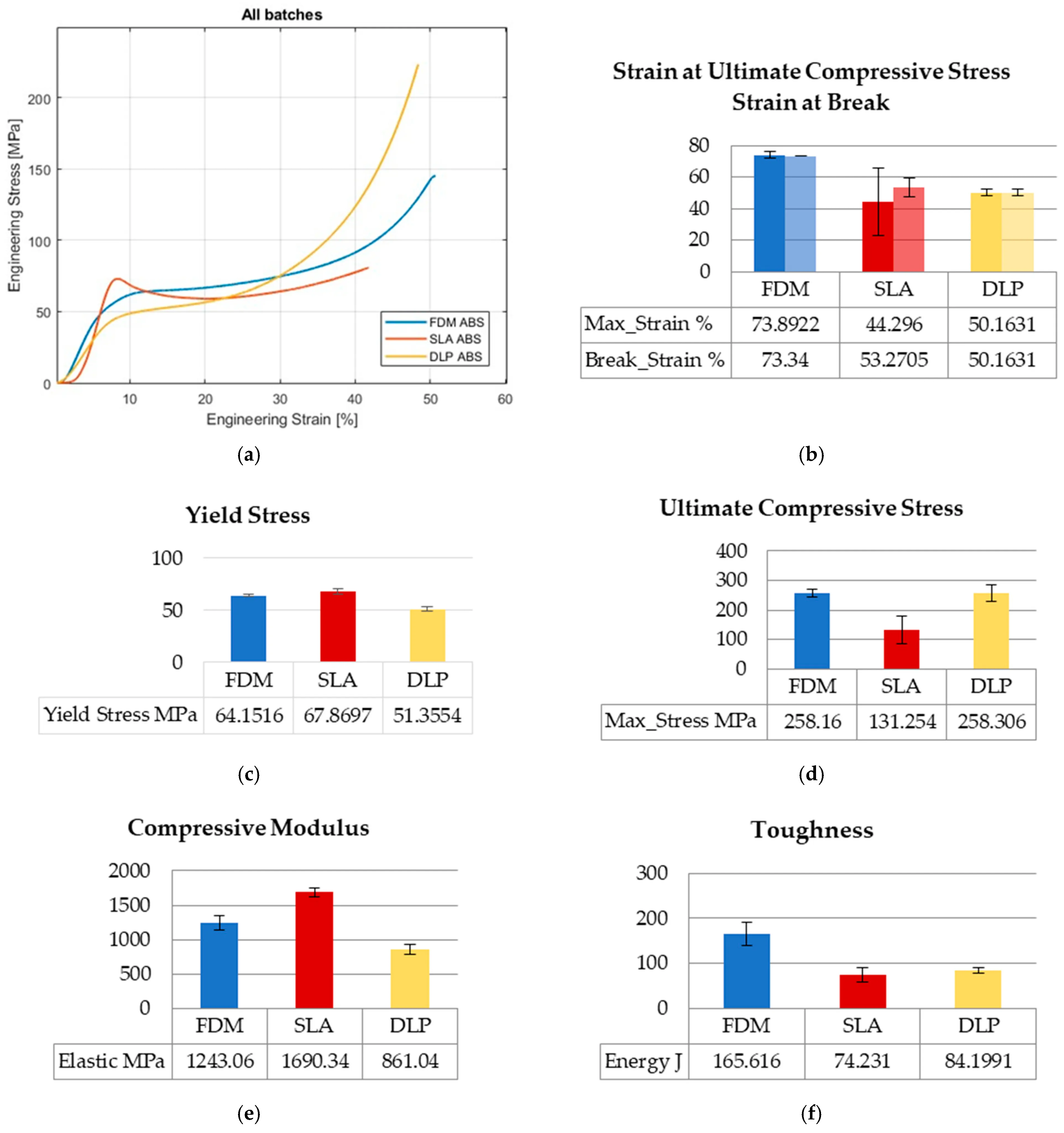
(Source: MDPI Polymers)
(Source: MDPI Polymers)
According to the empirical findings published in the MDPI literature, the tensile load profiles reveal distinct differences in the failure mechanisms of these photopolymers. The curve for Standard Resin drops vertically immediately after reaching its peak ultimate tensile strength, representing sudden brittle fracture. Conversely, the curve for ABS-Like Resin displays a prominent yield point followed by an extended necking and elongation stage, proving its exceptional ductile resilience. Meanwhile, the Water Washable Resin curve exhibits a steep linear region before an abrupt fracture, confirming that its cross-linked matrix compromises post-yield toughness to accommodate water solubility.
For hardware brands and engineering teams, analyzing these benchmarks on paper is only the first step. If you are conducting stress or assembly validation, you can seamlessly test these material thresholds via the JLC3DP Online 3D Printing Instant Quote platform. Uploading your CAD files allows you to compare the production costs of rigid standard polymers against tough alternatives within seconds.
2.2 Impact Resistance: The "Drop Test" Metric 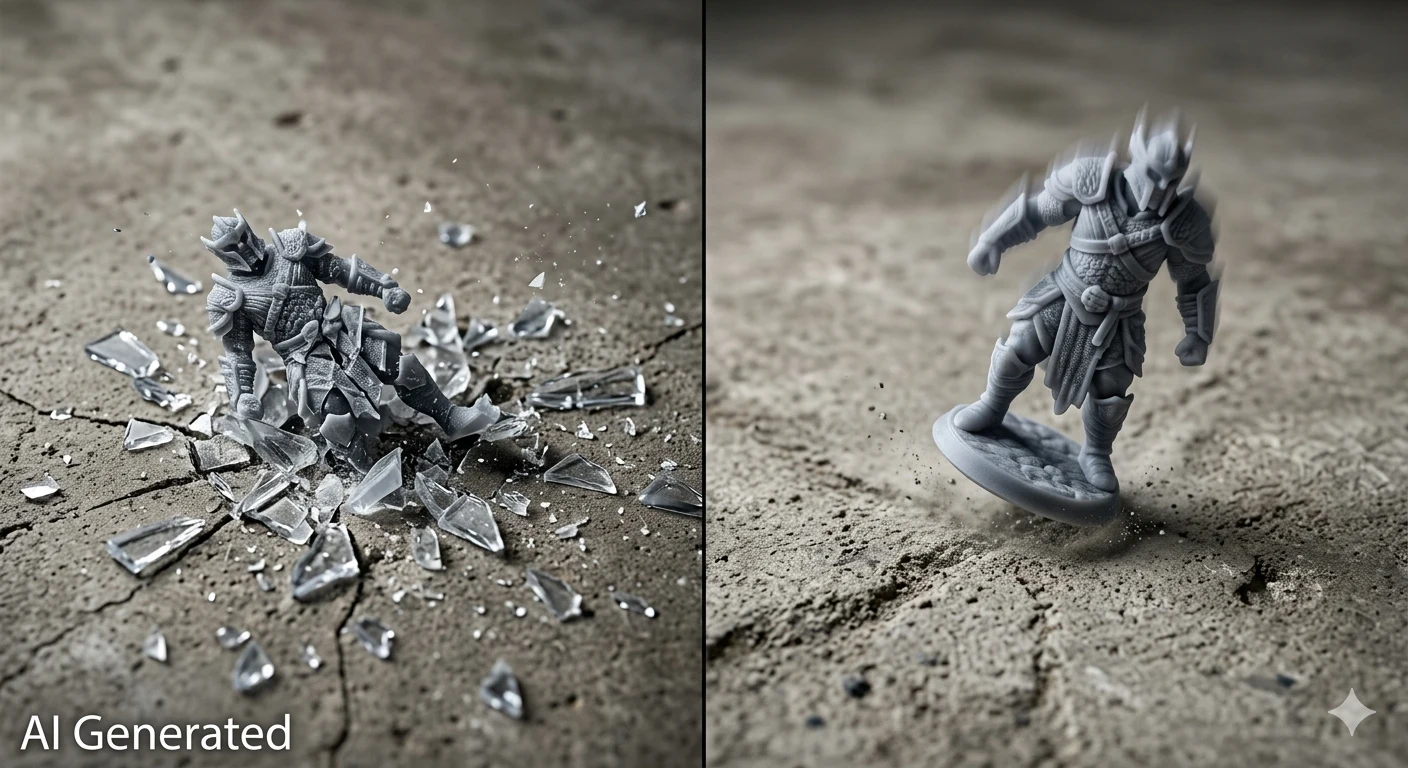
Reddit's engineering community (r/resinprinting) frequently notes that for functional parts, the "drop test" is the ultimate decider. Users like paulsmithkc emphasize that ABS-like resin survives the occasional fall, whereas standard resin minis or prototypes often lose appendages during simple handling. This toughness is achieved via energy-dissipating modifiers within the resin matrix.
2.3 Technical Insight: SLA ABS-Like Resin vs. FDM Authentic ABS Plastic
While authentic ABS filament remains a staple in FDM printing, the liquid photopolymerization process of SLA grants ABS-like resin a decisive mechanical advantage: highly-isotropic performance. FDM-printed ABS parts are inherently anisotropic; because they are formed by extruding thermoplastic layer by layer, the molecular bonds between layers (Z-axis) are significantly weaker than those along the extrusion path (X/Y axes), making the part prone to delamination under shear stress. Conversely, SLA ABS-like resin cures via continuous chemical cross-linking across the layer boundaries within a liquid vat. This highly integrated polymerization ensures minimal anisotropy, allowing critical mechanical properties—such as tensile strength and impact resistance—to remain exceptionally balanced across the X, Y, and Z axes. Consequently, for functional prototypes requiring multi-directional stress resistance, a specialized SLA ABS-like resin can deliver superior structural integrity and predictability compared to a traditional FDM-printed authentic ABS component. Learn how to expand your structural design knowledge with our comparison on ABS-like resin vs ABS filament.
3. Durable Resin SLA ROI: Is the Premium Justified?
3.1 Direct Costs
In the 2026 market, standard resin is inexpensive (roughly $20–30/kg for common brands), while ABS-like (tough/engineering) resin typically runs $35–55/kg. In other words, ABS-like costs on the order of 50% more than basic resin. At first glance, that might seem steep, but many users find the higher price pays off by reducing part failures. Every broken miniature or snapped model costs time and money. As one hobbyist grimly noted after a valued part shattered, “the moment you drop a painted mini and it explodes, you’ll think ‘I should buy more resistant resin’”. Investing in the stronger resin upfront often saves money by cutting the number of print retries, broken assemblies, and wasted efforts.
3.2 ROI Analysis: The "Failure Tax"
For hardware startups, selecting a durable resin is about reducing the "Failure Tax." The true cost includes machine time, operator labor, and post-processing. Research suggests that for professional shops, a single print failure can cost $15.00 - $17.60 in opportunity cost alone. Using a durable resin for SLA printing, such as a high-performance ABS-like resin, can significantly reduce scrap rates during support removal, paying for the abs-like resin premium within the first few design iterations.
4. Application Guide: Real-World Applications of ABS-Like Resin
4.1 Standard Resin Brittleness & Support Removal Limits
While general-purpose photopolymers are widely used for basic visual models due to their rigidity, utilizing standard resin alone for complex geometries creates a severe operational risk during post-processing. Because basic standard resins are naturally brittle, thin protruding features—such as sub-millimeter miniature weapons, flowing hair strands, or sharp casing edges—are highly susceptible to cracking or snapping during support removal.
4.2 ABS-Like Resin Applications: Dynamic Tabletop Gaming & Functional Components
When evaluating material choices, the core decision between abs like resin vs standard resin depends entirely on how the model is handled after curing. While standard resin excels at static, untouched display pieces, abs-like resin is the definitive choice for models requiring physical interaction or targeted structural reinforcement.
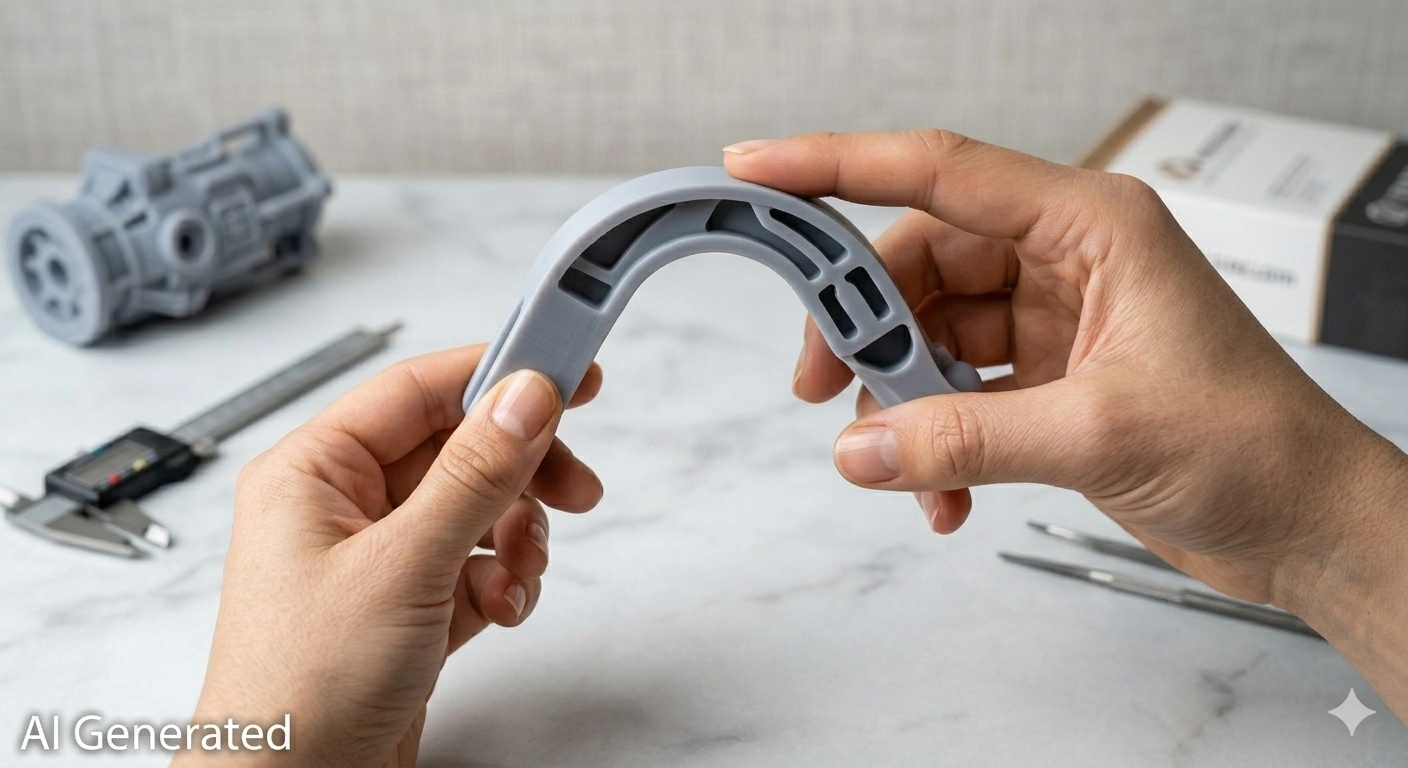
- For Tabletop Gaming Components & High-Handling Miniatures: If you are printing tabletop gaming miniatures, articulated action figures, board game tokens, or proxy models that face continuous handling, dice impacts, and accidental drop tests during sessions, selecting an abs like resin for miniatures is mandatory. Standard resin is far too fragile for the chaotic environment of a gaming table. The specialized modifiers within the abs resin matrix allow thin, vulnerable geometries—such as long swords, extended spears, or fragile antennas—to temporarily deflect and bend under localized stress rather than snapping instantly. The massive gain in real-world drop survivability makes it the superior choice for any asset meant to be touched and played with. If you are choosing a resin printer specifically for tabletop miniatures, check out our guide to the best resin printer for miniatures in 2026 for recommendations on printer resolution, build volume, and workflow.
- For Functional Engineering Components & Reinforced Localized Areas: Beyond gaming, abs-like resin serves as the industrial workhorse for testing high-stress engineering parts like snap-fit joints, enclosures with live hinges, battery covers, and custom electronic housings. Unlike brittle alternatives that shatter under insertion force, this specialized material delivers a clear yield point, absorbing assembly stress without cracking. Furthermore, if your mechanical validation requires physical thread-cutting or self-tapping screws, the compliant polymer networks of a high-quality durable resin formulation provide the structural ductility needed to grip threads securely without cracking the housing.
5. 2026 Brand Recommendations: Tough Resin for 3D Printer Success
- Entry/Maker Level: Anycubic ABS-Like 2.0 or 3.0, Elegoo ABS-Like 3.0 Pro, Sunlu ABS-Like Resin. These are affordable (~$20–30/kg) and widely used in hobbyist communities. Anycubic and Elegoo’s 3.0 series offer improved toughness over standard resin, and Sunlu’s ABS-like is a budget favorite (with some caveats on UV sensitivity). Many users praise these for miniatures that need extra strength.
- Prosumer/Engineering: Siraya Tech BLU, Resione M58, Formlabs Tough 2000 (or Tough 1500). These premium resins deliver higher consistency and mechanical performance. For example, Siraya Tech’s “BLU” is a tough engineering resin with excellent mechanical properties. Formlabs Tough resin is also well-known in industry for durable functional parts.
- JLC3DP SLA Portfolio: JLC3DP offers its own line of engineering SLA resins for professional use. For example, our “Black Resin” has a heat deflection temperature of 58-69°C and “excellent toughness”. Contact JLC3DP for high-performance resin formulations and competitive pricing for production runs. For specific design scenarios, check out our deep dives into selecting the best resin 3d printing materials for high-stress testing.
6. Expert Technical Tips: Optimizing for Success
6.1 Exposure and Support Strategies
ABS-like resins often require 10-20% longer normal exposure times compared to standard resins to ensure proper interlayer bonding . Furthermore, because the material is more flexible, "Heavy" supports are often required to prevent the part from sagging during the peel cycle .
6.2 Post-Processing Science
- Cleaning: Use 95%+ IPA for 2-5 minutes for your abs-like resin parts . Over-soaking (30+ mins) can cause micro-cracks in modified resins .
- Curing: UV cure for 2-10 minutes. Over-curing standard resin leads to extreme brittleness, whereas ABS-like resins are more forgiving . However, over-curing ABS-like resin forces excessive cross-linking of the polymer chains, causing the material to lose its elastomeric properties and drastically reducing its elongation at break—essentially turning your tough resin into brittle standard resin.
7. FAQs about ABS-Like Resin and Standard Resin
7. FAQs about ABS-Like Resin and Standard Resin
Q: Does using ABS-like resin for miniatures sacrifice print detail?
Not really – high-end ABS-like resins print nearly as sharp as standard resin if tuned properly. One user found that "with print settings dialed in, there is no difference in visual quality" versus standard resin. The trade-off is very minor loss in crispness for much better durability.
Q: Are ABS-like prints flexible?
They are more flexible than standard resin (higher elongation) but still stiffer than, say, TPU. They bend under load instead of snapping, but won't stretch like rubber. Use ABS-like if you need some flex and impact resistance, but use flexible resins for true elasticity.
Q: I keep cracking thin parts – what to do?
Thin walls (<1mm) are prone to breakage in any resin. With standard resin, even 0.5–1mm walls may snap. ABS-like is better – it can survive thin sections that standard resin cannot – but try to design walls at least ~1mm or more.
Q: When should I choose ABS-like resin vs standard resin?
Choose ABS-like resin if your part requires structural resilience to handle physical stress, such as mechanical assembly testing, functional snap-fits, or high-handling components. Conversely, if your project is purely for static display (such as architectural mockups or untouched visual prototypes) where cost efficiency and raw geometric crispness are your only priorities, standard resin for 3D printing is perfectly fine.
For further data or to try industrial-grade resins, consult JLC3DP's resources or request sample prints. We offer a full portfolio of SLA materials (from standard to high-performance formulations) and can guide you to the best choice for your application. If you want to dive deeper into optimizing your hardware prototyping or workflows, we invite you to explore our blog. For specific design scenarios, check out our deep dives into selecting the best resin 3d printing materials for high-stress testing.
Keep Learning
Best Resin Printer for Miniatures in 2026
Choosing the best resin printer for miniatures in 2026 comes down to one thing: detail per dollar. After a hands-on review of this year's leading SLA and 4K/8K LCD resin printers, we ranked the top picks for D&D, Warhammer, and tabletop terrain — from a $149 beginner machine to an 8K showcase rig. This guide covers resolution (4K vs 8K), build volume, resin choices, and a buyer's checklist, so you can print crisp minis without overspending or drowning in failed prints. Why Resin 3D Printers Are Best f......
Strongest Resin for 3D Printing (2026): Tough vs High Strength Resins Compared
When people ask for the strongest resin for 3D printing, what they usually mean is “the strongest for my part.” A rigid bracket, a snap-fit enclosure, and a heat-exposed fixture all fail in different ways. This guide breaks it down clearly. What Is the Strongest Resin for 3D Printing? In pure tensile and flexural testing, high strength engineering resins are typically the strongest SLA resin options available. However, in real-world applications, parts often fail from impact, repeated stress, or stres......
ABS-Like Resin vs Standard Resin: The Definitive Guide to Material Choice & Performance
Key takeaways Standard Resin: High stiffness, extreme brittleness, best for static visuals. ABS-Like Resin: High elongation, exceptional impact resistance, mandatory for snap-fits. Near-Isotropic Advantage: Unlike FDM-printed authentic ABS which suffers from weak interlaminar (Z-axis) bonds and anisotropy, SLA ABS-like resin cures via liquid cross-linking, providing near-isotropic advantage and uniform multi-directional strength. Water Washable Resin: Zero IPA needed, eco-friendly workflow, but sacrif......
Best Flexible Filament for 3D Printing: TPU vs PEBA vs TPE
You're staring at three flexible filament options and they all claim to be "flexible." That word covers a lot of ground. A phone case grip and an airless basketball both need flexibility, but they need completely different things from it. This guide breaks down what actually separates TPU, PEBA, and TPE so you pick based on what your part needs to do, not just what's available. What Is the Best Flexible Filament for 3D Printing? The softest 3D printing material depends entirely on the application. TPU......
What Is 9000HE Resin? The High Strength SLA Engineering Resin Explained
What Is 9000HE Resin? The High Strength SLA Engineering Resin Explained Most SLA resins are designed for one thing: looking good. Smooth surface, fine detail, accurate geometry. That's where the technology excels and that's what most resin materials are optimized for. 9000HE wasn't designed for that. It was designed for the parts that actually have to do something, carry load, survive assembly, hold up in functional testing, and behave like an engineering material rather than a display model. If you'v......
Which Resin Is Best for 3D Printing Fine Details vs Functional Parts?
Resin 3D printing is often marketed as a single category, but in practice, the resin you choose matters more than the printer itself. A photosensitive resin optimized for ultra-fine surface detail behaves very differently from a resin designed for load-bearing or heat-resistant parts. Treating them as interchangeable is one of the most common reasons resin prints fail to meet expectations. When comparing 3D printing resin types, the real question isn’t which resin is “best” overall, it’s what the part......