Low Volume Manufacturing with 3D Printing: Benefits and Applications
9 min
- What Is Low Volume Manufacturing?
- Low Volume Manufacturing Processes: 3D Printing vs CNC Machining vs Injection Molding
- Why Use 3D Printing for Low Volume Manufacturing?
- Applications of Low Volume 3D Printing
- Choosing the Right 3D Printing Service for Low Volume Production
- Frequently Asked Questions About Low Volume Manufacturing
- Conclusion
Key Takeaways
Cost-Effective Production: 3D printing eliminates expensive tooling costs, making low volume manufacturing economically viable.
Faster Time-to-Market: Production can begin within days instead of weeks.
Design Flexibility: Complex geometries and customization are achievable without additional tooling costs.
Low volume manufacturing bridges the gap between prototyping and mass production. It is useful when companies need smaller production runs, want to test a product before investing in tooling, or require customized parts in limited quantities.
Compared with injection molding or CNC machining , 3D printing can reduce upfront tooling costs, shorten lead times, and make design changes easier. This makes it a practical option for low volume manufacturing, especially for prototypes, custom parts, and small-batch production.
What Is Low Volume Manufacturing?
Definition of Low Volume Production
Low volume production generally refers to manufacturing parts in smaller quantities than conventional mass production. The exact volume varies by industry, but it often covers production runs ranging from a few dozen parts to several thousand.
This approach is commonly used for new product launches, market testing, customized products, replacement parts, limited editions, and bridge production before mass manufacturing.
For many companies, low volume production offers more flexibility than committing immediately to a large manufacturing run. It can also reduce the risk of holding excess inventory if demand changes.
Difference Between Low and High Volume Manufacturing
The main difference is not only the number of parts produced, but also the manufacturing strategy.
High volume manufacturing usually relies on dedicated tooling, standardized processes, and repeatable production. The initial investment can be high, but the cost per part decreases as production volume increases.
Low volume manufacturing prioritizes shorter lead times, lower upfront investment, and greater flexibility. It is often better suited to products that are still being refined, customized, or produced in limited quantities.
Low Volume Manufacturing Processes: 3D Printing vs CNC Machining vs Injection Molding
There is no single best process for every low volume project. The right choice depends on geometry, material, quantity, tolerance, and production goals.
Tooling Cost
Injection molding requires a mold before production can begin. For small quantities, tooling may account for a large part of the total project cost.
CNC machining does not require a mold, but machine setup, fixtures, and programming still add cost.
3D printing usually has the lowest tooling requirement because parts are produced directly from digital files. This makes 3d printing low volume production especially useful when designs may still change or when multiple versions are needed.
Lead Time
Tooling can add days or weeks to an injection molding project.
CNC machining can move faster, especially for simple parts, but production time increases with machining complexity and setup requirements.
With 3D printing, production can often begin soon after the CAD file is approved. This makes it useful for projects moving quickly from rapid prototyping into low volume production.
Production Volume
Injection molding becomes more economical as production quantity increases. CNC machining works well across a wide range of volumes, especially when tight tolerances or engineering-grade materials are required.
3D printing is strongest when production volumes are relatively low and avoiding tooling brings more value than minimizing unit cost.
This makes it suitable for bridge manufacturing, pilot production, customized batches, and short-run products.
Material Options
CNC machining supports a wide range of engineering plastics and metals. Injection molding also offers many thermoplastic materials once tooling is ready.
Modern 3d printing services provide engineering resins, nylon, thermoplastics, and metals. However, material performance varies by printing technology, so the process should be selected according to the part’s actual requirements.
Best Applications
Injection molding is usually best for stable designs and larger quantities.
CNC machining is well suited to precision parts, functional components, and applications requiring specific engineering materials.
3D printing is particularly effective when parts are geometrically complex, customized, frequently revised, or needed in relatively small quantities.
If a project is still between prototype validation and full-scale production, JLC3DP’s 3D printing services can provide a flexible way to test materials and production quantities before moving to larger-volume manufacturing.
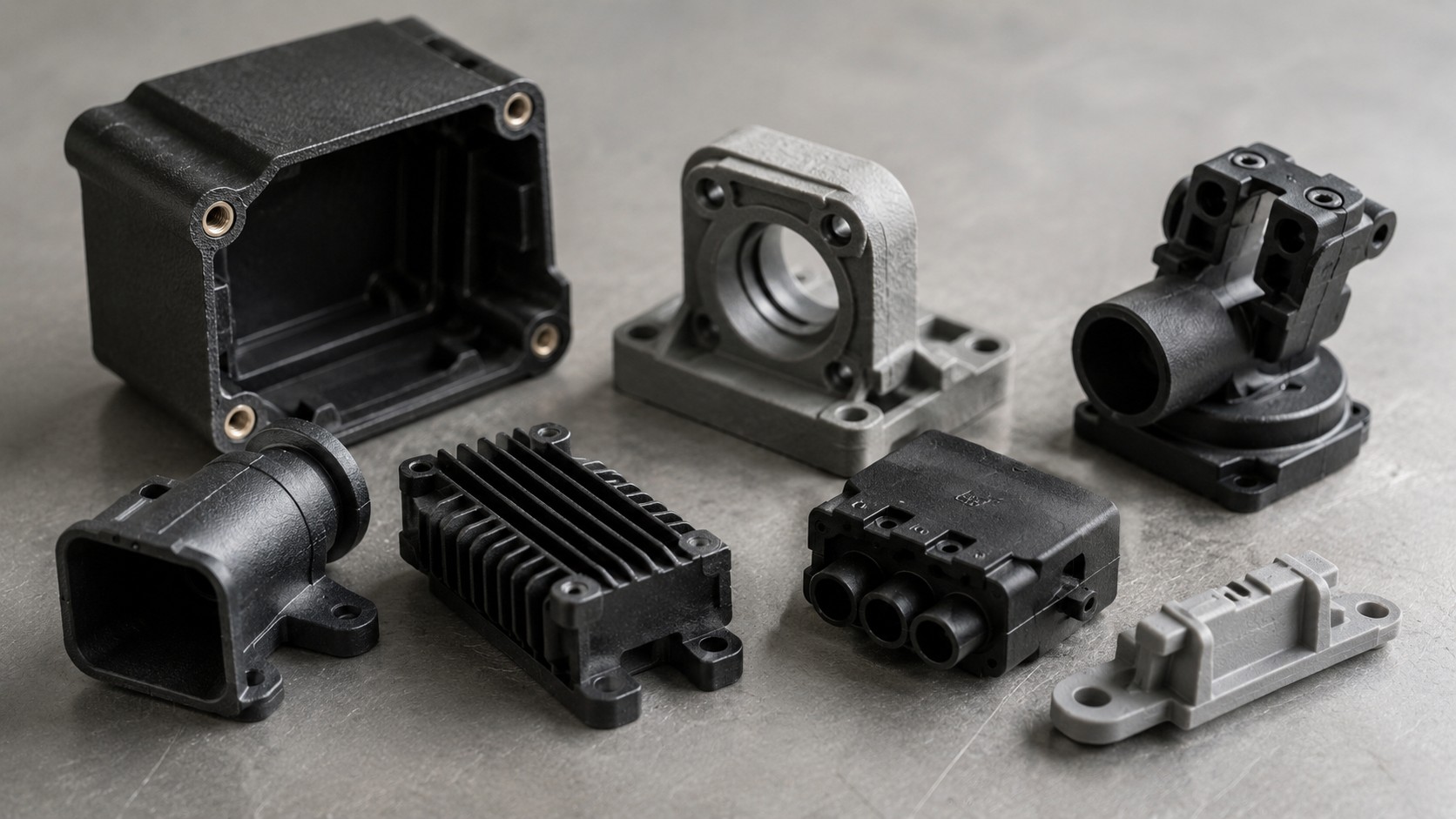
Why Use 3D Printing for Low Volume Manufacturing?
One of the biggest advantages of 3D printing in low volume manufacturing is that production starts from a digital file rather than dedicated tooling.
1. Lower Tooling Costs
Without molds or specialized tooling, manufacturers can avoid a large upfront investment. This is particularly useful for new products, limited production runs, and parts that may require future design changes.
For low volume contract manufacturing, reducing tooling costs can also make smaller projects more commercially practical.
2. Faster Production Cycles
Once the design is ready, parts can move into production quickly. If the design changes, the digital file can be updated without rebuilding a mold.
This shortens the time between design revisions and physical production, which is valuable when companies are testing a product or responding to changing customer requirements.
3. Design Flexibility
D printing can produce internal channels, lattice structures, organic shapes, and consolidated assemblies that may be difficult or costly to manufacture using conventional methods.
This design freedom can also reduce part count, simplify assembly, or lower component weight.
4. Easy Customization
Because each part is produced from a digital model, variations can be introduced without changing the entire production setup.
This makes 3D printing suitable for custom manufacturings ,including personalized products, customer-specific components, and multiple design variants within the same production run.
Applications of Low Volume 3D Printing
1. Product Prototypes
Many companies begin with rapid prototyping and later need a small number of production-quality parts for testing, validation, or early customer use.
Many companies begin with rapid prototyping and later need a small number of production-quality parts for testing, validation, or early customer use.
3D printing makes this transition relatively straightforward because the same digital model can often move from prototype to functional part with only minor adjustments.
This is useful for design verification, functional testing, trade-show samples, and early-stage product launches.
2. Custom Parts
Low volume 3D printing is useful for parts that are unlikely to justify dedicated tooling, such as custom housings, mounting brackets, jigs and fixtures, replacement components, specialized tools, and customer-specific product variations.
For these parts, producing only what is needed can reduce inventory and simplify product management.
3. Small-Batch Production
3D printing can support small production runs when demand is limited, uncertain, or highly specialized.
This is especially valuable for startups, niche products, spare parts, and limited-edition products. Instead of committing to a large inventory, companies can produce smaller batches and adjust future production according to demand.
That flexibility is one of the main reasons low volume manufacturing services increasingly include additive manufacturing as part of the production mix.
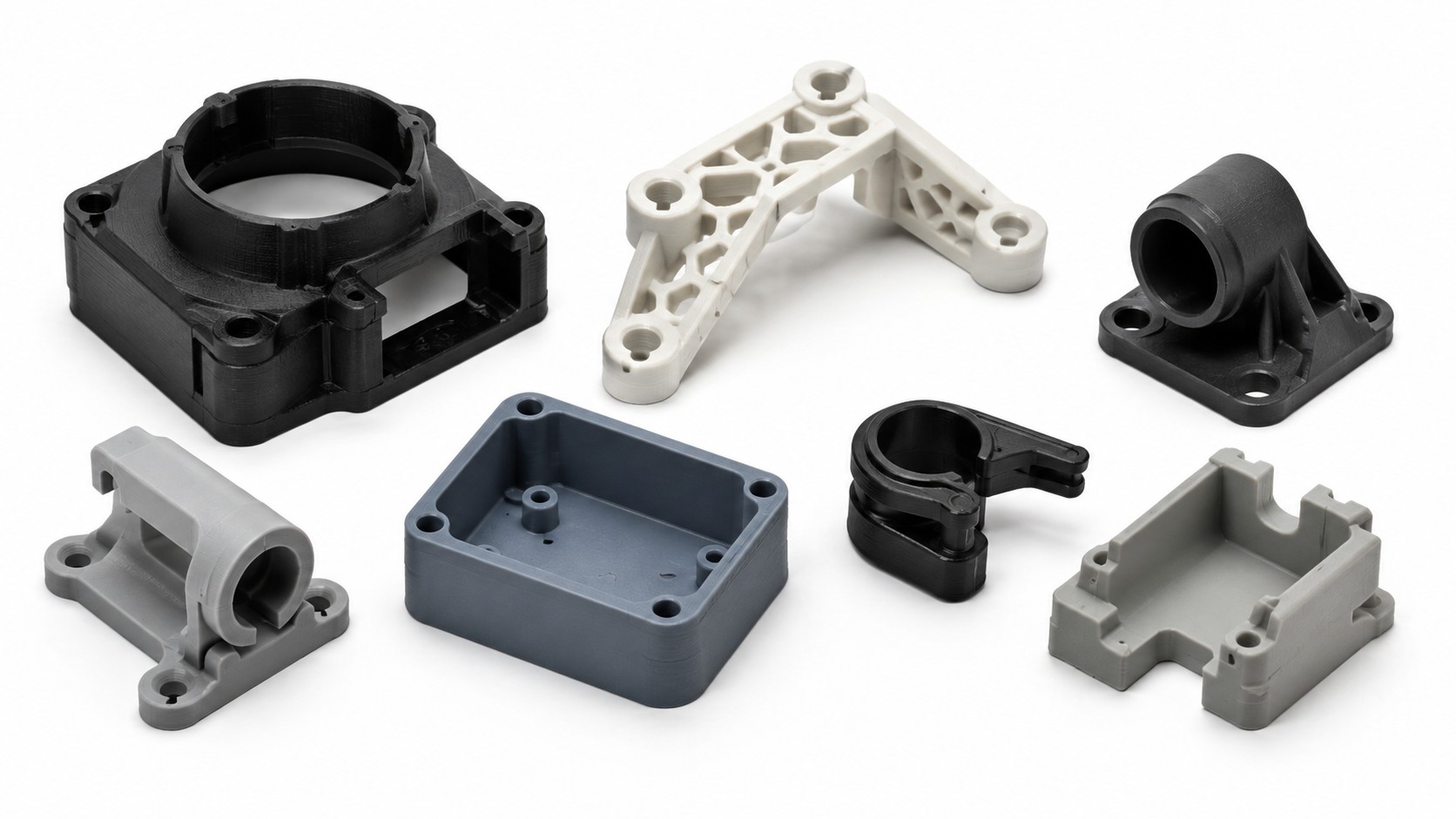
Choosing the Right 3D Printing Service for Low Volume Production
Not every 3D printing process is suitable for production parts. Before choosing a supplier, it is important to consider the material, technology, and final use of the component.
Materials
The material should be selected according to the required strength, flexibility, heat resistance, surface finish, and durability.
Resin can work well for detailed parts and visual models, while nylon is often used for functional components. Metal printing may be suitable for higher-strength or more specialized applications.
Technologies
Different technologies serve different purposes.
SLA is often selected for smooth surfaces and detailed parts. SLS and MJF are commonly used for functional nylon components and small production batches. Metal 3D printing is better suited to complex metal parts where conventional machining may be difficult or inefficient.
A capable supplier should recommend the technology based on the part rather than applying the same process to every project.
Production Requirements
Before placing an order, manufacturers should consider required quantity, dimensional tolerance, surface finish, mechanical performance, delivery time, and post-processing requirements.
For businesses comparing low volume manufacturing services, these details are often more important than the printing technology alone.
The best solution is usually the one that balances part performance, production speed, and total project cost.
If you already have a CAD model, uploading it to JLC3DP for an instant quote is a practical way to compare suitable materials, technologies, and low-volume production options for the part.
Frequently Asked Questions About Low Volume Manufacturing
Q: What is considered low volume manufacturing?
There is no universal quantity range. In many industries, low volume manufacturing can mean anything from a few dozen parts to several thousand units. The definition depends on the product, manufacturing process, and economics of production.
Q: Is 3D printing suitable for low volume production?
Yes. 3D printing is particularly suitable when production quantities are too low to justify expensive tooling, when designs change frequently, or when parts require customization or complex geometry.
Q: Is 3D printing cheaper than injection molding for low volumes?
It can be. Injection molding usually has a high initial tooling cost but a low cost per part at high volumes. For smaller batches, 3D printing can be more economical because it avoids mold costs.
Q: When should CNC machining be used instead of 3D printing?
CNC machining may be the better choice when very tight tolerances, specific engineering materials, or machined surface finishes are required. The decision depends on geometry, material, quantity, and performance requirements.
Q: Can 3D printing be used for final production parts?
Yes. Depending on the technology and material, 3D printing can produce functional end-use parts as well as prototypes. SLS, MJF, SLA, and metal additive manufacturing are all used in production applications.
Conclusion
Low volume manufacturing offers a flexible way to produce parts without committing to mass production too early. For projects with changing designs, customized components, or limited demand, 3D printing can reduce tooling requirements and simplify production.
With the right material and printing process, 3D printing can support both prototyping and low volume production, helping businesses move more efficiently from design to final parts.
Keep Learning
Low Volume Manufacturing with 3D Printing: Benefits and Applications
Key Takeaways Cost-Effective Production: 3D printing eliminates expensive tooling costs, making low volume manufacturing economically viable. Faster Time-to-Market: Production can begin within days instead of weeks. Design Flexibility: Complex geometries and customization are achievable without additional tooling costs. Low volume manufacturing bridges the gap between prototyping and mass production. It is useful when companies need smaller production runs, want to test a product before investing in t......
How to Turn a Photo Into a 3D Model: AI, Photogrammetry & 3D Scanning
Quick Overview You can convert a regular photo into a usable 3D model using AI image generation, multi-photo reconstruction, photogrammetry, or 3D scanning. For most creators and beginners, the simplest workflow is straightforward: prepare your photo, generate a 3D model, inspect every angle, fix geometry issues, and export. Single-image AI tools work best for fast visual results. If you need precise shapes, complete object coverage, or accurate real-world dimensions, multi-photo reconstruction, photo......
Tree Support vs Grid Support in 3D Printing: How to Choose the Right Support Strategy
Key Takeaways -A 45° overhang is a conservative starting point for support decisions, not a universal rule. -Tree or organic supports use branching geometry to reach overhangs with less unnecessary contact. -Grid-style supports generally provide broader, more continuous support beneath large areas. -Material savings and print-time differences vary by model, orientation, slicer, interface settings, and support density. -The best support settings should be treated as starting points and adjusted accordi......
How Accurate is FDM 3D Printing for Prototyping?
When speed and affordability matter, FDM 3D printing often takes center stage in prototyping. But there's one question that comes up time and again, how accurate is FDM 3D printing really? If you're developing a functional prototype, testing fitment, or evaluating mechanical properties, understanding the accuracy of 3D printing, especially FDM, can be the difference between a reliable test piece and a misleading mockup. (souruce: Unsplash) What is FDM 3D Printing? FDM (Fused Deposition Modeling) is a ......
Dual Extruder 3D Printer: Types, Principles and Tips
In the 3D printing industry, with the development of dual-extrusion technology, engineers can now use dual extruder 3d printers to print parts composed of two or more materials. Compared with traditional single-extrusion printers, dual extruder 3d printers have significant advantages in functionality and application range, but at the same time, design difficulty and maintenance costs also increase. This article introduces the types, working principles, advantages and disadvantages, and printing techni......
Exploring the Potential of FDM for Flexible 3D Printing
What is flexible 3D printing? The term "flexible 3D printing" describes the technique of producing three-dimensional goods with materials that have elasticity and may compress, bend, or stretch. FDM 3D Printing Flexible FDM 3D printing makes use of Fused Deposition Modelling (FDM) to create three-dimensional things out of flexible and elastic materials. varying degrees of flexibility and durability can be produced by adapting FDM printers to accept flexible filaments such as thermoplastic elastomers (......