PETG Temperature Resistance: Limits & Comparison with PLA/ABS/ASA
18 min
- Intro
- What Is PETG?
- Understanding PETG Temperature Range and Thermal Properties
- Comparison of Temperature Resistance of PETG and Other 3D Printing Materials
- PETG Practical Use Temperature Limits
- Printing Temperature Setting for PETG
- Optimization Methods for PETG in High Temperature Applications
- PETG Temperature Resistance in Real-World Applications
- PETG Heat-Resistance Research: What Could Change in 2025–2026?
- FAQ about PETG Temperature Resistance
- Conclusion: How Much Heat Can PETG Really Handle?
Key Takeaways
- Standard PETG is best suited for continuous use below ~60℃; performance can decline as temperatures approach 70℃.
- PETG typically has a Tg of ~75–85℃ and an HDT of ~65–75℃, depending on the material grade and test conditions.
- HDT is not a maximum service temperature—load, print orientation, wall thickness, geometry, and exposure time all affect real-world performance.
- PETG offers better heat resistance than PLA but lower heat resistance than ABS, ASA, PA12-CF, PC, and PEEK.
- For sustained temperatures above 70℃, consider a higher-temperature PETG formulation or engineering materials such as ASA, PA12-CF, PC, or PEEK.
Intro
PETG (polyethylene terephthalate glycol-modified) is a thermoplastic material widely used in 3D printing, packaging and industrial applications. Due to its excellent mechanical properties and chemical resistance, PETG has become another popular choice besides PLA, ABS and other materials.
How stable is PETG in a high temperature environment? What is its temperature resistance limit? This article will introduce the temperature tolerance of PETG in detail and analyze the environment in which PETG is used.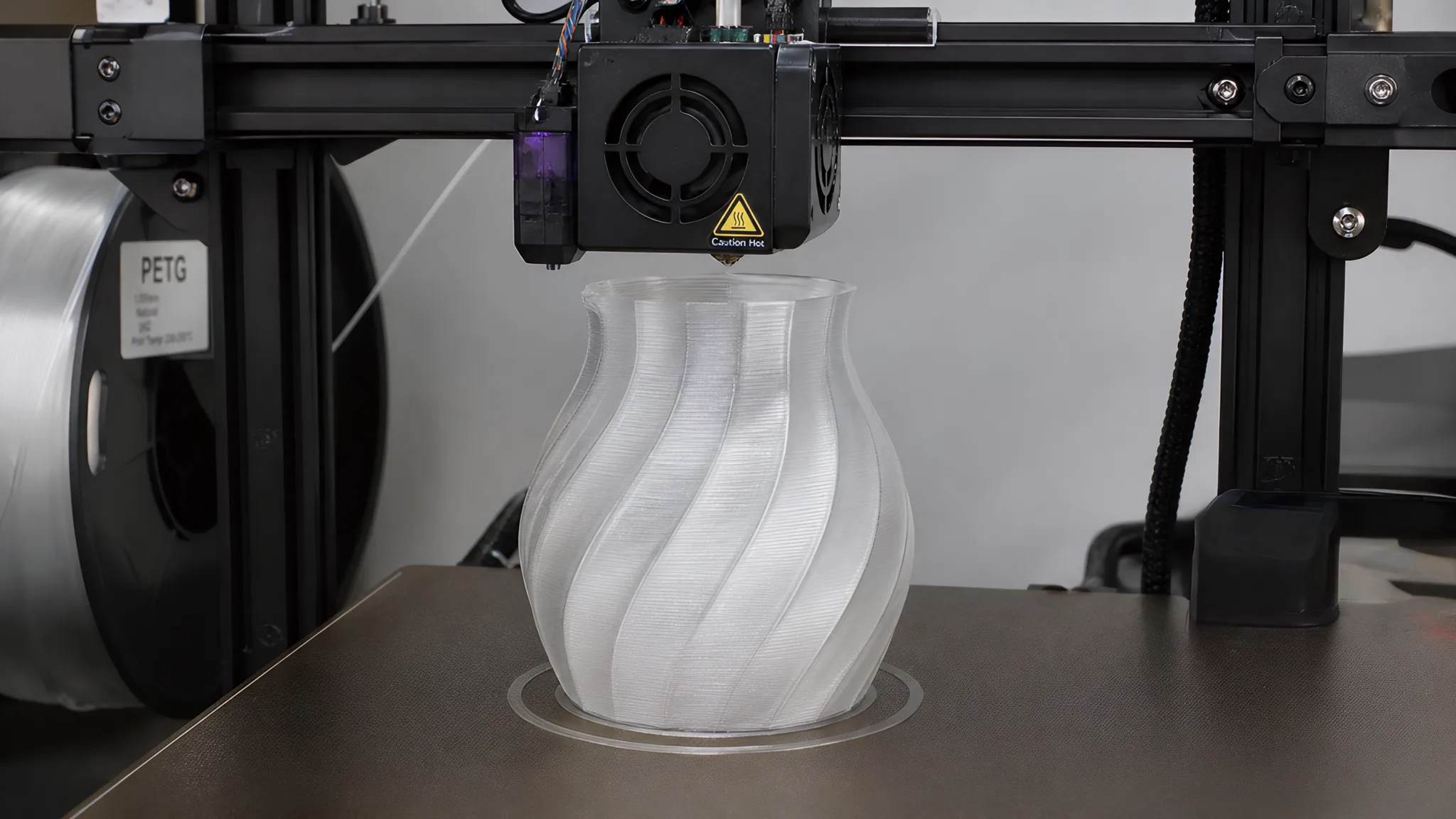
What Is PETG?
PETG is a glycol-modified version of PET, a thermoplastic widely known for its strength, chemical resistance, and durability. Adding glycol helps reduce brittleness and crystallization, making PETG easier to process and 3D print while maintaining good mechanical strength, impact resistance, and dimensional stability.
Understanding PETG Temperature Range and Thermal Properties
PETG's thermal behavior can be described using five key parameters: Glass transition temperature (Tg), heat deflection temperature (HDT), melting temperature (Tm), coefficient of thermal expansion (CTE), and thermal conductivity. They each describe a different aspect of how PETG behaves when exposed to heat.
1. Glass Transition Temperature (Tg) — 75–85℃
The glass transition temperature (Tg) of PETG is usually between 75℃ - 85℃, which means that when it approaches this temperature, PETG will start to soften and lose some of its mechanical strength. (The glass transition temperature is the temperature point at which a material changes from a rigid, brittle state to a certain elasticity and fluidity. For thermoplastics, the glass transition temperature is an important physical property, which marks the change of the material's molecular structure from a hard and brittle "glass state" to a softer "rubber state.")
2. Heat Deflection Temperature (HDT) — 65–75℃
PETG typically has an HDT of around 65–75℃, depending on the test method, applied load, and material formulation. HDT measures how much a material deforms under a specified mechanical load as temperature increases, making it more useful than Tg for evaluating whether a printed part can maintain its shape under load.
For functional PETG parts, HDT is often more relevant than Tg because real components usually experience both heat and mechanical stress.
3. Melting Temperature (Tm) — 230–260℃
For FDM printing, PETG has a typical melting or processing range of approximately 230–260℃. However, this temperature should not be interpreted as a usable temperature limit for finished parts. It mainly relates to PETG's processing behavior during FDM printing and other thermoplastic manufacturing processes.
For FDM printing, PETG is commonly printed with a nozzle temperature of approximately 220–250℃, depending on the filament formulation and printer setup.
4. Coefficient of Thermal Expansion
PETG expands and contracts as its temperature changes. Its coefficient of thermal expansion (CTE) is typically on the order of 50–80 × 10⁻⁶/K, although the actual value varies with formulation, print orientation, and measurement conditions.
This thermal expansion can affect dimensional accuracy, fit, and assembly tolerances when PETG parts experience large temperature changes. For example, a tightly fitted PETG component may expand enough to affect clearance when exposed to elevated temperatures.
5. Thermal Conductivity
PETG has relatively low thermal conductivity, typically around 0.2 W/(m·K). This means PETG does not transfer heat as efficiently as metals, so heat can remain concentrated in localized areas rather than spreading quickly through the part.
This is particularly relevant for dark or black PETG parts exposed to direct sunlight. The material can absorb more solar radiation, causing the surface temperature to rise significantly above the surrounding air temperature. Combined with PETG's low thermal conductivity, this can create localized hot spots and increase the risk of softening or deformation.
Summary: Tg tells you when PETG begins to lose rigidity, HDT indicates its resistance to deformation under load, Tm describes its processing range rather than service temperature, while CTE and thermal conductivity help explain dimensional changes and localized heating in real-world applications.
Comparison of Temperature Resistance of PETG and Other 3D Printing Materials
The table below compares the temperature resistance of common FDM materials using JLC3DP technical data where available. PETG, PETG-CF and PC are included as a general industry reference, and its properties may vary by grade and manufacturer.
| FDM Material | Tg | HDT | Melting / Processing | Continuous Use | Heat Resistance | Data Type |
|---|---|---|---|---|---|---|
| PLA | — | 53℃ (ISO 75) | ~170–180℃ | <40–45℃ | Low | JLC3DP /Reference |
| PETG | ~75–85℃ | 65–75℃ (ISO 75) | ~230–260℃ | <60–70℃ | Low–Moderate | Industry |
| PETG-CF | ~80–85℃ | ~75–85℃ | ~230–250℃ | <70–80℃ | Moderate–High | Industry |
| TPU 95A | — | ~40–70℃ * | ~170–230℃ | ~50–60℃ | Low–Moderate | JLC3DP Data |
| ABS-ESD | — | 78℃ * | ~220–250℃ | <70℃ | Moderate | JLC3DP Data |
| ABS | ~100–105℃ | 98℃ (ISO 75 1.8 MPa) | ~220–250℃ | <85–90℃ | Moderate–High | JLC3DP Data |
| ASA | ~100–105℃ † | 97.8℃ † | ~230–260℃ † | <85–90℃ | Moderate–High | JLC3DP Data |
| PA12-CF | 108℃ (DSC, 10℃/min) | 105℃ (ISO 75 1.8 MPa) | 165℃ (DSC, 10℃/min) | <90–100℃ | High | JLC3DP Data |
| PC | ~140–150℃ | ~120–140℃ | ~250–270℃ | <120–130℃ | Very High | Industry Reference |
| PEEK | 143℃ (ISO 11357) | 144℃ @ 1.8 MPa (ISO 75-f) | 343℃ (ISO 11357) | <250℃ continuous | Extreme | JLC3DP Data |
Note
1. * Values vary by grade, manufacturer, and test method. PETG, PETG-CF and PC shown as industry reference, not a JLC3DP material.
2. Tm describes the polymer's melting or processing behavior and should not be interpreted as the maximum service temperature of a finished FDM part.
As can be seen from the table, PETG generally offers better heat resistance than PLA, making it a better choice for parts exposed to moderate heat. But PETG still is not as good as ABS, ASA, PA12-CF, PC and PEEK in high temperature environments.
Which Material Should You Choose?
When choosing a material, it is necessary to weigh the performance according to the specific application scenario.
| Application Temperature | Recommended Material |
|---|---|
| <50℃ | PLA |
| 50–70℃ | PETG |
| 80–100℃ | ABS / ASA |
| 100–110℃ | PA12-CF |
| 110–130℃ | PC |
| >130℃ | PEEK / high-temperature materials |
In general, choose PLA for low-temperature prototypes and general-purpose parts, PETG when you need a better balance of heat resistance and printability, ABS or ASA for applications around 80–100℃, PA12-CF for higher-performance functional parts, PC for higher-temperature applications, and PEEK for extreme-temperature engineering applications.
How to Interpret PETG Temperature Data for 3D Printed Parts
For 3D printed PETG parts, datasheet values such as Tg and HDT should be treated as material-level reference points rather than guaranteed service temperatures. Actual performance depends on print orientation, wall thickness, infill, geometry, mechanical load, exposure time, and the specific PETG grade.
This is why a PETG part with an HDT of around 70℃ should not automatically be considered suitable for continuous operation at 70℃.
PETG Practical Use Temperature Limits
PETG's actual service temperature depends on load, exposure time, sunlight, and part design, not just Tg or HDT.
-
Recommended Operating Temperature
For standard PETG, continuous use below 60℃ is a conservative range. At 70–80℃, stiffness and dimensional stability can decrease significantly, so standard PETG is generally not recommended for load-bearing applications in this range.
-
Stress and Load Sensitivity
PETG deforms more easily when heated under load. A part may remain stable without a load but deform at a lower temperature when subjected to continuous mechanical stress.
-
Local Heating and Environmental Factors
Black PETG exposed to direct sunlight can become much hotter than ambient temperature. A car interior can reach 50–60℃ or higher, making prolonged exposure potentially problematic, especially for loaded parts.
-
Long-Term Aging and UV Exposure
Long-term heat and UV exposure can gradually reduce PETG's mechanical performance. For outdoor applications, consider UV-resistant PETG or ASA. For more detailed, see our guide to the best 3D printing filament for outdoor use.
-
Low-Temperature Performance
PETG generally remains tougher than PLA at low temperatures and can perform well around −20℃, depending on the specific grade and application. For critical cold-temperature applications, check the manufacturer's datasheet.
-
Warping: Print Adhesion vs. Heat-Induced Deformation
PETG print warping is usually caused by poor bed adhesion or uneven cooling, not heat softening. A 70–85℃ heated bed, consistent cooling, and an enclosure can help. See our guide on preventing 3D printing warping.
Heat-induced deformation is different. As PETG approaches its typical HDT of 65–75℃, it can lose stiffness and deform under load.
How hot can PETG get before warping? There is no single PETG warping temperature, but deformation risk increases around 65–75℃.
Printing Temperature Setting for PETG
When printing with PETG material, the recommended nozzle temperature range is 220℃ to 250℃. Different brands of PETG filaments may vary, so it is best to refer to the guidance of the specific brand. In practice, it is recommended to start at a lower temperature, and if you find uneven extrusion or adhesion problems, you can gradually increase the temperature until the problem is solved. In addition, make sure the nozzle is unobstructed before printing, as any residual extrudate may affect the print quality. To ensure that the PETG print can be stably attached to the print bed, avoid warping and ensure a firm fixation during printing, it is best to heat the bed to 70℃ to 85℃. PETG adheres well to glass, PEI and textured build plates at these temperatures.
Optimize printing parameters before considering annealing. Correct nozzle and bed temperatures, cooling, layer height, and print speed help ensure proper layer bonding and dimensional stability. Annealing is a post-processing step that may improve thermal stability for some PETG grades, but it cannot fully compensate for poor initial print quality and may introduce shrinkage or warping.
Related article: PETG Filament for 3D Printing: Properties & Settings Guide
Optimization Methods for PETG in High Temperature Applications
If you need to use PETG in a slightly higher temperature environment, you can consider the following ways to improve its heat resistance:
1Use High Temperature Resistant Modified PETG
Choose a modified high temperature resistant PETG material with a higher glass transition temperature and Heat Deflection Temperature (HDT), which can withstand higher temperatures. High temperature resistant modified models have a glass transition temperature of 90-105℃ and a Heat Deflection Temperature (HDT) of 85-100℃. You can choose the high temperature model PETG marked in the technical data sheet.
2Increase Wall Thickness and Filling Density
By increasing the wall thickness and filling rate (such as 80%-100%) of the 3D printed parts, its heat resistance stability can be improved. Thicker walls and high filling rates can delay heat transfer, reduce softening and deformation, but will not change the glass transition temperature of the material itself. Suitable for short-term or mild high temperature scenarios.
3Annealing
Proper annealing of PETG (such as 80℃, 30 minutes) can eliminate internal stress and slightly improve thermal stability. After annealing, slow cooling is required to reduce shrinkage and warping. Experimental data show that annealing can increase the Heat Deflection Temperature (HDT) by about 5-10℃, but the temperature and time need to be strictly controlled.
4Avoid Direct Sunlight or Heat Sources
In high temperature or outdoor environments, use shading, heat insulation or heat dissipation measures (such as aluminum foil reflective layer or cooling fan) to reduce the actual contact temperature of the components and extend the service life. Avoid long-term exposure to high temperature or ultraviolet light.
With the growing adoption of 3D printing in manufacturing and prototyping, the demand for heat-resistant materials continues to rise. PETG's balance of durability, printability, and chemical resistance has made it a general-purpose material. With 2025–2026 research exploring heat-resistant PETG formulations with Tg values above 120℃, PETG is gradually moving toward higher-performance engineering applications.
5Use Carbon-Fiber Reinforced PETG (PETG-CF)
PETG-CF is a standard PETG filament reinforced with short carbon fibers (typically 10–20 wt%). The carbon fibers restrict polymer chain mobility, which generally raises HDT by about 5–15℃ and significantly improves stiffness and dimensional stability during printing. For PETG-CF temperature resistance, the glass transition and melting temperatures are usually close to those of standard PETG, while HDT is typically around 75–85℃ at 1.8 MPa. The PETG-CF softening temperature also depends on the specific formulation, load, and testing conditions.
For parts that need a step up from standard PETG in stiffness, dimensional accuracy, and heat resistance, PETG-CF is a practical drop-in option. Most PETG-CF grades print at 240–260℃ nozzle and 70–85℃ bed, and require a hardened nozzle because of the abrasive fibers.
Note
JLC3DP currently does not offer PETG-CF; refer to the filament manufacturer's TDS for grade-specific values. For applications requiring significantly higher heat resistance or strength (HDT > 100℃), PA12-CF (HDT 105℃) is the recommended JLC3DP option.
PETG Temperature Resistance in Real-World Applications
PETG is a good choice for the heat-exposed parts that are not heavily loaded or exposed to a direct heat source. Its practical temperature resistance makes it useful for functional components with a moderate thermal stress. Here are a few typical examples:
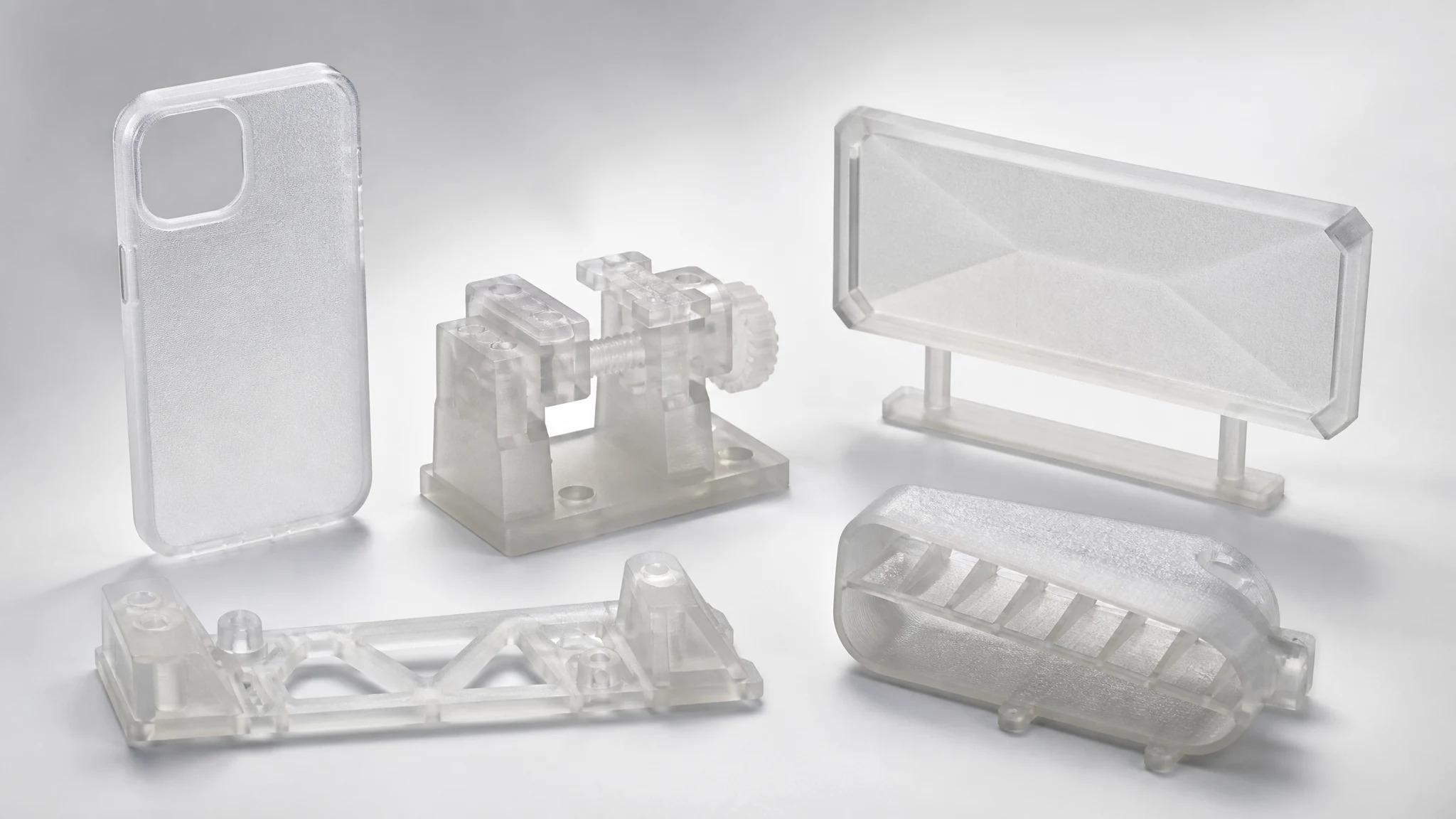
- Electronics enclosures: Housings for sensors, microcontrollers, and small circuit boards can be made from PETG when operating temperatures remain below about 60℃.
- 3D printer accessories: Spool holders, tool organizers, and fan ducts located near heated components are generally suitable, provided they do not directly contact the hotend or heated bed.
- Automotive interior components: Clips, cable organizers, and mounts in shaded interior areas can work well with PETG when prolonged direct sunlight and excessive heat are avoided.
- Light-duty jigs and fixtures: PETG can handle moderate workshop temperatures for assembly aids and positioning fixtures that are not subjected to significant heat or mechanical loads.
- Outdoor signs and covers: PETG can be used for outdoor components when heat exposure is moderate, although long-term UV exposure should be considered.
For applications involving sustained temperatures above 70℃, high mechanical loads, direct contact with hot surfaces, or prolonged heat and UV exposure, standard PETG may not be the best choice. Consider ABS/ASA, Nylon, PC, or a high-temperature PETG grade when higher thermal performance is required.
Summary: PETG works well for moderate-temperature applications, but the actual service temperature, mechanical load, exposure time, and heat source should all be considered when selecting PETG for a functional part.
PETG Heat-Resistance Research: What Could Change in 2025–2026?
While commercial high-temperature PETG today reaches a glass transition temperature (Tg) of about 90–105℃, 2026 research is pushing PETG's thermal limits much further through material modification and process optimization.
1Copolymerization Raises Tg Above 120℃
A 2025 study incorporated a rigid fused-ring diol monomer (DHSE) into PETG. At 29.3 mol% incorporation, the glass transition temperature increased from 81.2℃ to 120.4℃, demonstrating that molecular-level modification can substantially improve PETG's thermal performance [1].
2Nanocomposites and Advanced Blends
Material modification can also improve PETG's thermal performance. Recent studies have explored particle-filled composites, polymer blends, and recycled-polymer systems to improve thermal stability and thermomechanical properties. For example, PETG/HDPE blends have been investigated for 3D printing, with one 2025 study reporting a Tg of around 87℃ based on DMTA measurements [2]. Other research has examined PETG composites reinforced with inorganic fillers and metallic powders, reporting improvements in thermal stability and interfacial properties [3][4].
These results demonstrate potential routes for improving PETG's heat resistance, but they are primarily research-stage material formulations and should not be treated as equivalent to commercially available high-temperature PETG filaments.
3What This Means for Your Parts
These are largely lab-scale or specialty results, not off-the-shelf filaments. Most routes require specialized equipment and are not practical for typical 3D printing. If you need higher heat resistance today, choose a commercial high-temperature PETG (Tg 90–105℃) or step up to ASA, Nylon, or PC. The copolymer and nanocomposite routes show where PETG is heading — from a general-purpose material toward a high-performance engineering thermoplastic.
FAQ about PETG Temperature Resistance
Q: What is the glass transition temperature of PETG?
PETG typically has a glass transition temperature (Tg) of 75–85℃, depending on the formulation. As PETG approaches and exceeds its Tg, it becomes softer and less rigid, so its mechanical performance can decrease significantly.
Q: Is PETG more heat resistant than PLA?
Yes. PETG generally has a higher heat resistance than PLA. Typical PETG can remain dimensionally stable at around 60–70℃, while standard PLA may begin to soften at around 50–60℃. Actual limits depend on the material grade and applied load.
Q: Can PETG Withstand 80℃?
Standard PETG is generally not recommended for sustained exposure to 80℃, especially under mechanical load. At this temperature, the material is close to or above its Tg and well above typical HDT values, so significant loss of stiffness and deformation can occur.
Q: How does PETG compare to ABS for high-temperature use?
ABS generally offers better high-temperature performance, with a Tg of around 100–105℃ and typical HDT values around 85–100℃. PETG is generally easier to print and can often be printed without a fully enclosed printer. For applications above 80℃, ABS, ASA, or other higher-temperature materials may be more suitable.
Q: Can PETG survive in a hot car?
It depends on the conditions. PETG in a hot car may soften or deform when temperatures reach 50–60℃ or higher, especially under load or direct sunlight. For prolonged exposure, consider ASA or another more heat-resistant material.
Q: Can you improve PETG's heat resistance?
To some extent. Options include using a high-temperature modified PETG, increasing wall thickness and infill, and optimizing the print and post-processing process. Annealing may improve thermal stability and HDT for some PETG formulations, but the results vary and excessive heat can cause shrinkage or warping.
Q: What Is the PETG Melting Point and Printing Temperature?
The PETG melting point varies by formulation, so it is more accurate to discuss its thermal transition and processing range rather than a single melting point. For FDM printing, PETG is commonly processed at around 220–260℃, depending on the filament grade and printer setup. This processing temperature should not be confused with the maximum service temperature of a finished PETG part.
Q: Is PETG-CF more heat resistant than PETG?
Yes. PETG-CF heat resistance and dimensional stability is better than standard PETG, especially under mechanical load. Carbon fiber reinforcement improves stiffness and reduces heat-related deformation, although it may not significantly increase the polymer's Tg or melting point. Actual PETG-CF heat resistance depends on formulation, fiber content, and test conditions.
Conclusion: How Much Heat Can PETG Really Handle?
Standard PETG is best kept below 60℃ for continuous use. Between 60–70℃, performance depends on load and exposure time, while temperatures above 70℃ can cause significant softening, creep, and deformation—especially in load-bearing parts.
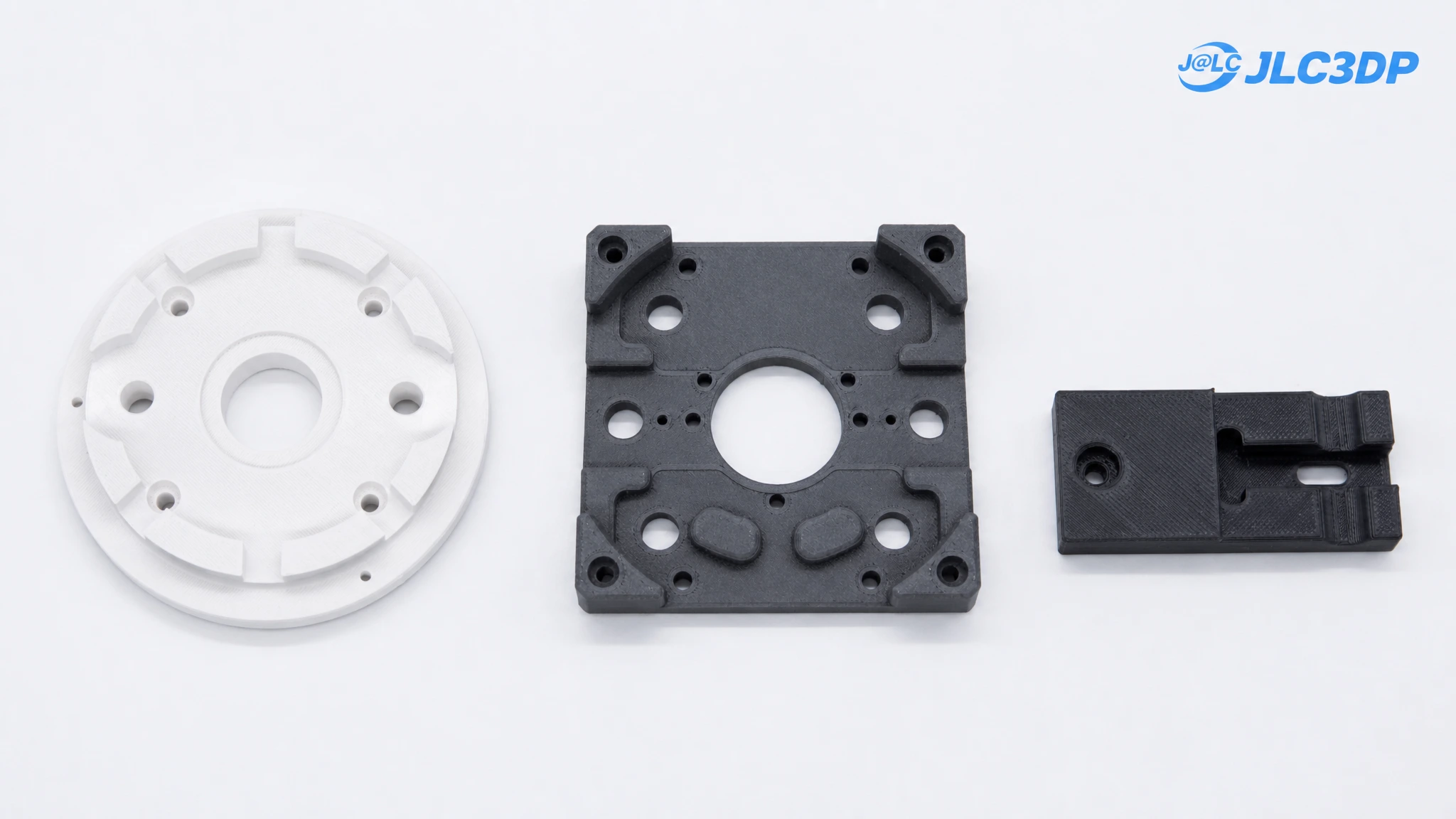
If you need better heat resistance, consider high-temperature modified PETG or controlled annealing, which can improve thermal stability for suitable grades. For sustained temperatures above 70℃ or heavily loaded applications, ASA or ABS is generally a safer choice.
References
- [1] Synthesis and characterization of PETG copolymers incorporating rigid fused-ring diol monomers. Journal of Polymer Research, 2025. https://doi.org/10.1007/s13233-025-00478-4
- [2] Characterizing Shape Memory and Mechanical Properties of Pellet-Based 3D-Printed PETG/HDPE Blends for 4D Printing Applications. Journal of Polymer Research, 2025.
- [3] Development and characterization of PETG composite feedstock filament reinforced with chromium powder for material extrusion 3D printing. Progress in Additive Manufacturing, 2026.
- [4] Use of Recycled Poly(ethylene terephthalate)-Based (rPET) Blends in Additive Manufacturing Techniques to Prepare Sustainable, Tough, and Heat-Resistant Parts. ACS Sustainable Chemistry & Engineering.
Keep Learning
Is PETG Toxic to Print? Fumes, Risks & Safety Guide
Key Takeaways PETG is generally considered a lower-emission 3D printing material compared to ABS and ASA, but it does produce VOCs and ultrafine particles during printing. The odor during PETG printing is typically mild, some people barely notice it, others describe a faint warm-plastic smell. Low odor doesn't mean zero emissions. Ventilation is still a sensible precaution. PETG food safety is complicated, the material itself may be food-grade in some formulations, but the printing process introduces ......
Top 5 Heat-Resistant 3D Printing Filaments Compared
When Regular Filament Just Doesn’t Cut It You’ve 3D printed a functional bracket for a car engine bay. It fits perfectly, looks great, and then warps into a banana-shape after a week under the hood. That’s the danger of underestimating heat. If you're building automotive components, enclosures near motors, molds, or even kitchenware, using the wrong filament can lead to deformation, brittleness, or outright failure when exposed to heat. So, you already know the solution: Choosing the right heat-resist......
PLA Temperature Resistance: Heat Resistance, Softening & Melting Point
Key Takeaways PLA typically starts losing rigidity around 55–65℃ (Tg) and melts at approximately 150–180℃. PLA can deform and creep long before it melts, so melting point is not a practical service-temperature limit. Actual PLA deformation depends on temperature, load, geometry, print orientation, and exposure time. Standard PLA becomes increasingly risky above 50–60℃ and is generally unsuitable for sustained 70–80℃ applications. PLA+ heat resistance varies by formulation. For higher-temperature appli......
PETG Temperature Resistance: Limits & Comparison with PLA/ABS/ASA
Key Takeaways Standard PETG is best suited for continuous use below ~60℃; performance can decline as temperatures approach 70℃. PETG typically has a Tg of ~75–85℃ and an HDT of ~65–75℃, depending on the material grade and test conditions. HDT is not a maximum service temperature—load, print orientation, wall thickness, geometry, and exposure time all affect real-world performance. PETG offers better heat resistance than PLA but lower heat resistance than ABS, ASA, PA12-CF, PC, and PEEK. For sustained ......
How to Print TPU Filament: Settings and Troubleshooting
Key Takeaways TPU is printable on ordinary FDM hardware. The material bends instead of breaking, but it punishes settings tuned for PLA — four changes (print slowly, print dry, retract gently, keep the filament path short) turn it into a routine material. Difficulty tracks Shore hardness. A 95A TPU prints readily on most FDM machines; 85A and softer grades demand a direct drive extruder and patience. TPU print settings start around a 210–230°C nozzle, 20–40mm/s speed, and minimal retraction — the full......
What Is 3D Printer Filament? Types and How to Choose
Key Takeaways 3D printer filament is the thermoplastic strand an FDM printer melts and deposits layer by layer. Two diameters dominate: 1.75mm mainstream, 2.85mm second. The main types of 3D printer filament sort into five practical groups — easy and rigid (PLA), tough and balanced (PETG), heat-resistant (ABS/ASA), flexible (TPU), engineering-grade (nylon, PC, PEEK) — plus composites and soluble support materials. Choosing comes down to four properties: strength versus stiffness, heat resistance, flex......